Pinyon Shift 0.3.1 consolidated on October 1, 2026 the greatest advancement of the native Forza Horizon port for Windows. The 0.3 line replaces the old Xenos-based graphics path with a renderer created for the game, featuring Vulkan or Direct3D 12, internal resolution up to 4K, and 60 or 120 FPS limits.
Version 0.3.0 marked the first stable release since 0.1.1. Hours later, hotfix 0.3.1 fixed a bug that interrupted shader preparation when the user chose Direct3D 12 during the initial setup. Therefore, version 0.3.1 is the current reference for anyone planning to test the project.
Pinyon Shift does not emulate the Xbox 360 during gameplay. Instead, ShiftGlue, derived from ReXGlue, ahead-of-time translates the executable's PowerPC code into C++. Afterwards, the computer compiles this material into x86-64 and uses a custom runtime for services, audio, input, and graphics.
Pinyon Shift 0.3.1 fixes the setup with Direct3D 12
Hotfix 0.3.1 has a specific focus. In the previous version, the setup could crash with a missing path error when preparing Direct3D 12 shaders. The issue also appeared when a user tried to start the Microsoft backend after an unsuccessful configuration with Vulkan.
Now, the launcher creates the expected structure and completes this step. Anyone who encountered the error needs to download the 0.3.1 launcher and run the setup again. Saves and settings remain in place during the update.
This fix matters because the project itself recommends Direct3D 12 at 3x and 4x internal scales. Vulkan remains the default and has an advantage at 1x and 2x resolutions in the official test, but the cost of multisampled surfaces increases at heavier settings.

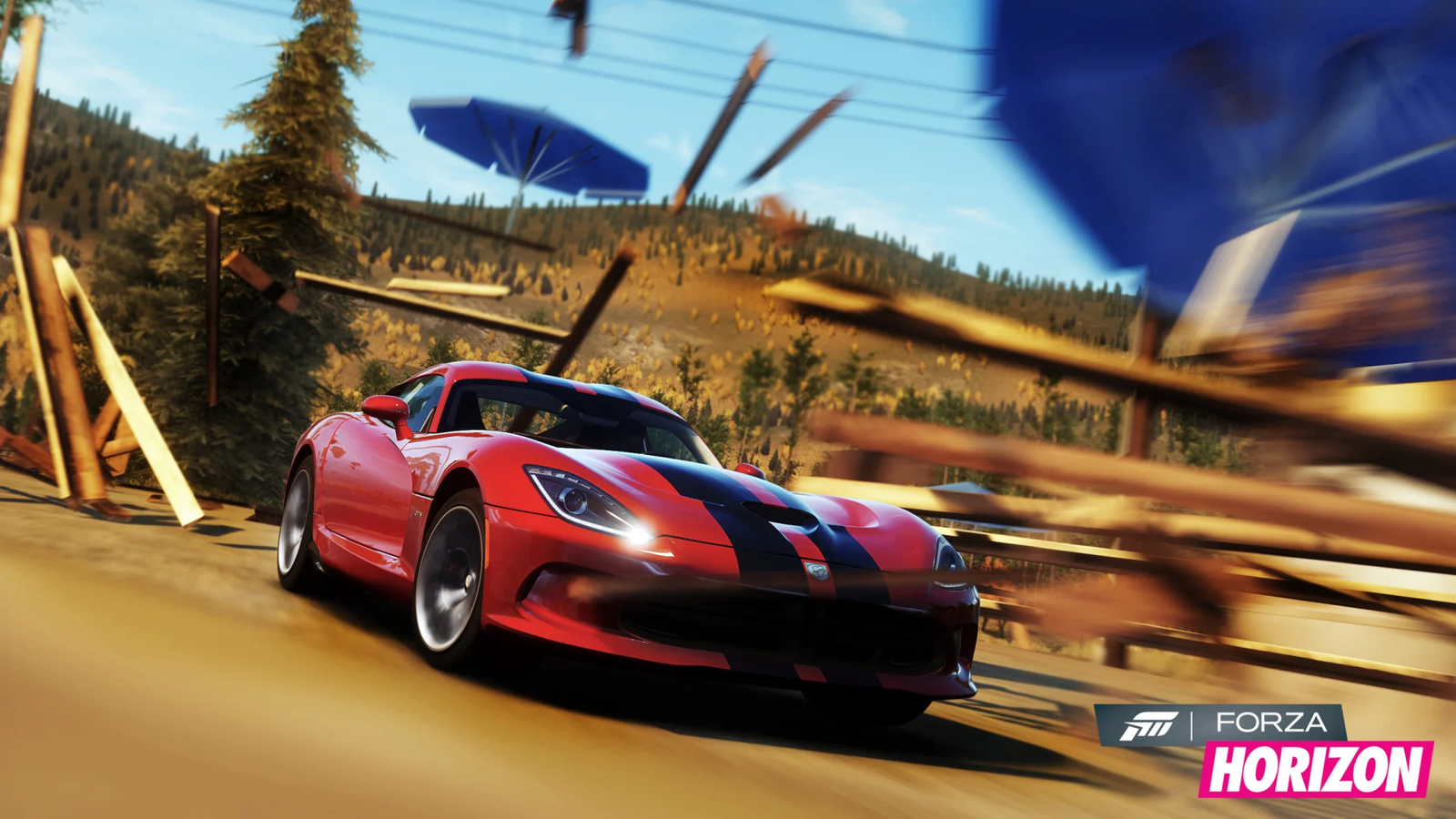
Xbox 360 Forza Horizon provides the data used by Pinyon Shift. The image shows the original game and not the interface of version 0.3.1.
Native renderer offers Vulkan and Direct3D 12
The new renderer processes each draw, clear, resolve, and present command in the order produced by the game. In addition, it translates the original shaders to SPIR-V in Vulkan or DXBC in Direct3D 12.
In the Vulkan backend, one thread decodes the graphics queue while another records the draw commands. This division helps at lower resolutions. On the other hand, Direct3D 12 gains ground when the GPU becomes the main bottleneck at 4K.
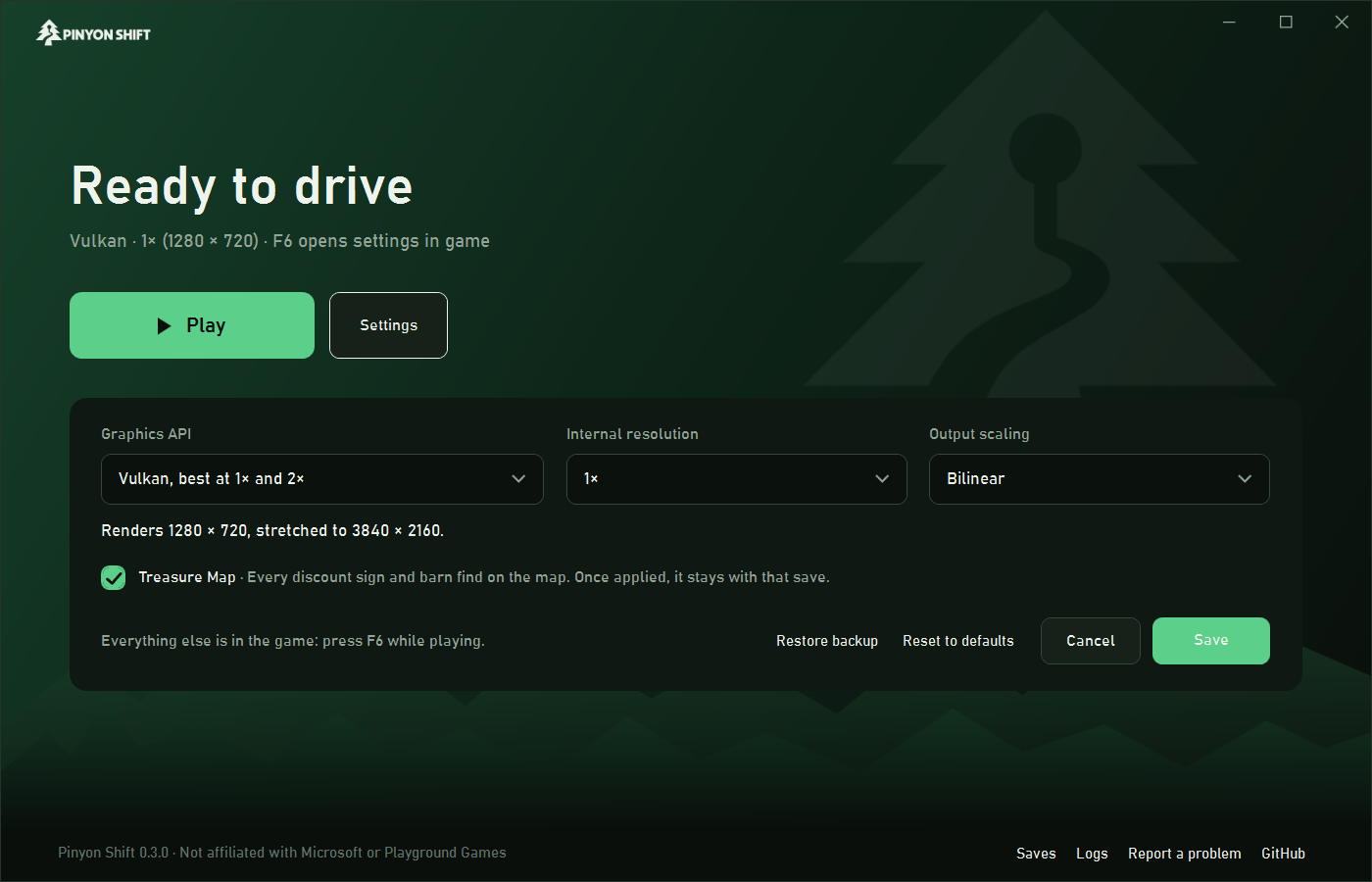
The internal menu, opened with F6, brings together resolution, screen mode, output scaling, audio, and controls. The user can also choose FSR 1, CAS, or bilinear filtering, in addition to adjusting FXAA, anisotropic filtering, motion blur, and depth of field.
On the other hand, the resolution advertised as 4K needs context. The port can render internally at 3840 × 2160 at 3x scale or upscale a smaller image to 4K output with FSR 1. The launcher displays both the internal resolution and the output to avoid confusion.
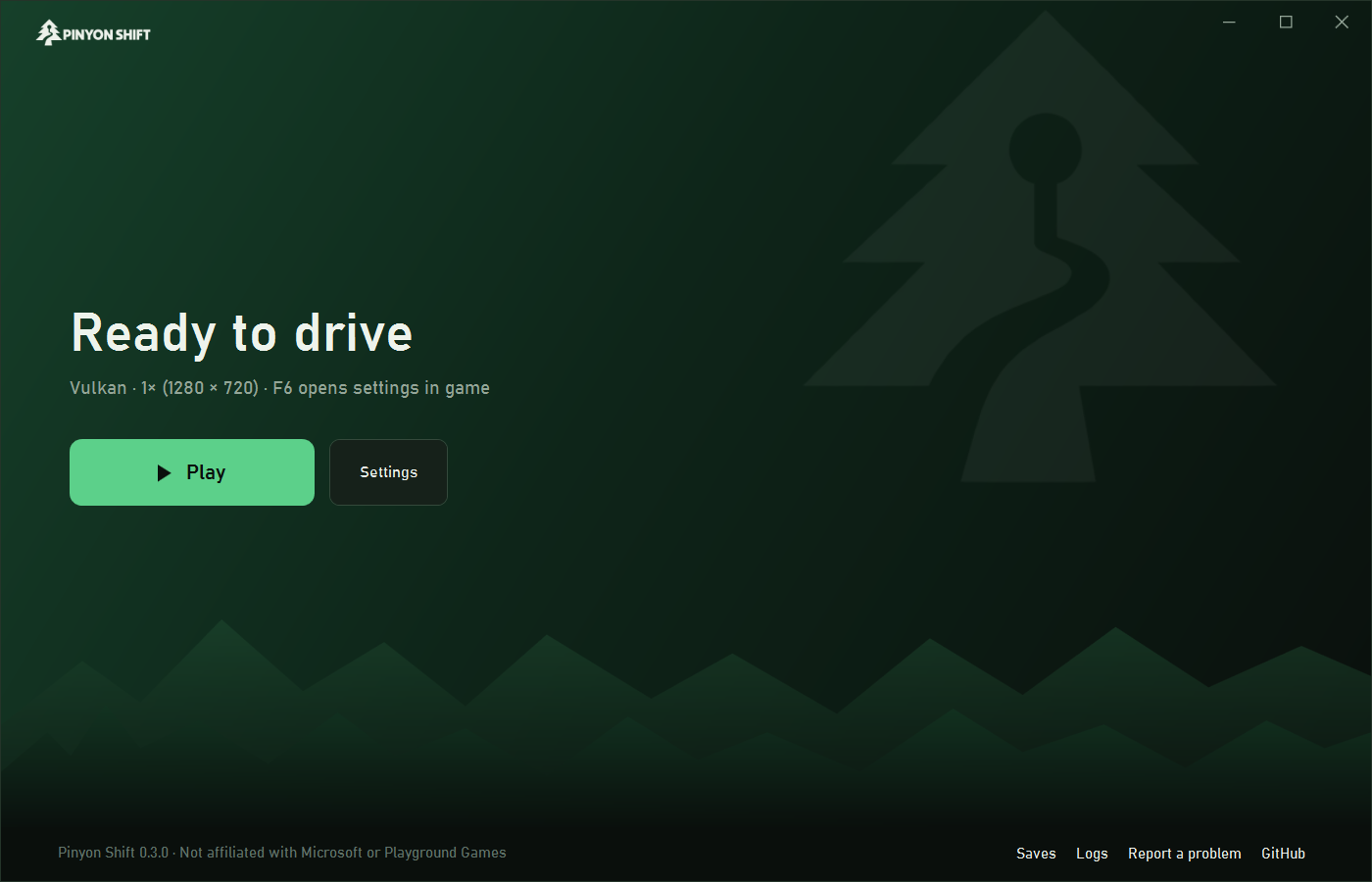
Official Pinyon Shift launcher in a ready-to-play state, image kept in the project's own repository.
Official test reaches the 120 FPS limit
The developer published measurements taken on September 30 with a Ryzen 7 5800X, GeForce RTX 4080, 128 GB of RAM, and Windows 11. The screen operated at 120 Hz, which capped the faster lines of the test.
In the intro and at the beginning of the first direction, the native backend registered between 118.7 and 120 FPS. Meanwhile, Xenia Canary and the older version 0.1.0 hovered around 30 FPS. These numbers come from a single computer and an automated route, so they do not guarantee performance for every PC.
In a heavier race, Vulkan registered a median of 110 FPS at 720p and 79 FPS at 1440p. Direct3D 12 scored 79 and 66 FPS at the same scales. However, at 3840 × 2160, the scenario reversed: Direct3D 12 reached 57 FPS, compared to 35 FPS on Vulkan.
Furthermore, the 120 FPS limit does not mean that every area sustains that rate. The project still documents slowdowns in some points and crowd animations sped up above 30 FPS. The team also acknowledges visual regressions and does not claim to have validated all hardware combinations.
Official settings screen of Pinyon Shift, with options made available by the project's launcher.
Mods, ultrawide and trainer arrive in version 0.3
The update also expands options beyond rendering. Pinyon Shift accepts native plugins via a C ABI, file replacement, database patches, texture swapping and custom texts.
In addition, the menu offers adjustable field of view and support for ultrawide screens. The game expands the scene to proportions like 21:9, while the HUD can remain at 16:9 to avoid elements stuck at the edges.
A separate trainer allows changing credits, game speed, time of day, and free camera. However, the feature uses a separate profile copy when cheats are active. Thus, the user does not mix this progress with their normal save.
The port also incorporates the Treasure Map, content that marked discount boards and barn find cars through a discontinued service. The feature is enabled by default, although the launcher allows disabling it before revealing the map in the save.
Installation requires a dedicated drive and up to 25 GB of free space
The project does not distribute Forza Horizon, extracted assets, or a complete game executable. The user must provide an ISO created from the compatible North American disc, identified by the serial MS-2505 and title ID 4D5309C9.
After verification, the launcher installs the necessary tools, extracts the data locally, translates the code, and compiles the build on the user's computer. According to the documentation, the initial preparation can take from 20 to 60 minutes and requires about 25 GB of free space.
Current requirements include 64-bit Windows 10 or 11 and a GPU with Vulkan 1.3 or Direct3D 12. So far, the team has only qualified NVIDIA cards. AMD and Intel remain without official validation, which does not mean automatic incompatibility, but prevents a promise of support.
This model is similar to other projects based on ReXGlue, such as The Darkness's Staked. However, each port needs to create its own runtime and solve the game's particularities. Meanwhile, the Need for Speed for Switch shows the same idea of ahead-of-time translation applied to another architecture and another system.
Android, iPhone, Linux and macOS do not have builds yet
Version 0.3.1 remains restricted to Windows x86-64. There is no APK for Android, IPA for iOS or iPadOS, publication on the Play Store, App Store, or TestFlight, nor any official mobile sideloading process.
Similarly, the project does not offer public builds for Linux, Steam Deck, or macOS in this release. Android and other platforms have appeared on the roadmap, but a future goal does not equate to available support.
Consequently, Pinyon Shift 0.3.1 does not use ARM or ARM64, OpenGL ES, Metal, or touch controls. It should also not be confused with Xbox streaming, Xenia emulation on another device, Windows wrappers, or a commercial mobile version of Forza.
Version 0.3.1 turns the project into a more complete preview
Pinyon Shift still defines itself as a playable preview, not as a final remaster. Even so, the 0.3 series represents a concrete leap: a specific renderer, modern framerates, scaling up to 4K, internal menus, mods, and better diagnostics enter a reproducible public release.
Finally, hotfix 0.3.1 closes an important day-one flaw without altering the rest of the version. For those planning to try the port, it replaces 0.3.0 and keeps the same feature set with the corrected Direct3D 12 setup.
Sources: Pinyon Shift 0.3.1 — official release; Pinyon Shift 0.3.0 — complete notes; official repository and documentation.