
The OptiScaler DLSS 5 1.2 was released on October 10, 2026 with the x8 preset and adjustments to reduce visual ghosting. In a test released by the developer with The Last of Us Part I and an RTX 4070, the framerate went from 39.2 to 77.3 FPS compared to the DLSS 5 implementation used as a reference. This represents about a 97% gain relative to that mode with Neural Rendering, not to the game without the effect.
The project is an unofficial community fork of OptiScaler, with no affiliation to NVIDIA. Therefore, the numbers are the author's measurements, not independent tests nor a performance guarantee for other configurations.
OptiScaler DLSS 5 1.2 premieres the x8 preset
The x8 mode runs the neural model once every eight frames and reuses the result in the intermediate frames. Furthermore, processing occurs before DLSS Super Resolution, with fewer pixels to calculate.
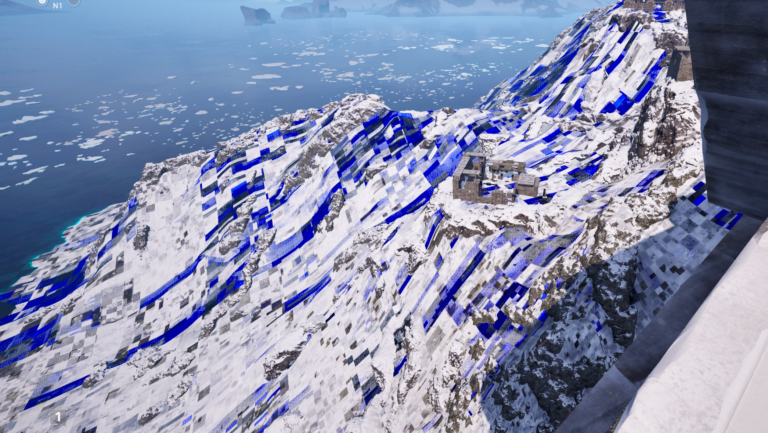
To reuse the changes, the program considers motion vectors, depth, color, and a scene signature. Thus, it attempts to avoid incorrect trails in particles, hands, and moving objects. However, this method may lose details or introduce artifacts in specific situations.
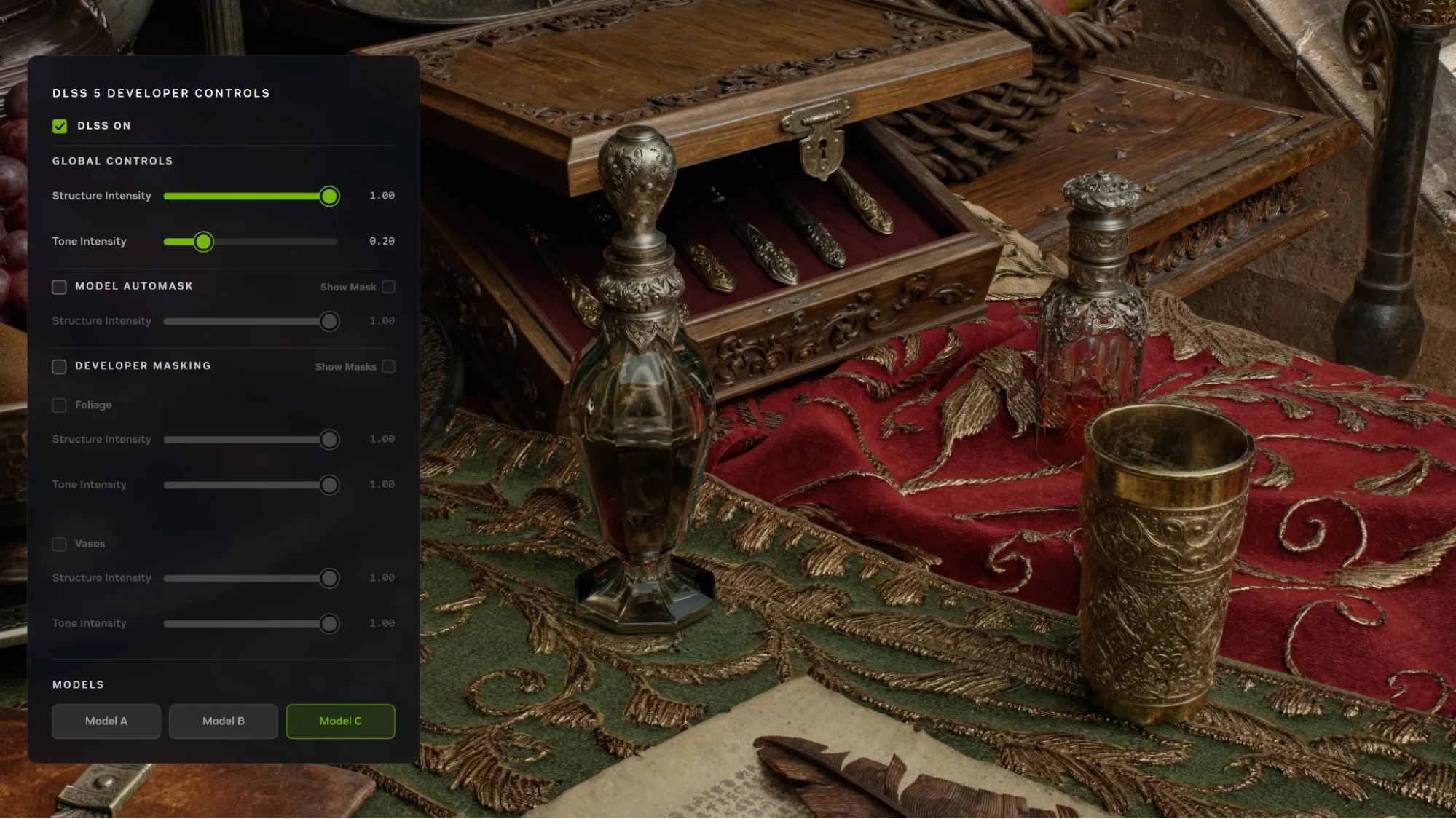
Official NVIDIA panel for DLSS 5. Contextual image: does not show the fork's x8 preset. Source: NVIDIA, via the Allves Games library.
The author also describes adaptive cadence according to camera movement, temporal smoothing, and tools to measure ghosting and brightness fluctuations. On the other hand, the x8 preset reduces model frequency and involves a trade-off between speed and fidelity.
RTX 4070 test: 77.3 versus 39.2 FPS
According to the developer, The Last of Us Part I at 1440p it scored 39.2 FPS on the reference DLSS 5 path and 77.3 FPS on x8. Meanwhile, with Neural Rendering turned off, the same test recorded 83.9 FPS. Therefore, the new mode came close to the rate without the effect, but did not surpass it.
The reported neural cost dropped from approximately 13.2 to 0.9 ms per frame. However, the numbers depend on the scene and the author's methodology. There is no confirmation that the gain will be repeated on other GPUs, games, or camera conditions.
In posts from October 10, the creator presented images and explained the adjustments made after community feedback. Even so, comparisons published by the project itself do not replace independent measurements of quality and stability.
What changed compared to the previous version
On October 6, the same author had released results with the Performance preset in Control Resonant. At the time, the neural cost dropped from 13.0 to 2.9 ms on the RTX 4070. The previous article by Allves Games explains that first benchmark.
Now, OptiScaler DLSS 5 1.2 adds x8 frame pacing, ghosting protection, and results in The Last of Us Part I. Thus, the launch represents a new milestone, not just a repetition of the previous test.

Official NVIDIA image to illustrate DLSS 5. It does not represent the test with the RTX 4070 nor a capture of the 1.2 fork.
On October 10, the author released the hotfix OptiScaler DLSS 5 1.2.1. It fixes brightness flickering in the x8 preset. According to the developer, the light variation in the processed frame dropped from 0.016 to 0.002 stops in The Last of Us Part I; screen flicker became eight times lower, with an approximate cost of 2% in FPS. These numbers have no independent validation. Thus, the most recent public package for Windows x64 became OptiScaler-DLSS5-1.2.1-win-x64.zip, with an English installer INSTALL.bat and uninstaller UNINSTALL.bat. The release also offers source code and SHA-256 files. The project does not include the proprietary DLL nvngx_dlssnr.dll, which must be obtained legally by the user.
In addition, the Allves Games has already addressed the DLSS 5 Swapper with OptiScaler. Although they have related technologies, these projects and versions should not be confused.
Sources: official hotfix 1.2.1; release 1.2.0; author's repository; technical announcement for version 1.2.