
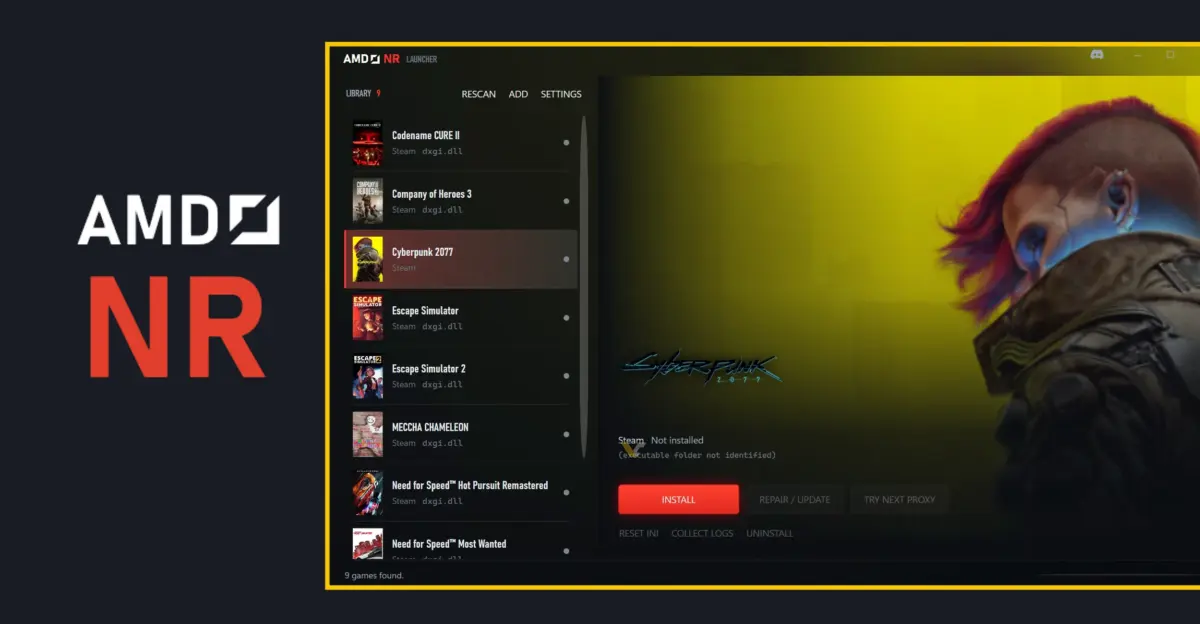
The DLSS-NR-on-AMD 0.4.1 received a new performance optimization to run DLSS 5 Neural Rendering on Radeon cards. Released on September 26, 2026, the update brings a stated 8% gain over version 0.4.0 and adds a new priority queue mode that can boost performance by an additional 9% under heavy gameplay loads.
The numbers were released by the project's own developer. Therefore, they do not yet represent an independent benchmark. Furthermore, the changelog does not disclose the complete hardware configuration used to measure the percentages. Even so, version 0.4.1 represents a new delta over 0.4.0, which had already significantly increased the performance of the experimental runtime.
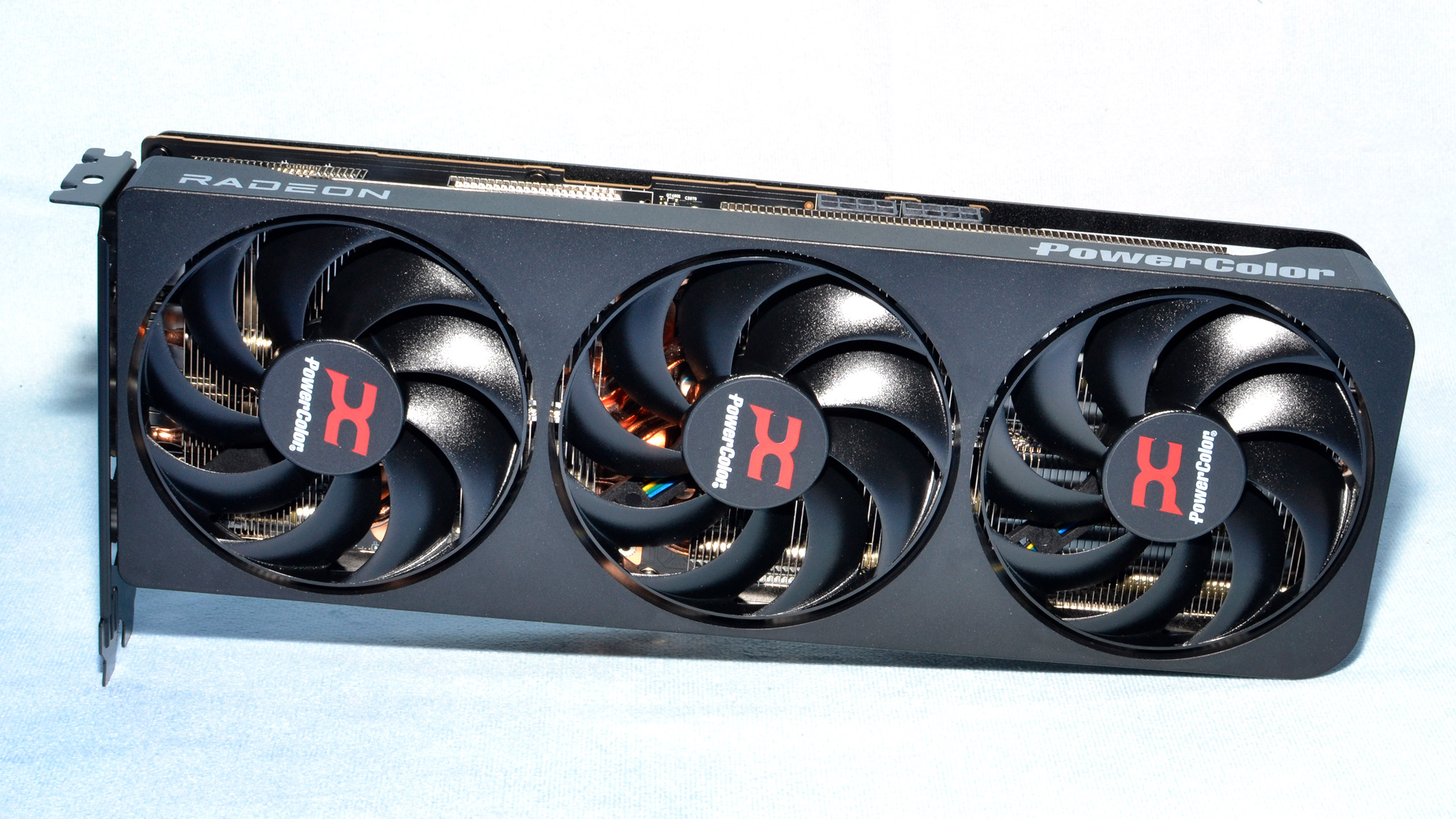
The Radeon RX 9070 XT is among the cards used in community experiments with DLSS 5 Neural Rendering on AMD hardware. Illustrative photo: Tom’s Hardware.
DLSS-NR-on-AMD 0.4.1 improves performance once again
The previous version, 0.4.0, had already introduced a major optimization. According to the author, that update increased performance by 42% compared to version 0.3.3.
Now, the DLSS-NR-on-AMD 0.4.1 advances over this new base. The official changelog reports an additional 8% gain in direct comparison to version 0.4.0.
However, this percentage should not be automatically added to previous gains to create a cumulative estimate. The versions use different comparison bases, while internal pipeline changes can also alter behavior between scenarios.
In addition, the developer did not publish data alongside the release such as resolution, game, GPU, driver, operating system, or absolute FPS used in this measurement. Therefore, the 8% value should be treated as a result stated by the project, and not as guaranteed performance for all compatible Radeons.
New priority queue can add another 9%
The second change in version 0.4.1 appears specifically in heavy gameplay situations. The project added a new mode of priority queue, or priority queue.
According to the developer, this mechanism can produce an additional 9% gain when the GPU faces a high load during gaming. Thus, the optimization seeks to reduce contention between Neural Rendering processing and other tasks executed simultaneously by the board.
This difference matters because an isolated network benchmark does not necessarily represent behavior inside a game. During a match, the GPU also needs to execute rasterization, shaders, lighting, post-processing, upscaling, and other work.
Therefore, an optimization focused on scheduling these tasks can produce a different effect depending on the graphics load. The percentage disclosed for the priority mode should not be interpreted as a fixed 9% gain in any game.
Update is a subsequent delta to version 0.4.0
Version 0.4.1 does not represent the debut of DLSS 5 on AMD cards. This advancement occurred previously and has already gone through several optimization stages.
The new release is relevant precisely because it introduces a subsequent change: the developer returned to the performance bottleneck and modified how the runtime contends for resources during heavy loads.
Another community project follows a different approach. The DLSSNR-AMD ran Neural Rendering on an RX 9070 XT via Vulkan compute shaders and showed how reducing the network's working resolution before FSR 4 can significantly lower processing cost.
Although the names are similar, the projects are not equivalent. Daniel Balanescu's DLSS-NR-on-AMD uses its own path to perform processing on Radeon. Meanwhile, DLSSNR-AMD follows an independent implementation based on Vulkan.
The gain still requires complete benchmarks
For now, release 0.4.1 only presents improvement percentages. It does not publish a table with FPS, frametimes, or network cost before and after optimization.
Consequently, it is still not possible to calculate how many frames per second the new mode adds in Cyberpunk 2077, GTA V Enhanced, or other games previously used by the project.
There is also not enough basis to claim that the additional 9% gain will appear in every situation. The release text itself limits this result to heavy gameplay loads.
This caution is especially important because the cost of Neural Rendering varies significantly depending on the processing resolution. In Allves Games, the DLSS 5 load tests on an RTX 5090 also showed how neural processing can significantly increase GPU workload. However, these numbers belong to NVIDIA hardware and cannot be transferred to Radeons.
DLSS 5 on Radeon remains experimental
The DLSS-NR-on-AMD 0.4.1 remains a community project. The update does not mean that NVIDIA or AMD have released official support for DLSS 5 on Radeon cards.
NVIDIA maintains official support for DLSS 5 3D-Guided Neural Rendering on GeForce RTX 50 Series. Experiments on Radeon use community implementations and runtimes to explore paths that are not part of this official compatibility matrix.
Therefore, differences in quality, performance, and stability may still appear. It is also important to separate these projects from tools that apply neural processing to the final screen image. The NeuralScreen, for instance, offers an experimental edition for Radeon, but works with a different architecture and a different capture and processing method.
What changes in practice with DLSS-NR-on-AMD 0.4.1?
The main takeaway lies in the pace of optimization. On September 25, version 0.4.0 declared a 42% leap over 0.3.3. Just a day later, 0.4.1 added a claimed 8% improvement over that new baseline.
In addition, the priority queue targets a different problem. Instead of just accelerating isolated execution, it seeks to improve behavior when the game is already keeping the GPU under heavy load.
This development also mirrors a trend seen in other community tools. The DLSS5-Feeder has also been altering its pipeline and diagnostic mechanisms to make Neural Rendering more usable outside of official integrations.
Now, the next step for DLSS-NR-on-AMD will be to publish more complete measurements. Tests with documented hardware, resolution, game, driver, FPS, and frametime will allow verifying how much the gains from version 0.4.1 appear in real-world situations.
Sources: DLSS-NR-on-AMD — official Alpha 0.4.1 release | DLSS-NR-on-AMD — official release history | NVIDIA — official DLSS 5 documentation.
Pingback: AMDNR 0.3.4.2 corrige menu e Ray Regeneration