
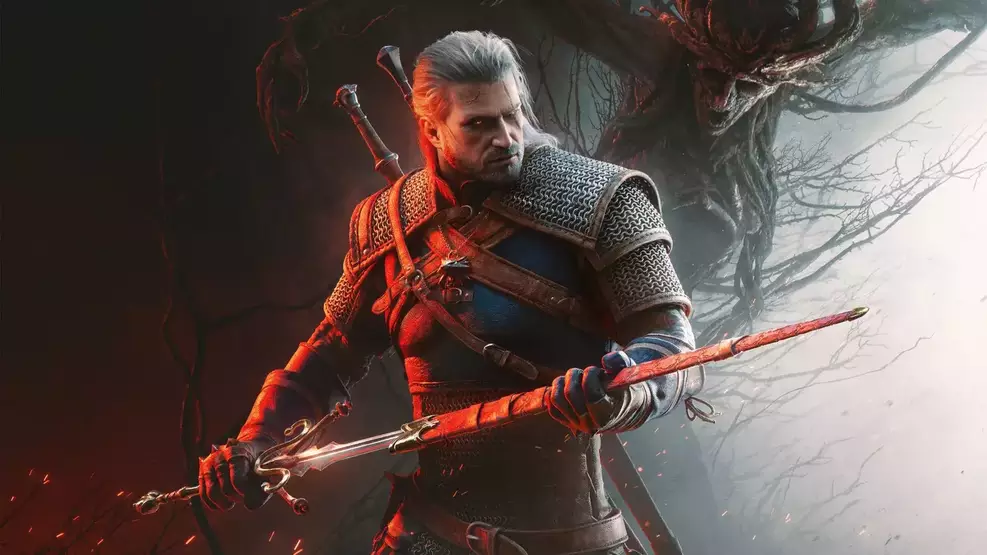
The DLSS 5 in Witcher 3 brought a clear improvement to faces and small image details, but also exacted a significant performance cost. In an independent test published on September 29, 2026, with The Witcher 3: Wild Hunt — Remastered, a GeForce RTX 5090 lost up to 30% performance after the injection of Neural Rendering over the game's new path tracing.
The experiment is especially interesting because the Remastered version already demands a lot from the GPU on its own. In addition to path tracing on PC, the official update includes DLSS 4.5 Super Resolution, Ray Reconstruction, and Dynamic Multi Frame Generation. However, CD Projekt Red did not officially integrate DLSS 5 into the game. Therefore, the results below belong to a community implementation added externally to the pipeline.
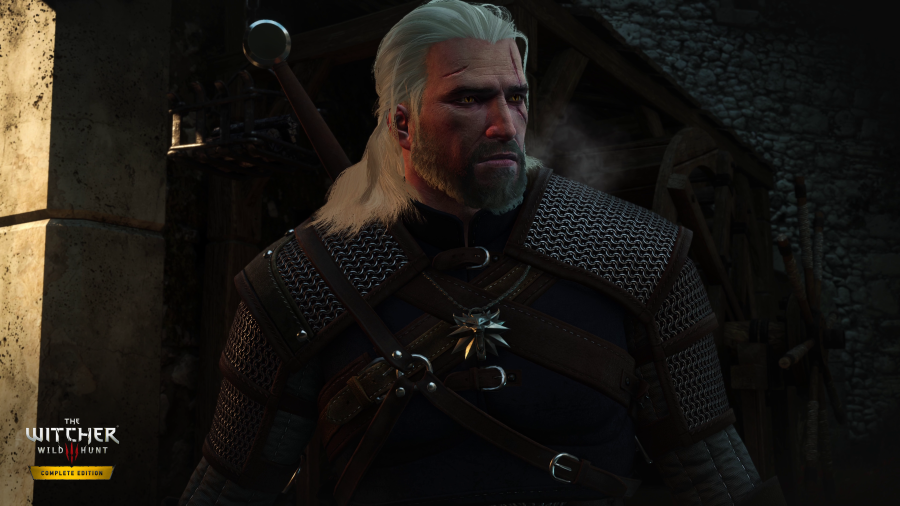
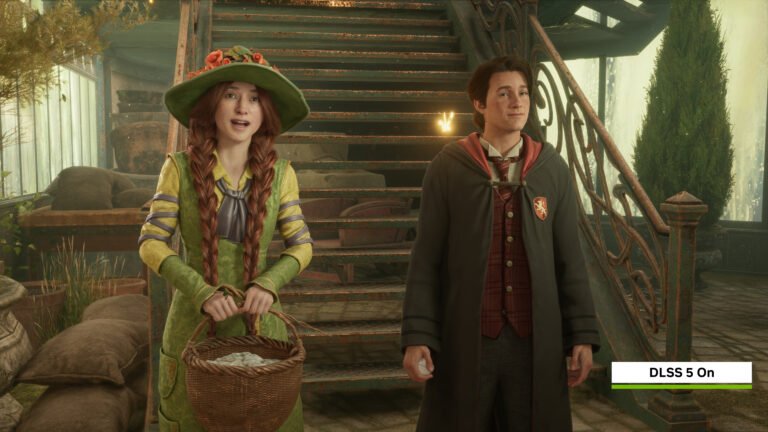
One of the official captures used by CD Projekt Red in the "Before and After" gallery of The Witcher 3: Wild Hunt — Remastered. The image serves as a visual reference for the update and does not independently represent the Neural Rendering test. Image: CD PROJEKT RED.
DLSS 5 in Witcher 3 costs up to 30% in performance
Wccftech's test used a GeForce RTX 5090 and kept path tracing active. Without Frame Generation, the game delivered about 50 FPS with DLSS 5 off.
After activating Neural Rendering, the frame rate dropped to approximately 35 FPS. Thus, the measured cost was close to 30% in this scenario.
Frametime shows the same difference from another angle. Without DLSS 5, each frame took about 20 ms. With neural processing enabled, the time rose to approximately 28.6 ms.
| Settings | FPS | Frametime | Impact |
|---|---|---|---|
| DLSS 5 off | 50 FPS | 20,0 ms | — |
| DLSS 5 enabled | 35 FPS | 28.6 ms | ~30% |
Consequently, Neural Rendering added a significant load even on the fastest GPU in the current GeForce lineup. However, the result does not mean that every game will lose exactly 30%. The cost depends on the resolution used by the network, the scene, the rest of the pipeline, and the integration itself.
Multi Frame Generation hides part of the cost
The first visual test almost hid the performance loss because Remastered uses Dynamic Multi Frame GenerationThe system aims to reach the monitor's refresh rate by automatically changing the frame generation multiplier.
On the 165 Hz monitor used in the test, the game needed approximately 4X MFG without DLSS 5. After Neural Rendering entered the pipeline, Dynamic MFG automatically increased to 6X and once again managed to approach the same output target.
First video test published along with the review, showing DLSS 5 injected over the Remastered with path tracing. Video: Wccftech.
Therefore, looking only at the final FPS number with Frame Generation can lead to a misinterpretation. The output counter can remain close to the target while the truly rendered frame rate drops.
When the test fixed Multi Frame Generation at 6X, the difference appeared clearly again. Without Neural Rendering, the counter stayed between 245 and 247 FPS. With DLSS 5, it dropped to 180 to 183 FPS.
In this case, the reduction was close to 26%. Although the final number is still high due to frame multiplication, the base feeding the MFG started working under a considerably heavier load.
Neural Rendering cost about 8.7 ms in 4K
The tool used in the test also separately estimated the cost of Neural Rendering. With the network running at full 4K resolution, neural processing consumed approximately 8.7 ms.
In addition, the mod indicated that halving the resolution used by the network could save about 3.2 ms. However, this strategy also reduces the amount of information processed by the model and can alter the final quality.
This behavior helps explain why experimental projects started working with working resolution, Pre-SR and other methods to run Neural Rendering before upscale. The DLSSNR-AMD, for example, showed a large difference between processing the network at 1080p before FSR 4 and running it directly at 4K.
Faces receive more detail with DLSS 5
Despite the cost, the visual result caught attention mainly in the characters. Wccftech noted that Neural Rendering added small details to the faces and gave a more realistic appearance to Geralt and other characters.
This type of change gains importance in The Witcher 3 because the game uses many dialogue scenes with the camera close to the characters' faces. The Remastered modernized lighting, materials, and path tracing, yet many models remain based on a game originally released in 2015.
In this context, Neural Rendering manages to add details without replacing the original models. However, an external integration does not have the same artistic control as an implementation made directly by the developers.
According to a test published by the analysis, this time with performance recording via FrameView. Video: Wccftech.
ShortFuse presented loss of highlights and color shift
The first method used in the experiment was the ShortFuse tool. Installation worked quickly, but the author noticed two unwanted visual changes.
First, Neural Rendering reduced some highlights. This becomes especially noticeable in HDR, since bright areas are part of the Remastered visual composition. In addition, the test recorded a slight change in the image color.
After that, the author switched to Lecram's implementation. This mod offers additional color and hue controls, and the adjustments helped reduce the problem.
The situation reinforces an important difference between community injection and official support. When a studio integrates DLSS 5 directly into the game, it can adjust models, structural intensity, tone, and other parameters according to each scene.
Meanwhile, an external tool needs to apply much more generic rules throughout the entire game.
The three models may react differently per scene
The test also worked with three model variations, identified by the mod as Default, Natural and Cinematic. Depending on the scene, each option can alter faces, lighting, materials and contrast differently.
Therefore, a single model does not necessarily produce the best result throughout the campaign. NVIDIA allows developers to choose and adjust Neural Rendering models according to scene, gameplay or cutscene when doing an official integration.
In community injection, however, manually changing profiles for each situation would be impractical. Therefore, the result can look excellent in a conversation and less suitable a few minutes later.
The Witcher 3 Remastered does not feature official DLSS 5
This distinction needs to be clear. The official update for The Witcher 3: Wild Hunt — Remastered brought path tracing to PC, DLSS 4.5 Super Resolution, Ray Reconstruction and Dynamic Multi Frame Generation. However, CD Projekt Red has not announced official support for DLSS 5 for the game.
Wccftech's own test highlights that Neural Rendering was introduced through community tools. Therefore, this 26% to 30% loss does not necessarily represent what an official implementation optimized by CD Projekt Red and NVIDIA would cost.
In a separate analysis of the Remastered version without this injection, Wccftech measured an average of 161.7 FPS at 4K on an RTX 5090 with a Ryzen 7 9800X3D, settings at maximum, DLSS Quality, and Dynamic Multi Frame Generation. This number belongs to another test and should not be compared directly with the 50 and 35 FPS above because the conditions and the objective of the measurement are different.
The cost aligns with other DLSS 5 tests
The results also align with a trend already observed in other scenarios: Neural Rendering adds a heavy step to the graphics pipeline.
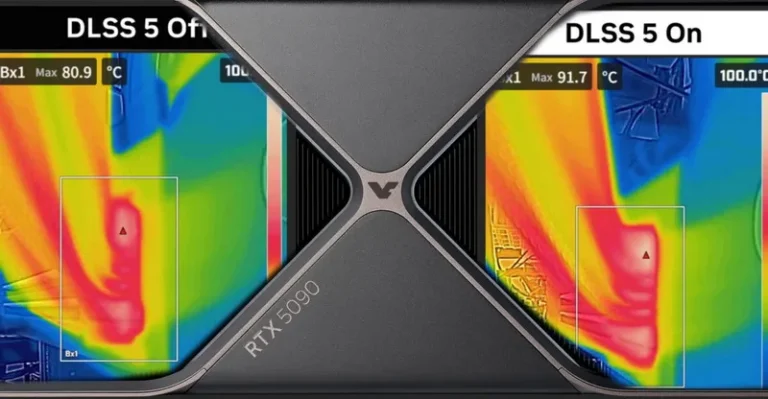
The Allves Games has already shown that a DLSS 5 test significantly increased the power consumption of an RTX 5090. In that case, the card started working very close to its nominal power limit.
This does not mean that every game will show the same FPS loss or the same increase in watts. However, both tests point to the same basic characteristic: Neural Rendering is not a computationally free effect.
The cost grows even more when the user applies several consecutive passes. Therefore, experiments by DLSS 5 Multipass also need to consider frametime, power consumption, and working resolution, and not just the visual difference.
Is it worth using DLSS 5 in The Witcher 3?
The test shows a very clear trade-off. DLSS 5 manages to improve faces and add details that the Remastered version did not bring to the original models. On the other hand, an RTX 5090 lost approximately a quarter to a third of its performance in the analyzed scenario.
Dynamic Multi Frame Generation manages to mask part of this drop in the final FPS counter. However, it does not eliminate the increase in frametime from the base rendering.
Furthermore, community tools can still alter colors, highlights, and artistic intent. An official implementation would be better equipped to adapt Neural Rendering to the game's different scenes, models, and lighting conditions.
Thus, the DLSS 5 in Witcher 3 already functions as an impressive visual experiment, but still requires a large performance margin and some configuration work. For those intending to test the feature, frametime analysis remains just as important as observing the final FPS number.
Sources: Wccftech — DLSS 5 test in The Witcher 3 Remastered | Wccftech — Remastered analysis and benchmark | CD PROJEKT RED — official Remastered release | The Witcher — official update news.
Pingback: The Witcher 3 DLSS volta no Patch 5.00b
Pingback: DLSS 5 Multipass derruba RTX 5090 para 36 FPS
Pingback: Universal MFG Unlocker 1.6.1: DLSS e XeSS até 6x