
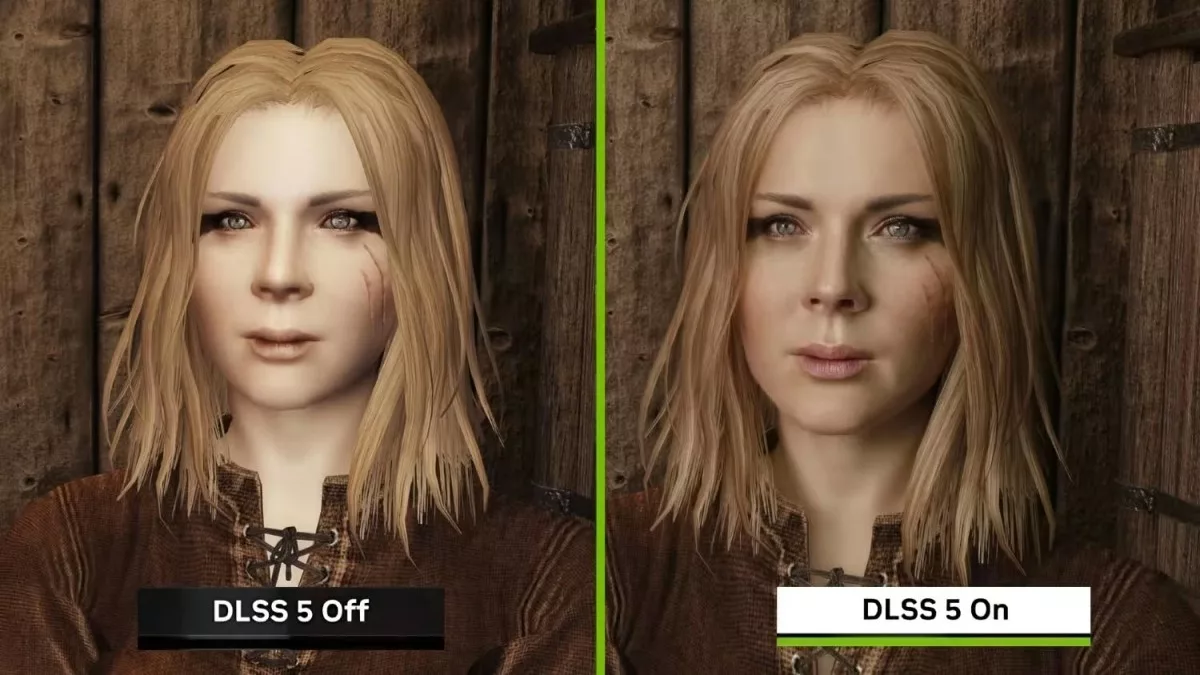
DLSS 5 Autopilot 2.0.7 was released on September 28, 2026, with new tools to diagnose Neural Rendering and Frame Generation installed by the application. The update also expands proxy options for the experimental path dlssg_for_sm86, adds an OptiScaler fork, and improves file recovery after updates or verifications performed by game launchers.
The community project automates different routes used to bring DLSS 5 to games that did not originally receive the technology. For this reason, version 2.0.7 focuses a good portion of the changes on discovering if the chain actually worked, rather than just confirming that files were copied to the game folder.

DLSS 5 Autopilot 2.0.7 now reads the bridge log
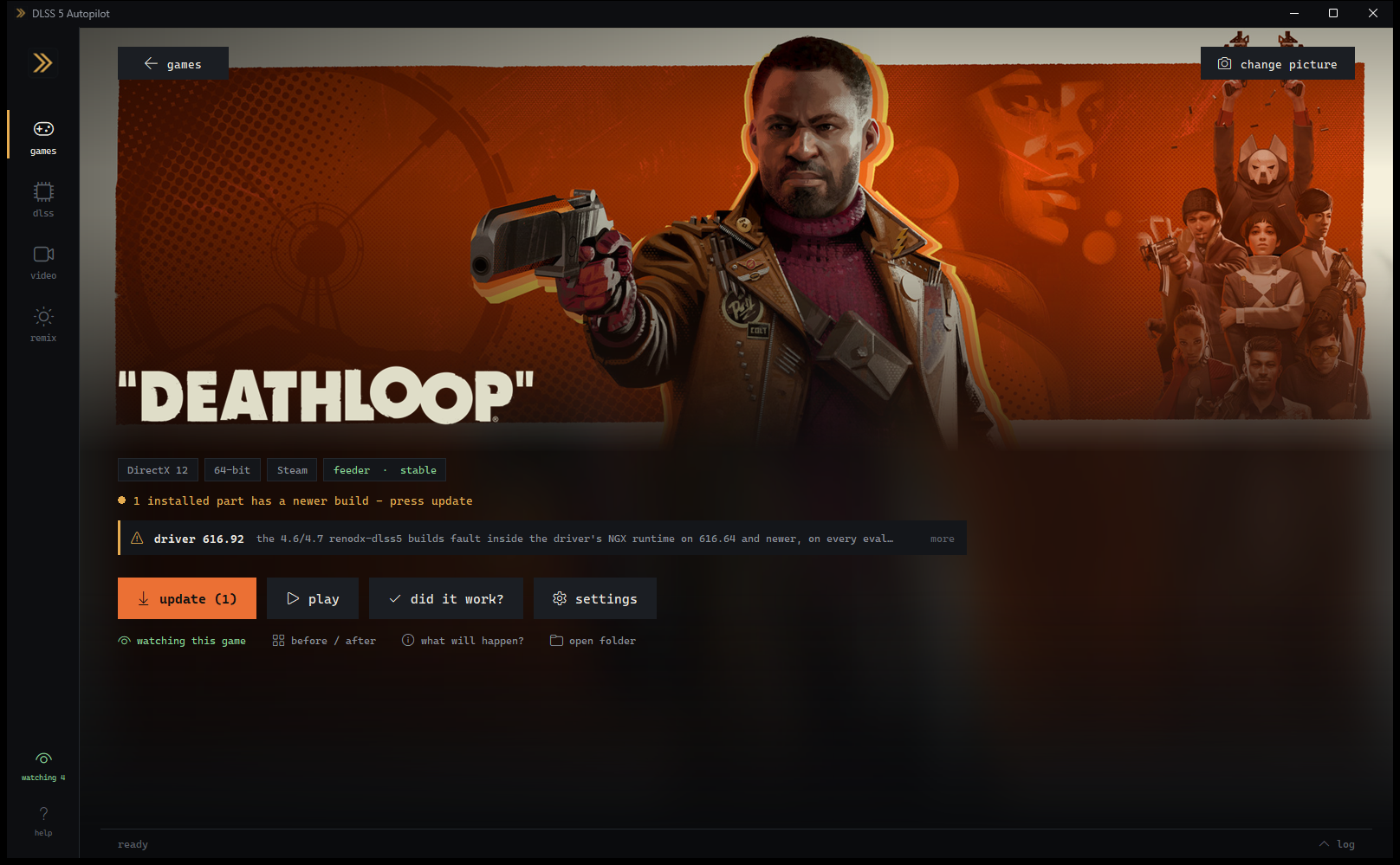
The main novelty appears in the feature did it work?. Now, DLSS 5 Autopilot 2.0.7 reads directly from the log produced by the bridge. Thus, the interface can report how many frames the bridge delivered and the rate recorded during execution.
In addition, when the bridge shuts down, the program now shows the reason, the exception code, and the involved module. The last lines of the file dlss5-bridge.log are also included in the report generated by the option report a bug. Therefore, the diagnostic becomes more useful for distinguishing an apparently correct installation from a route that failed during execution.
This detail matters because community Neural Rendering methods combine different components. Depending on the game, Autopilot can select routes based on OptiScaler, RenoDX, feeder or bridge. Therefore, the presence of the DLLs alone does not prove that neural processing has reached the frames.
Experimental Frame Generation gains more proxy names
Version 2.0.7 also expands the experimental use of dlssg_for_sm86. Now, a proxy present in the folder alternatives can keep names like winmm.dll, dxgi.dll, d3d12.dll or dbghelp.dll. This helps in games that do not load the proxy when it uses the name version.dll.
According to the official notes, the file dlssg_sm86.ini must accompany the proxy before selection. The developer himself marks this path as experimental. Therefore, the change does not represent official NVIDIA support for Multi Frame Generation on older architectures.
Autopilot adds OptiScaler fork and improves updates
Another change adds Janblade's fork to the OptiScaler build option. Autopilot installs this fork in the same position before the upscaler used by wilsjo2's fork and searches for the latest release even when GitHub classifies it as a pre-release. However, the version 2.0.7 release notes themselves state that this integration has not yet been tested in a game by the author.
The update flow has also become more resistant to external changes. After a game receives an update or goes through the verify files option, the state update now considers files that Autopilot had recorded and that have disappeared from the folder. The check versions function lists these components, while update can install them again.
There is also an option to forget the Frame Generation files kept by the tool. Thus, Autopilot removes its copy from the chosen set and also stops removing it from game folders on the next installation or uninstallation.
DLSS 5 Autopilot 2.0.7 fixes installation failures
The update includes several integrity fixes. If the initial installation stops because the game keeps a file open, for example, the program now rolls back that attempt. The same principle was already used when a download failed.
In addition, when the disk is full and the installation log cannot be saved, Autopilot reports which files need to be removed and which game backups must recover their original name. A reverted initial installation now also displays the cause of the failure, instead of incorrectly appearing as installed.
The version also fixes the 64-bit helper log association in long 32-bit game sessions. Another adjustment treats a shared route where the report encounters the as a failure. d3d9.dll of ReShade ahead of DXVK.
Route names in shared results have also been aligned with the list used by the tool: standalone-dlssnr, renodx-dlss and neural-upstream. Finally, the step counter for an OptiScaler installation with Frame Generation files no longer incorrectly shows "4/3".
Update reinforces focus on automation and diagnostics
DLSS 5 Autopilot 2.0.7 does not introduce a new Neural Rendering model. Instead, it improves the layer that selects, installs, verifies, and removes the community components used to assemble these routes. This distinction is important: the Autopilot does not turn experimental support into official support.
The landscape continues to be composed of independent tools. The DLSS5-Feeder 1.17.0-beta.3, for example, recently fixed incompatibilities with NVIDIA drivers, while other projects explore different paths to inject or transport the data required by Neural Rendering.
At the same time, experiments with Radeon follow a different line. The DLSS-NR-on-AMD 0.4.1 had already shown how community implementations can rapidly alter performance and compatibility. Thus, Autopilot's ability to record which route it actually executed becomes especially useful in an ecosystem that changes almost daily.
Sources: DLSS5-Autopilot 2.0.7 — official release on GitHub | official repository of DLSS5-Autopilot.


Pingback: Gears E-Day DLSS 5 cai para 17 FPS na RTX 5090