The AMDNR 0.3.5.5R2, a revision released on October 12, 2026 by developer 3zwr1, fixes situations where Neural Rendering would stop working without an actual GPU failure. AMDNR Radeon is a community fork of OptiScaler for AMD cards. In addition, the package addresses game startup issues and adds optional image and synchronization controls. The developer explains the changes in the official revision R2 changelog.
AMDNR Radeon is a community implementation based on OptiScaler for Neural Rendering experiments on Radeon cards. However, it is not an officially provided feature by AMD or NVIDIA. In October, Allves Games showcased AMDNR 0.3.5, which expanded the possibilities of applying the effect to titles without native support for DLSS, FSR 2, or XeSS. The author also published a demonstration video associated with the R2 review.
AMDNR Radeon prevents unexpected shutdowns
According to the author, a single slow frame, shader compilation, window switching, or pausing an emulator could disable neural processing for the rest of the session. Now, the program requires an actual error, such as a counted driver reset or a GPU task failure.
GTA V Enhanced, context image for AMDNR 0.3.5. It does not demonstrate the 0.3.5.5R2 fix. Source: Allves Games collection.
In addition, an isolated reading of high VRAM usage could permanently limit the resolution or the number of neural passes. Thus, the revision corrects this behavior. Furthermore, in Vulkan, an initial timeout no longer blocks subsequent use of the lmxxf runtime. If Daniel Blanco's community runtime exhibits a genuine failure, there is a fallback mechanism to lmxxf.
Fixes in Ghost of Tsushima and Anywhere mode
The update resolves, according to the changelog, a startup failure of Ghost of Tsushima caused by the duplicate installation of an FSR 3 hook. In Play Anywhere mode, the creator points out a fix for dark scenes that were about 6.4 times darker than they should be. This number describes the error diagnosed by the developer, not a quality gain measured in independent tests.
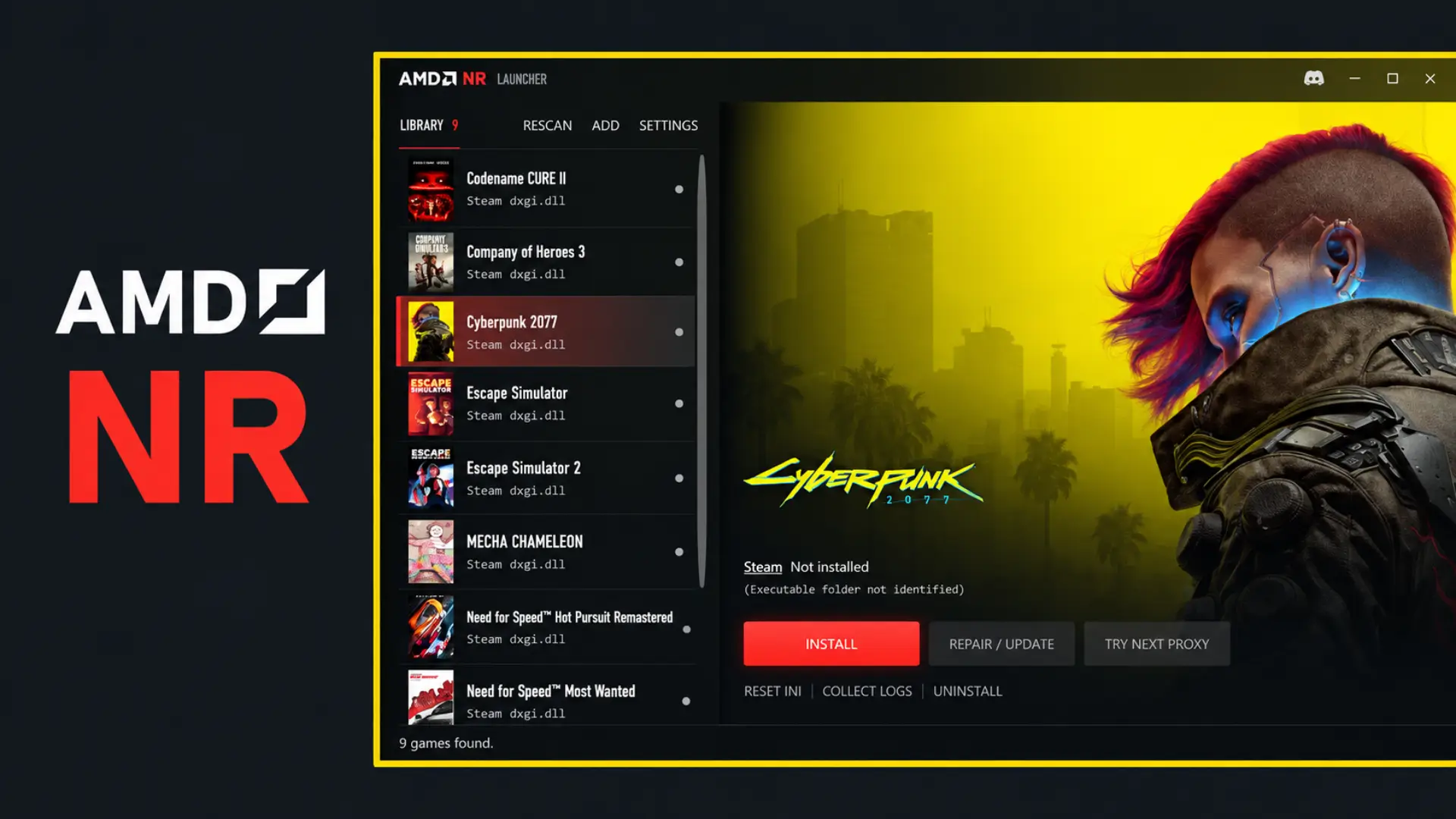
Material from a previous version of AMDNR, used only to illustrate the software. Source: Allves Games collection.
In turn, another adjustment prevents the interface from showing DLSS or Ray Reconstruction as active when, in reality, there was a replacement by FSR. In addition, up to 33 shader passes are no longer compiled during gameplay, which can reduce interruptions related to this step.
AMDNR Radeon gets new optional controls
Among the configurable new features are the fast FSR 4.1.1 shaders for Radeon RX 6000 and RX 7000 and certain handheld devices. According to the author, the benefits tend to be more noticeable at 4K, but there is no guarantee of improvement for all games.
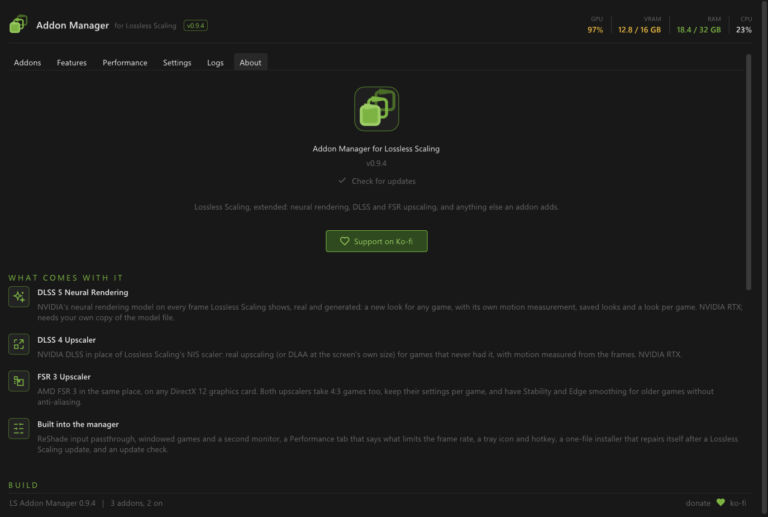
Visual reference to AMDNR on a handheld with an AMD GPU, from a previous version. Source: Allves Games collection.
In addition, there is a frame pacing adjustment independent of frame generation, an image size control for Play Anywhere with the danielblnc runtime, and two new experimental quality options. For safety, the program leaves all these features disabled by default.
How to download and what to check
The official files are on the AMDNR 0.3.5.5R2 page on GitHub. However, the package contains components from different runtimes; therefore, check the repository instructions and your Radeon's compatibility before replacing files from previous installations.
The author points out that R2 is a revision of 0.3.5.5, rather than a functionally separate version. Therefore, those already following the 0.3.5 family should consider this update for the identified fixes. In addition, the reported results remain subject to different drivers, games, and configurations; they do not represent an independent benchmark.
Sources: AMDNR 0.3.5.5R2 — official release; AMDNR 0.3.5.5 — base release.