The Borderless Gaming DLSS 5 opened a new route to experience Neural Rendering in PC games without replacing DLLs or modifying each title's files. Developer Andrew Sampson released the DLSS5-NR community effect on September 29, 2026, which runs directly through the application's BGFX graphics pipeline and can be installed separately via GitHub.
The approach is different from community tools that inject or replace libraries within the game directory. According to the developer, the model was quantized and reworked to remove bottlenecks and work on a wider variety of GPUs. Sampson even cites a GeForce RTX 3090, for which he estimates a target close to 30 FPS depending on the game and settings.
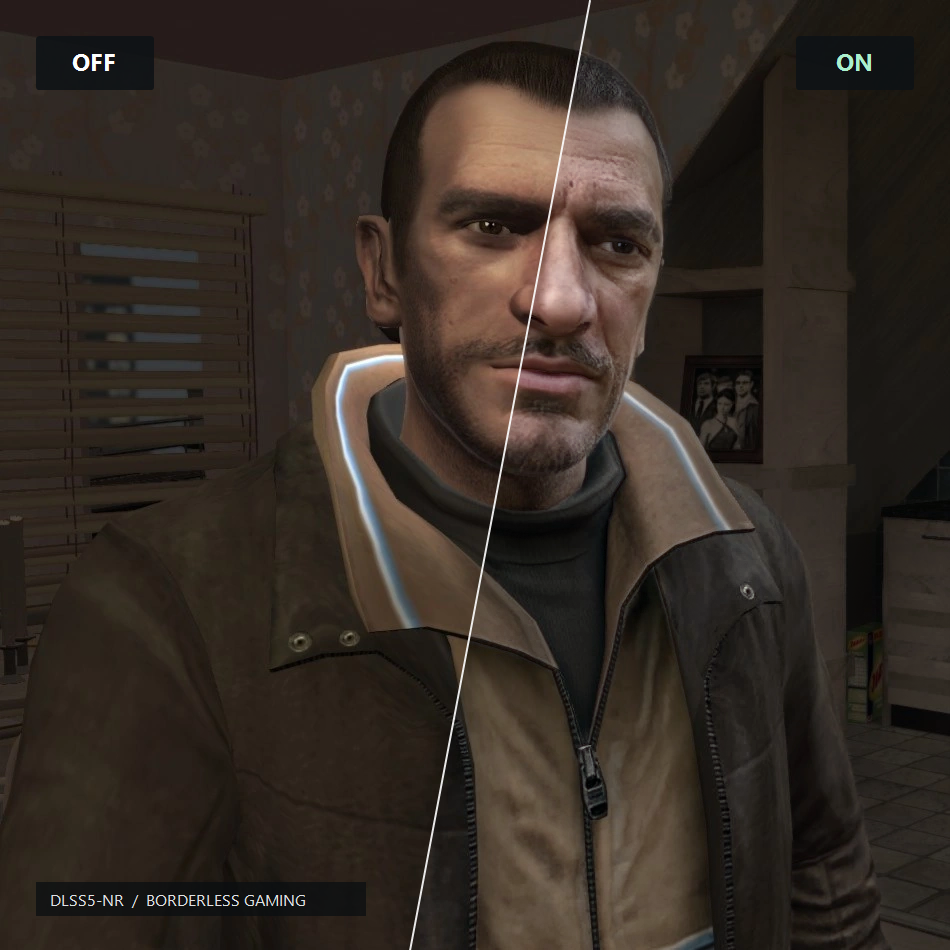
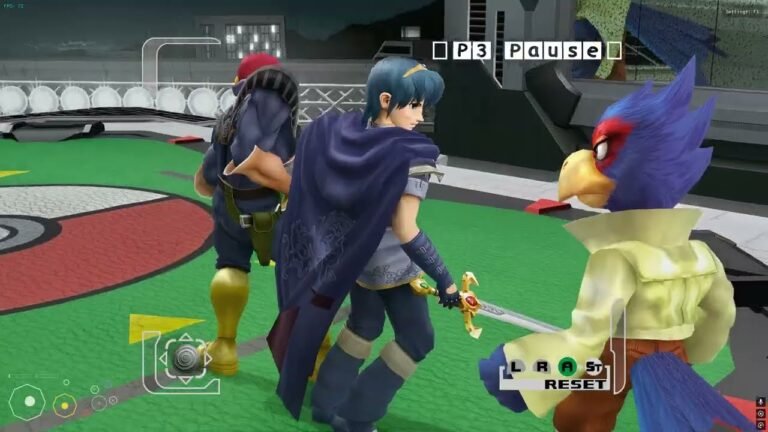
Official demonstration of the DLSS5-NR effect in GTA IV published in the project repository. Image: Andrew Sampson.
Borderless Gaming DLSS 5 does not depend on NVIDIA's DLLs
The main technical difference lies in the path used to execute the effect. Instead of routing operations to NVIDIA's Neural Rendering DLLs inside the game, Borderless Gaming runs the model directly through BGFX.
This means the game does not need to receive a custom integration. Furthermore, the user does not need to copy a DLL into the title's folder, replace existing libraries, or search for a mod developed specifically for that executable.
The repository itself summarizes the process in three steps. First, the user opens the Borderless Gaming effects editor or the Holo presets screen. Then, they choose the installation via GitHub and provide the repository andrewmd5/bgfx-dlss5-nr. Finally, just select the DLSS5-NR preset and activate the effects. On Windows, the documentation indicates the mode Scaling (GPU).
The result remains a community implementation. Therefore, it does not turn a game into a title with official DLSS 5 integration, nor does it necessarily reproduce the 3D-Guided Neural Rendering pipeline that a developer integrates directly into the engine.
Model has been reworked to target older GPUs
Sampson states that he dedicated a significant amount of time to model quantization, reorganizing its execution, and removing internal bottlenecks in the neural network. The goal was to expand the hardware capable of running the effect, rather than restricting it to newer GeForce GPUs.
As an example, the developer states that a GeForce RTX 3090 can target approximately 30 FPS. However, this value does not represent a standardized benchmark or a performance guarantee. The result depends on the game, the processing resolution, and the other effect settings.
It is also important to interpret the number correctly. The mentioned 30 FPS represents an approximate target while the neural effect is running. They do not mean a gain of 30 FPS and do not refer to frame generation.
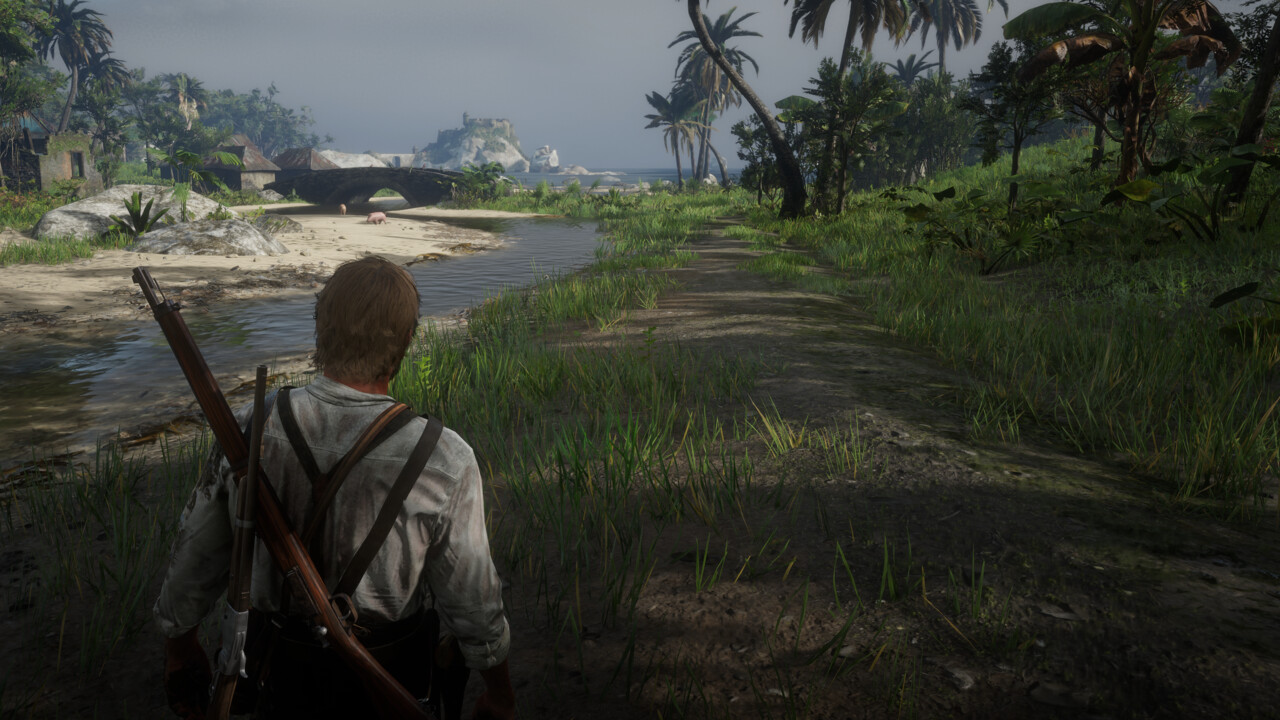
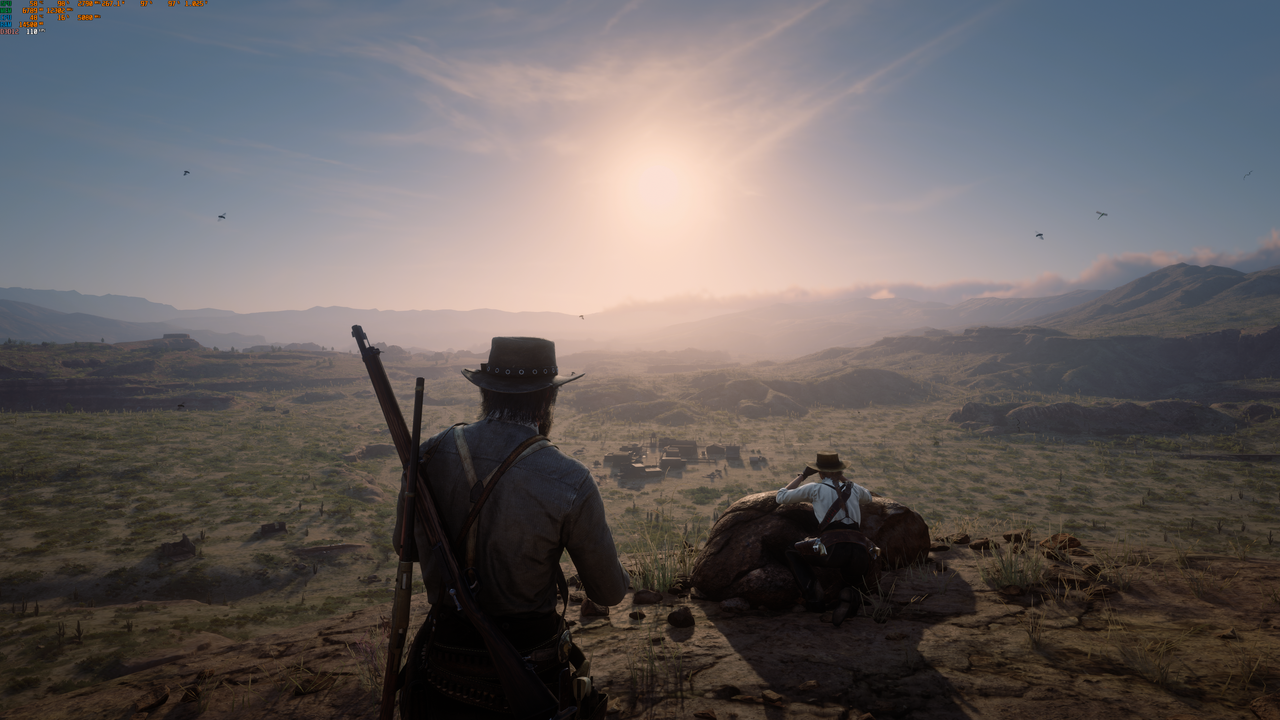
Red Dead Redemption 2 appears among the project's demonstrations; this scene illustrates the game and does not show the DLSS5-NR effect. Image: ComputerBase.
User can adjust lighting, structure, and resolution
The effect does not work with just an on and off button. Borderless Gaming offers controls for intensity, lighting, structure, style, and resolution used in neural processing.
This makes it possible to reduce the working resolution to ease the network cost or increase processing in pursuit of a stronger visual transformation. As happens in other community Neural Rendering experiments, however, these choices directly alter the relationship between quality and performance.
The project also provides demo presets. The official images of GTA IV, Red Dead Redemption 2 and Sora were produced with parameters that include intensity 1, Local Tone 1.5, Structure 2, Natural style and processing resolution 950.
These images serve as a demonstration of the effect developed for BGFX. They should not be interpreted as comparisons of an official NVIDIA implementation within these games.
Effect is downloaded separately via GitHub
Another important point is that DLSS5-NR is not automatically installed on the computer when updating Borderless Gaming. The effect is a separate download hosted on GitHub.
The developer clarified this distinction after confusion arose regarding how the update works. Thus, those who only use Borderless Gaming without installing the DLSS5-NR repository do not end up running Neural Rendering in the background.
This separation also makes the role of each component clearer. Borderless Gaming provides the effect and scaling infrastructure via BGFX. Meanwhile, the DLSS5-NR repository contains the neural effect that the user chooses to install into this infrastructure.
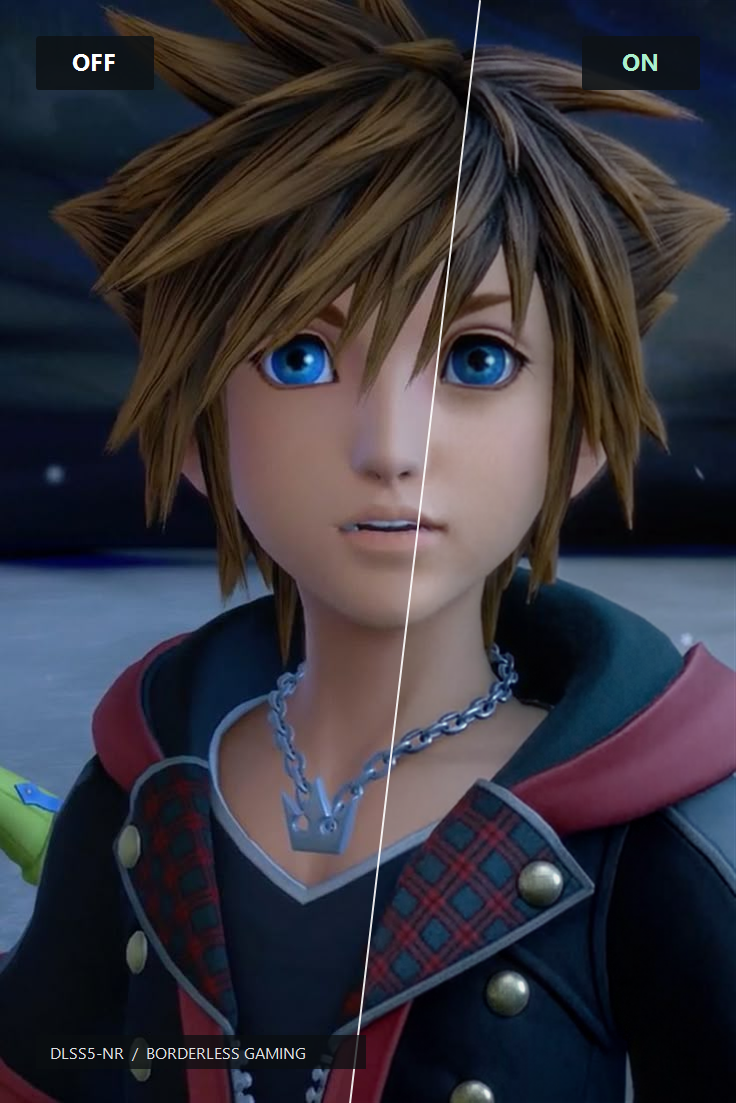
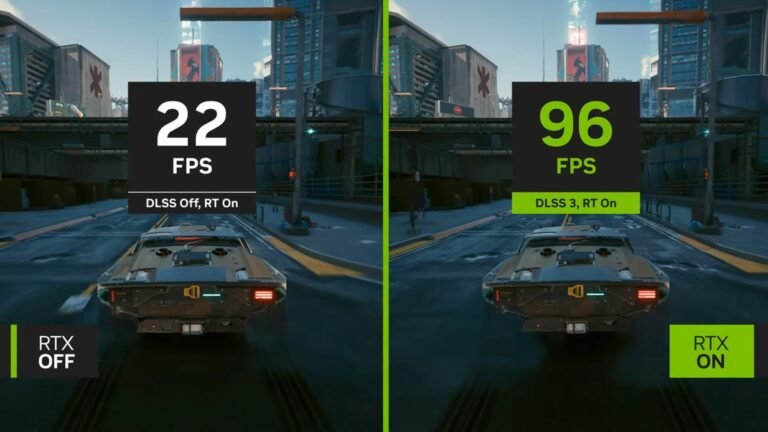
Third demonstration made available in the official repository of the DLSS5-NR effect. Image: Andrew Sampson.
Update also expands the effects system
The Borderless Gaming update brought other changes to the graphics infrastructure. The Windows effects editor has been redesigned to bring together available effects, processing order, and settings into a single interface.
It is now also possible to install effects and presets directly from GitHub repositories. Additionally, the version added DirectX 12 effects that can be combined with other effects within the same preset.
The changelog also mentions a reduction in unnecessary rendering work and performance improvements for scaling at higher resolutions. BGFG also received optimizations, especially for the Steam Deck and other compatible Vulkan devices.
On the other hand, Frame Generation and DLSS5-NR are distinct features. Therefore, the existence of frame generation in Borderless Gaming does not mean that the neural effect depends on it.
New route is different from DLL and RenoDX experiments
The community has already found several ways to bring Neural Rendering to games without native support. Some use RenoDX, OptiScaler, feeders, wrappers, and Neural Rendering libraries loaded within the game's pipeline.
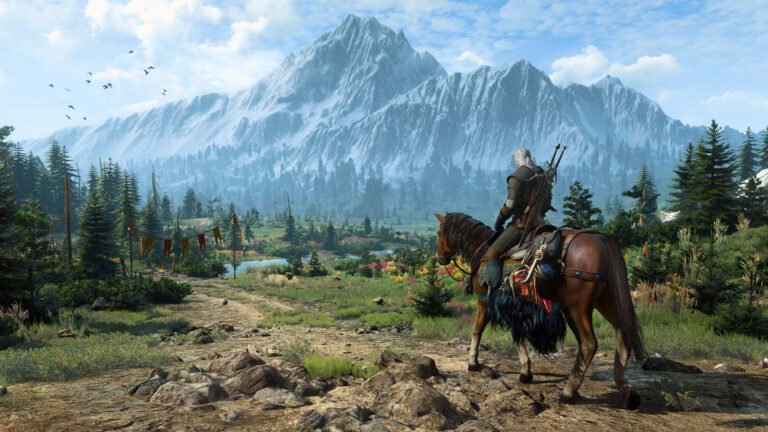
The Allves Games showed recently how two experimental DLSS 5 passes dropped an RTX 5090 from 80 to 36 FPS in The Witcher 3. In this case, the test used RenoDX and DLSSNP libraries in a different pipeline.
We also covered the official DLSS fix in Patch 5.00b of The Witcher 3. This update from CD Projekt RED addresses the game's existing official support and is not directly related to the external effect of Borderless Gaming.
The new method, in turn, processes the output via BGFX. This difference explains why it manages to work without individually modifying each game's files.
RTX 3090 shows the main promise of the new path
The most interesting point of DLSS5-NR for Borderless Gaming is not just simplifying installation. The quantization and optimizations made to the model also aim to make processing viable outside of the hardware officially associated with DLSS 5.
The RTX 3090 is a relevant example because it belongs to the Ampere generation. The estimate of approximately 30 FPS shows that the model manages to run on this hardware under the conditions considered by the developer.
This, however, does not equate to official NVIDIA support. Nor does it demonstrate that all games will reach 30 FPS or that slower GPUs will have usable performance.
Furthermore, the changelog itself classifies part of the shader technology used in this implementation as experimental. Sampson expects additional gains when drivers offer full support for Shader Model 6.10.
Borderless Gaming creates an external Neural Rendering alternative
The release significantly expands the available routes for community Neural Rendering experiments. Instead of individually preparing each game's folder, the user can install a single effect in Borderless Gaming and apply it through the tool's scaling system.
The ease, however, does not eliminate technical limitations. Neural processing still carries a GPU cost, and the RTX 3090 mentioned by the developer serves only as a rough reference. In addition, the external output via BGFX does not have the same access to internal data as an official 3D-Guided integration within the engine.
The novelty is, therefore, a different community implementation, and not an official DLSS 5 unlock on any card or game. Even so, by dispensing with DLL replacement and specific mods, Borderless Gaming's DLSS5-NR greatly reduces the barrier to trying this type of processing.
Sources: Andrew Sampson — DLSS5-NR for Borderless Gaming | Borderless Gaming — September 29 update notes | VideoCardz — technical coverage.