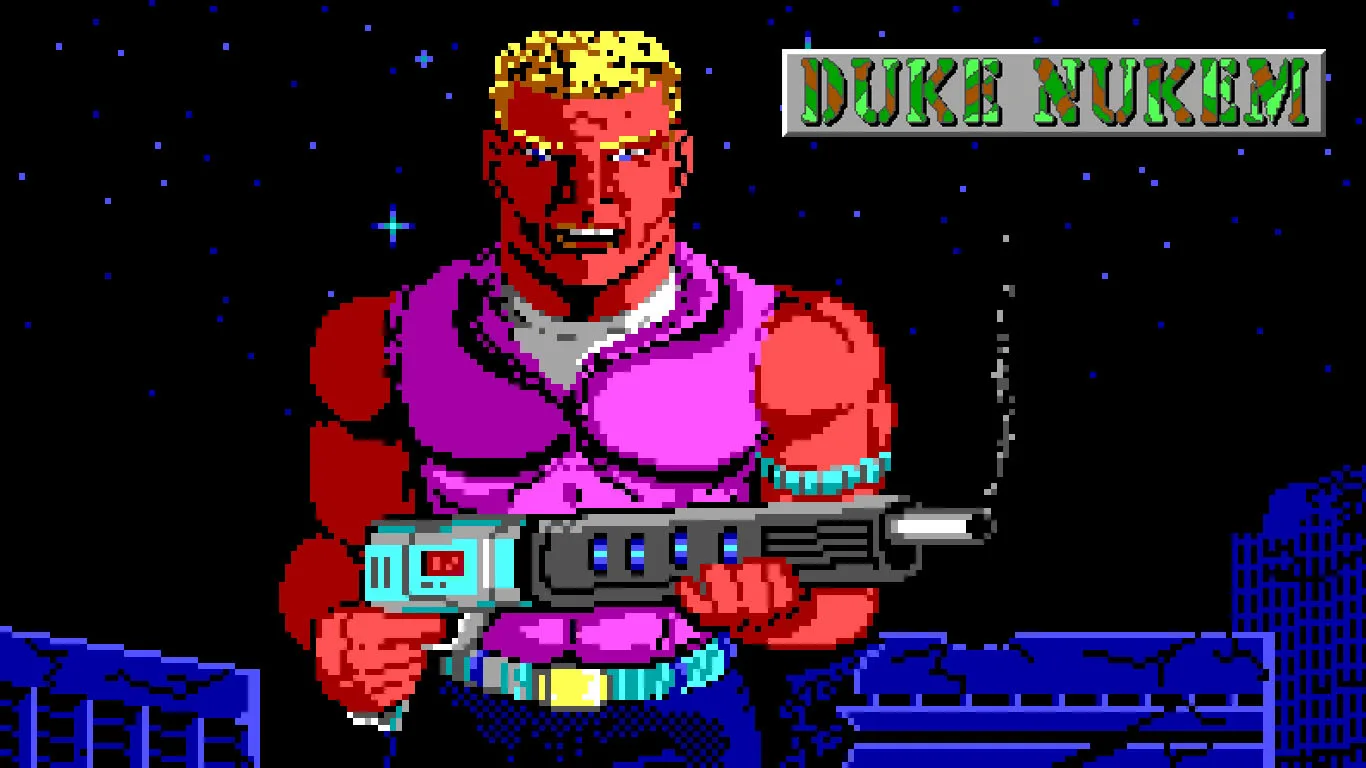
The 1991's Duke Nukem with DLSS 5 appeared in a demonstration published on October 5, 2026. The MS-DOS classic runs via DOSBox with dgVoodoo on DirectX 11, while ReShade and RenoDX apply Neural Rendering externally in Multipass mode. Thus, this is not native support added to the original game.
The test was conducted by Valery Kryzhanovsky and draws attention for the contrast between the 16-color art of the Apogee title and modern neural processing. Furthermore, the effect acts upon the 2D frame already produced by the emulator, altering the appearance of shadows, materials, and sprites without modifying the original game geometry.
https://www.youtube.com/watch?v=MH5TVAeri00Demonstration of 1991's Duke Nukem with DLSS 5 Neural Rendering in Multipass mode.
In practice, the video helps to show how the processing alters the visual reading of sprites and backgrounds without turning the game into a modern 3D rendering. As the technique acts on the final frame, the effect can also vary significantly depending on the scene and the number of passes chosen.
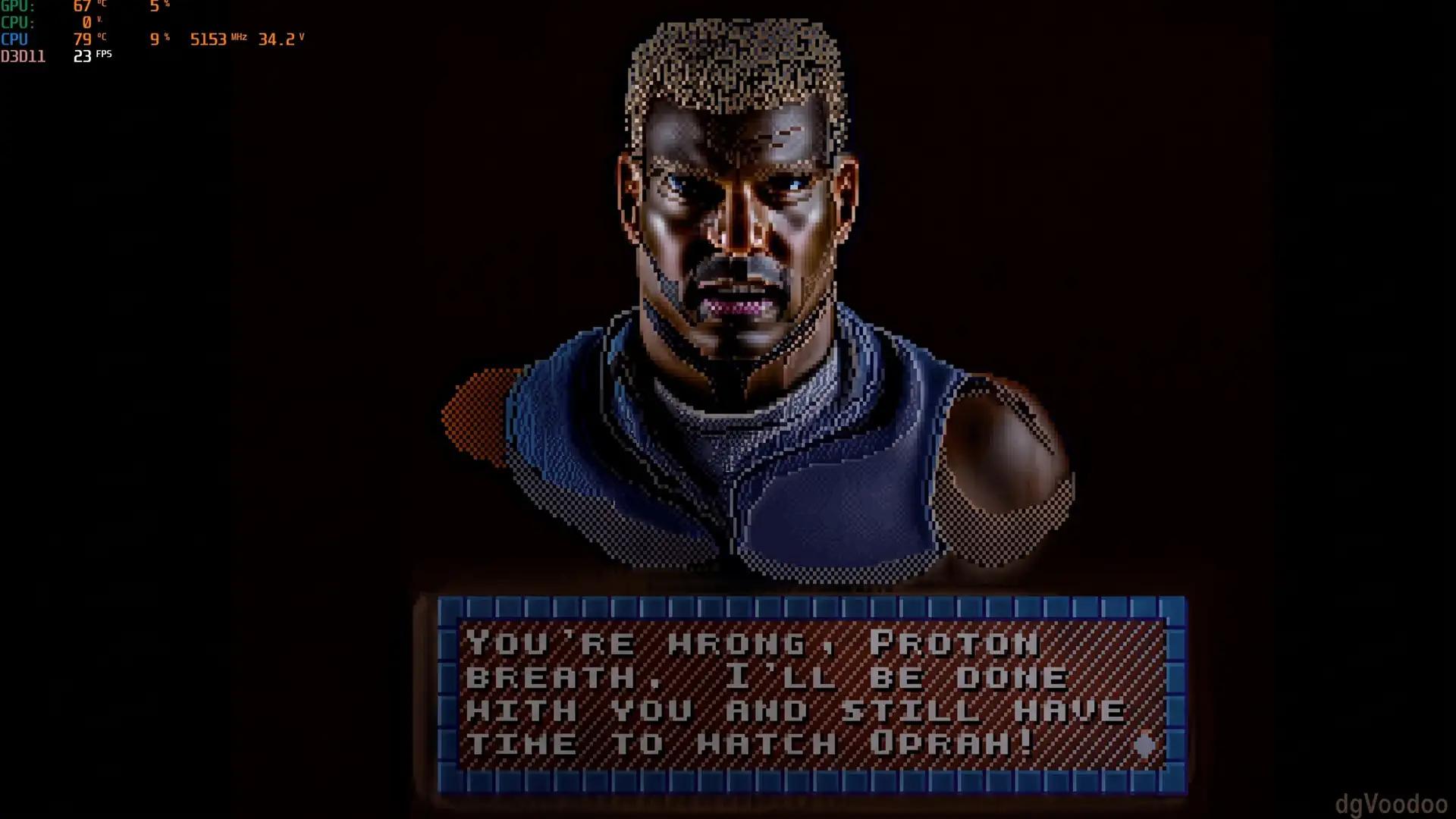
Duke Nukem from 1991 receives external DLSS 5 processing on top of the image produced by DOSBox. Image: GameGPU.
Duke Nukem from 1991 with DLSS 5 uses DOSBox and dgVoodoo
The original game does not offer the data from a modern graphics pipeline required for conventional integration. Therefore, the demonstration uses DOSBox to run the MS-DOS title and dgVoodoo to output via DirectX 11. Afterwards, the external chain intercepts this image to apply the neural processing.
This difference is important because it prevents a misinterpretation of the experiment. In other words, the Duke Nukem code did not get DLSS 5 and the 1991 engine did not start providing motion vectors. Neural Rendering works after the original rendering.
DLSS 5 Multipass reconstructs details over 2D sprites
In the video, the neural model modifies surfaces, apparent lighting, and character details. At the same time, interface elements and text can also receive changes, since the processing starts from the final frame instead of semantically knowing each element in the scene.
The Multipass mode allows applying the processing more than once over the result. However, more passes also increase the computational cost and can intensify visual changes. Allves Games has already shown in how to run DLSS 5 up to 10x using Multipass that this method prioritizes visual experimentation, not FPS gains.
Duke Nukem with DLSS 5 is an external demonstration, not official support
The result shows how an external layer can bring Neural Rendering to a game that predates modern graphics APIs. However, this does not mean that NVIDIA, Apogee, or those responsible for the game have implemented official support for the feature.
The approach also differs from techniques that rely on direct engine integration. For example, Allves Games's guide on DLSS 5 in PS1, PS2 and PS3 games explains how external layers can serve as a bridge for content that does not originally provide the data expected by Neural Rendering.
What the demonstration truly proves
The main value of the test lies in the breadth of the method. Indeed, a 1991 2D platformer can receive real-time neural transformations after its output passes through a compatible graphics chain.

Gameplay of the original 1991 Duke Nukem running via DOSBox, used here as visual context of the classic. Image: Audio Visual Cortex.
On the other hand, the demonstration does not turn the title into a modern game nor does it guarantee fidelity to the original visuals. So, the result should be seen as a neural post-processing experiment applied to an extremely simple image, with benefits and artifacts that depend on the scene and configuration.
Sources: GameGPU — 1991 Duke Nukem with DLSS 5.