Gears of War: E-Day with DLSS 5 appeared in an external test published on October 2, 2026, in which Neural Rendering was applied via NeuralScreen. At native 4K and maximum quality, one scene dropped from 33 to 17 FPS and another went from 30 to 19 FPS on a GeForce RTX 5090. The result does not represent native game support for DLSS 5.
The test draws attention precisely because of the high cost of neural processing. Furthermore, the GPU remained at 98% to 99% utilization in the recorded scenarios. Therefore, it is best to treat the numbers as a specific experiment, rather than a prediction of the performance of a future official integration.
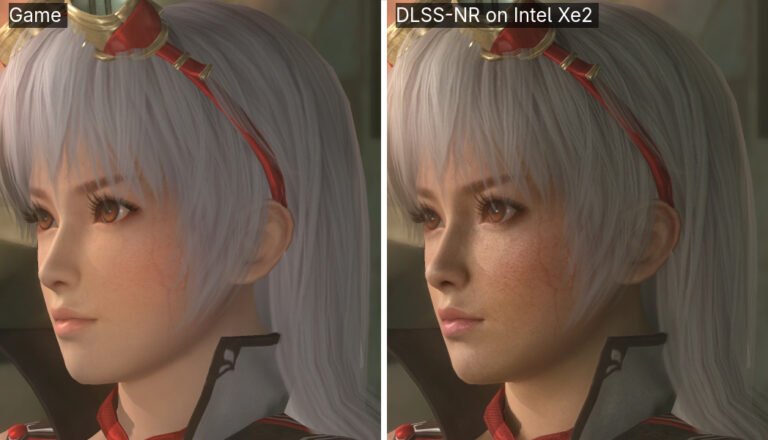
Demonstration of NeuralScreen, the tool used to apply neural processing externally.
Gears of War: E-Day with DLSS 5 was an external test
According to the technical test, Easy Anti-Cheat prevented the direct use of ReShade and OptiScaler. Therefore, NeuralScreen ran the processing externally. As a result, the chain used in the experiment differs from an implementation integrated by the game developer.
This distinction is important because a native integration can provide the neural model with different information and conditions. Meanwhile, the external method needs to capture and process the image through another route, which can add its own costs.
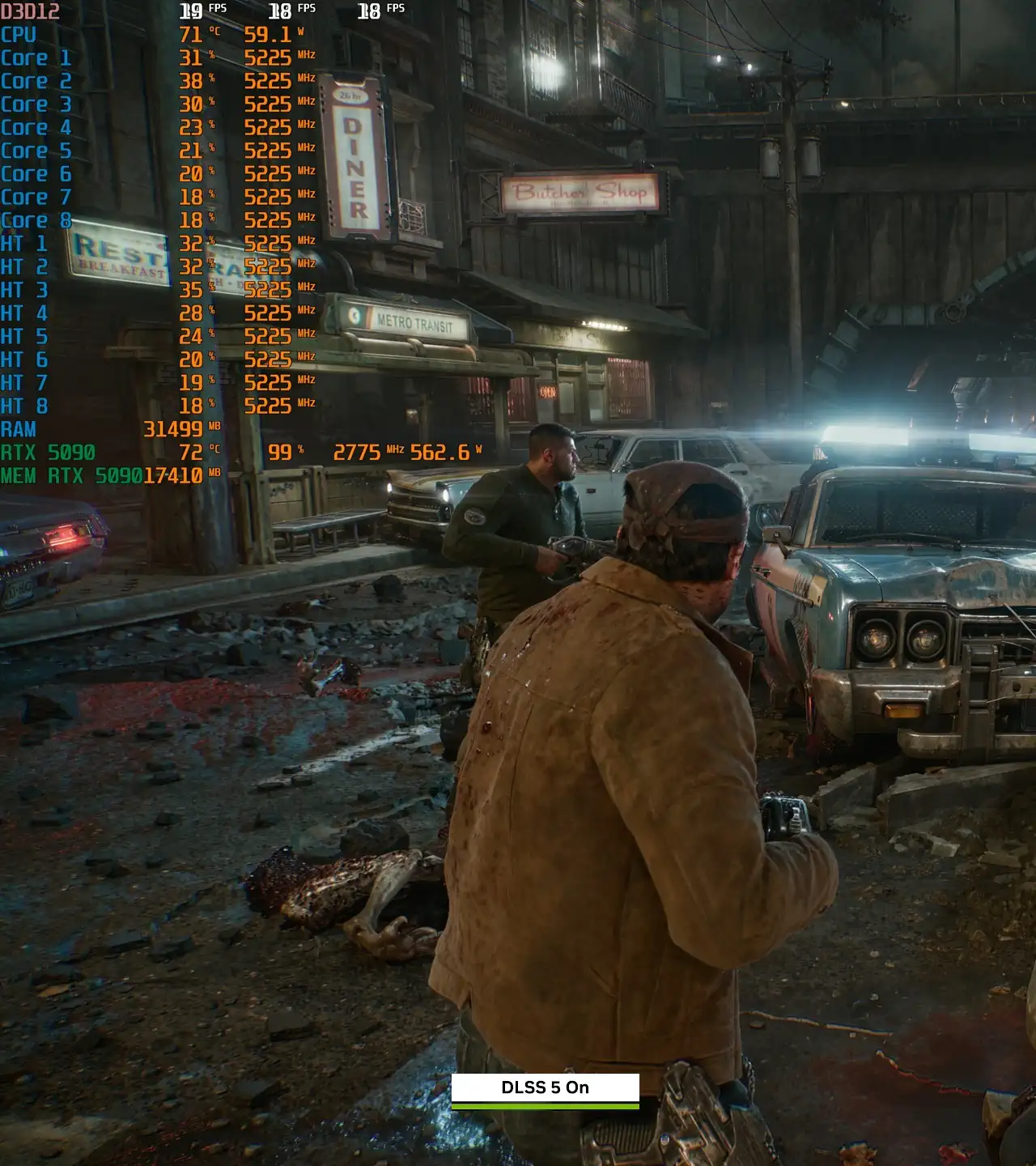
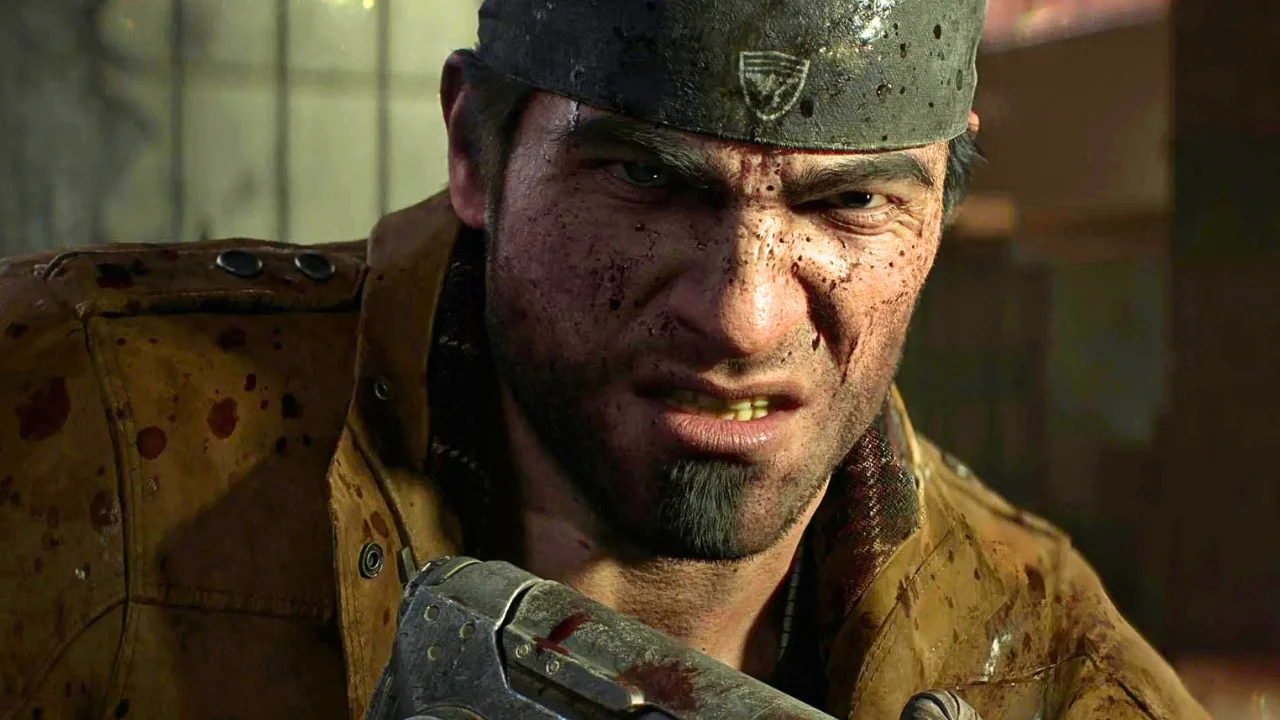
First scene of the Gears of War: E-Day test with external DLSS 5 enabled via NeuralScreen. Image: GameGPU.
RTX 5090 came close to maximum utilization
In the first recorded scene, the game operated at 33 FPS before the application of Neural Rendering and dropped to 17 FPS afterward. In another situation, the rate went from 30 to 19 FPS. At the same time, the usage of the RTX 5090 hovered between 98% and 99%.
Thus, the test shows that Neural Rendering can still impose a heavy cost when applied in this manner. However, two measurement points do not make a complete benchmark. Configuration, scene, neural resolution, and the external chain itself can significantly alter the result.
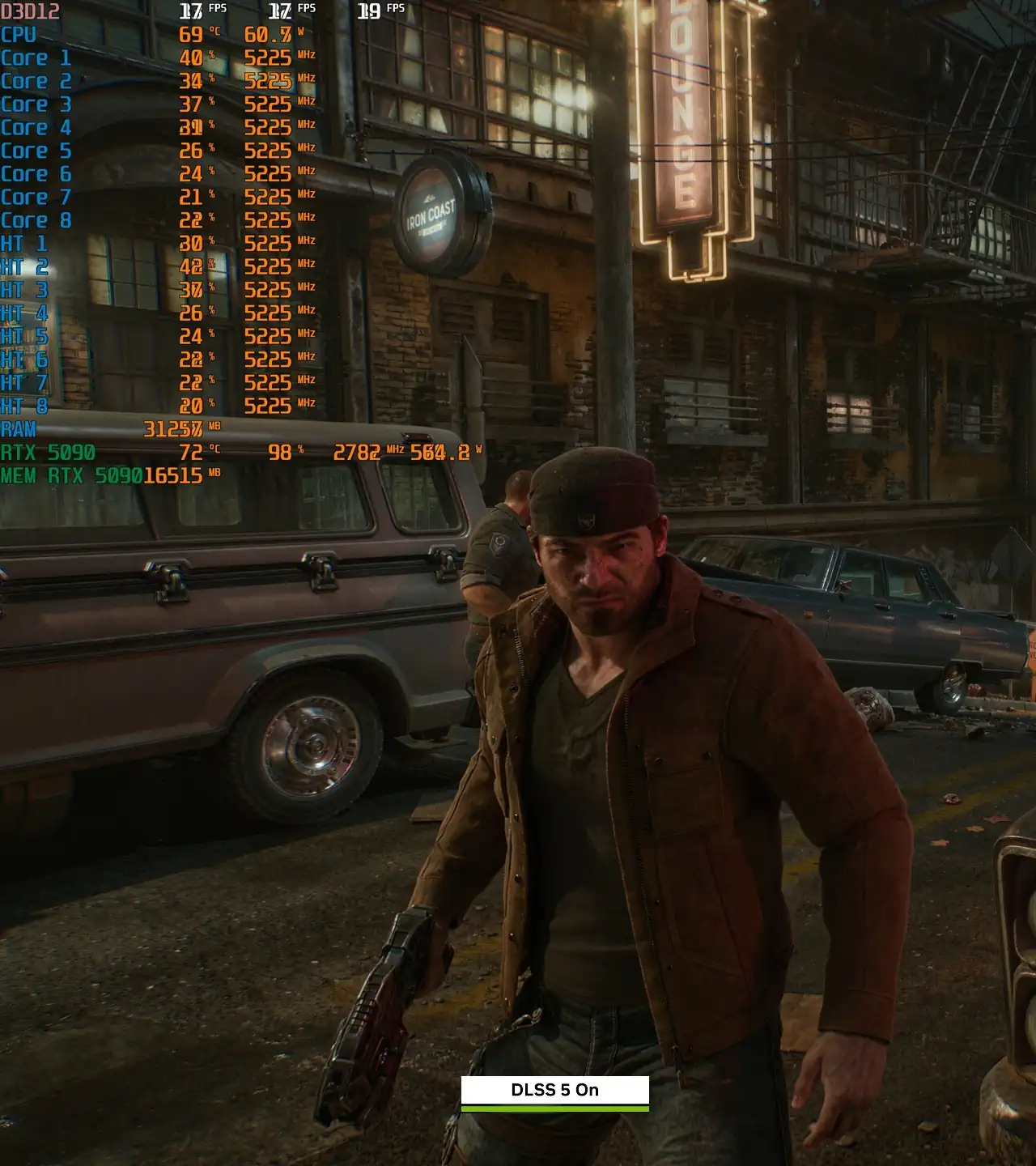
Second scene recorded by GameGPU with external DLSS 5 enabled at 4K on the RTX 5090. Image: GameGPU.
The result does not define the performance of DLSS 5 in games
The experiment also does not demonstrate that DLSS 5 Neural Rendering will necessarily halve performance in official integrations. It only documents the behavior observed in Gears of War: E-Day with NeuralScreen, native 4K, maximum quality, and an RTX 5090.
The Allves Games already includes other experimental implementations of DLSS 5 in games without native support. These projects use different routes and, therefore, the results of one tool should not be automatically extrapolated to another.
Finally, the test reinforces an essential difference: making the neural network work is only part of the problem. For practical use, the processing cost, integration with the game pipeline, and final quality also require joint evaluation by developers and analysts.
Sources: GameGPU technical test; NeuralScreen demonstration.