
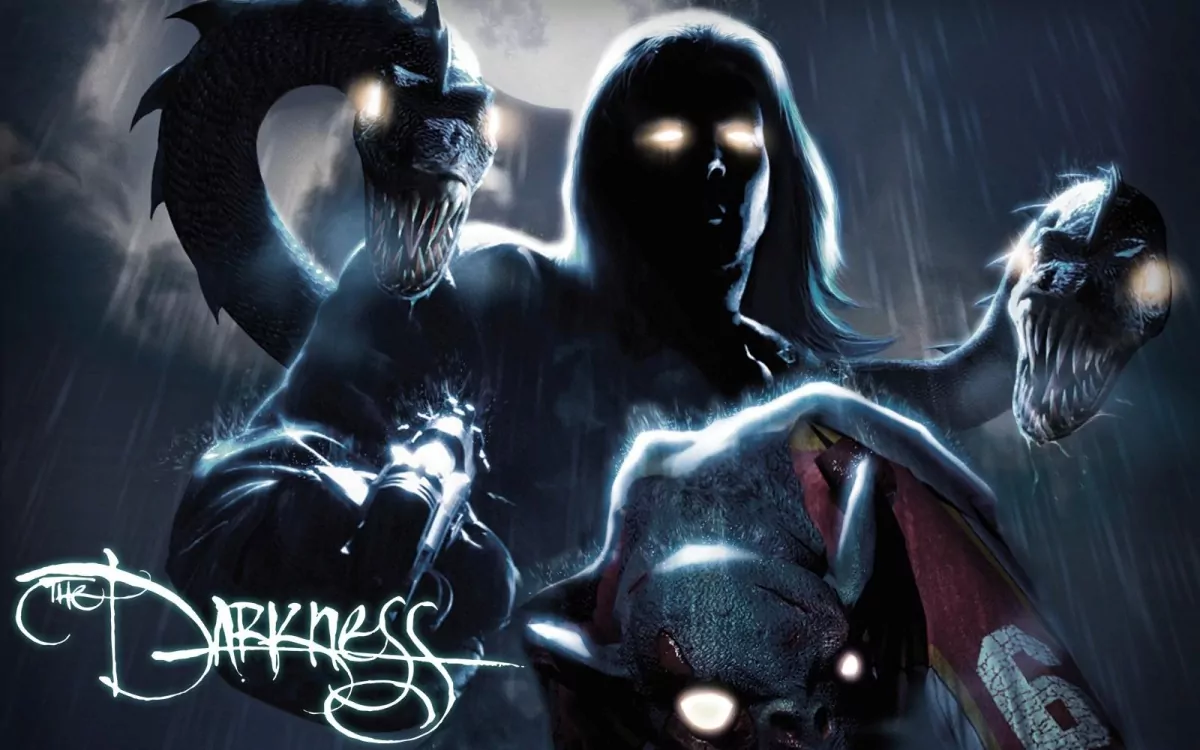
Estacado The Darkness received its first public release on September 29, 2026, as a new unofficial native port of the Xbox 360 classic for Windows. The project uses static recompilation to ahead-of-time translate the game's PowerPC code into C++ and adds Direct3D 12, framerates above 30 FPS, higher resolutions, native mouse, and experimental ultrawide support.
The release stands out because it does not replace the The Darkness Recomp 0.1.2 already accompanied by Allves Games. Estacado is another project, developed separately and with a different architecture to bring the same game to PC.
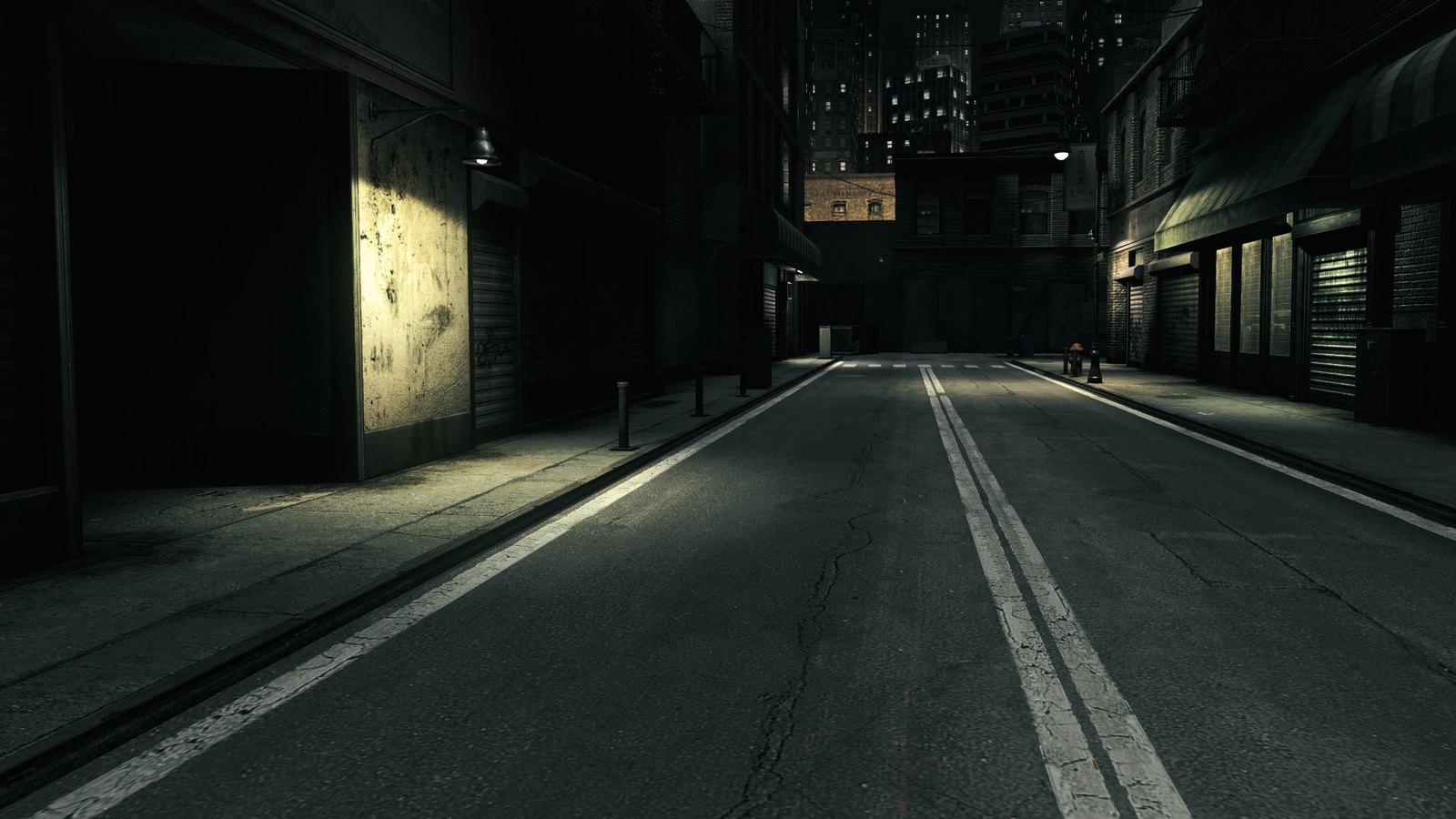
Estacado running a Chinatown area at 2x the original internal resolution. Image: invinceble55-wq/Estacado.
Estacado The Darkness uses XenonRecomp and ReXGlue
The project is based on the Xbox 360 version's executable. XenonRecomp ahead-of-time translates the PowerPC code to C++, while ReXGlue provides part of the infrastructure used by the port. Therefore, there is no Xbox 360 CPU JIT or interpretation during gameplay.
However, the graphical distinction deserves attention. The documentation explains that the Direct3D 12 layer derives from ReXGlue and Xenia's work. Thus, the main code runs natively recompiled, while the graphics infrastructure still reproduces expected Xenos GPU behaviors.
This approach differs from the already published implementation of The Darkness Recomp, which uses a custom Direct3D 11 renderer. Other recent projects also explore Xbox 360 recompilation; for example, the Ultra Street Fighter IV recompiled for Android created its own Vulkan path.
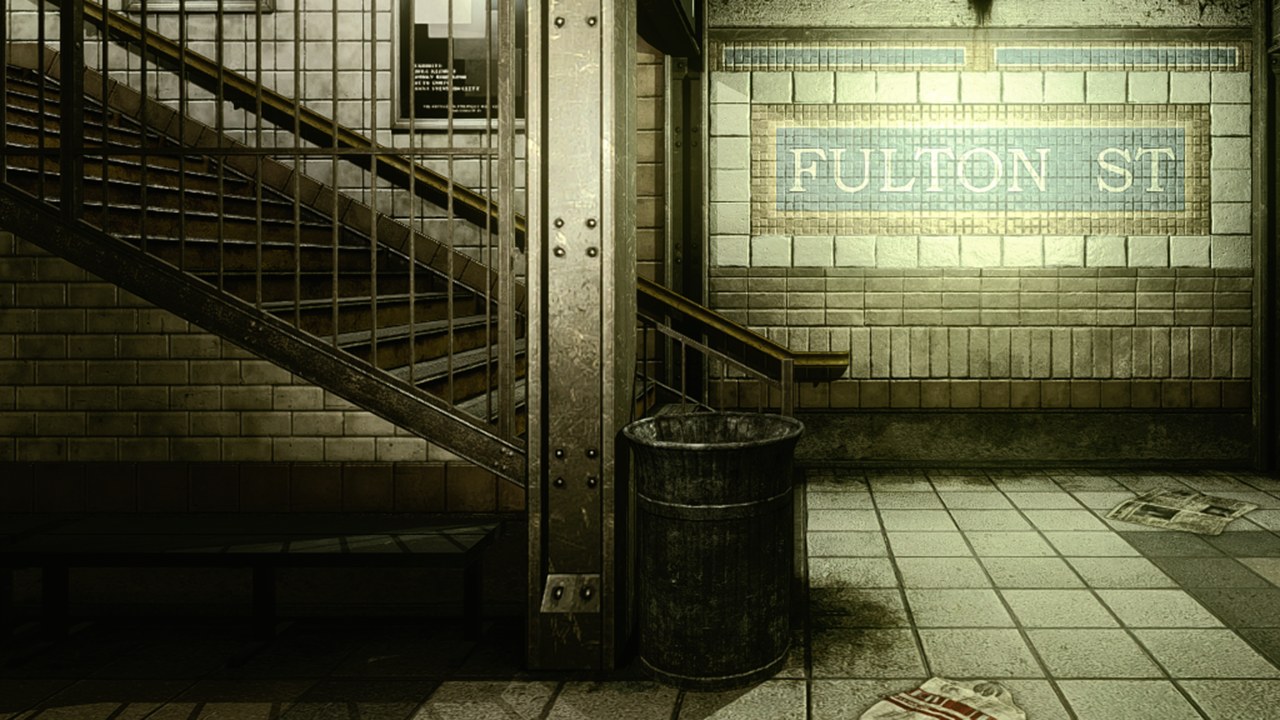
Fulton Street capture produced during testing of the port itself. Image: invinceble55-wq/Estacado.
Estacado The Darkness moves past 30 FPS
Among the main changes, Estacado offers limits of 60, 120, 144 and 240 FPS, in addition to a custom value or unlocked framerate. According to the developer, the world logic continues to operate at 30 Hz to prevent physics, audio and scripted cutscenes from speeding up along with the rendering.
The project also offers internal scaling of 1x, 2x or 3x over the original 1280 × 720. In addition, there is SMAA or FXAA, AMD FSR 1 and CAS for image processing. The user can disable motion blur, change the field of view and load HD texture packs.
Ultrawide is still experimental. The implementation broadens lateral vision on 21:9 and 32:9 screens and also supports 16:10, while keeping menus centered. However, the developer has already documented sizing and subtitle overlapping issues on very wide aspect ratios.
Native mouse and launcher are part of the first build
Estacado also adds native mouse look and remappable keys. The user can keep a controller connected and use the mouse without having to manually switch between input modes.
Settings are available both in the launcher and in an overlay opened by pressing the F1 key. Presets include Enhanced, Performance, Original, and Steam Deck. Even so, the presence of this last preset does not mean proven compatibility with the handheld.
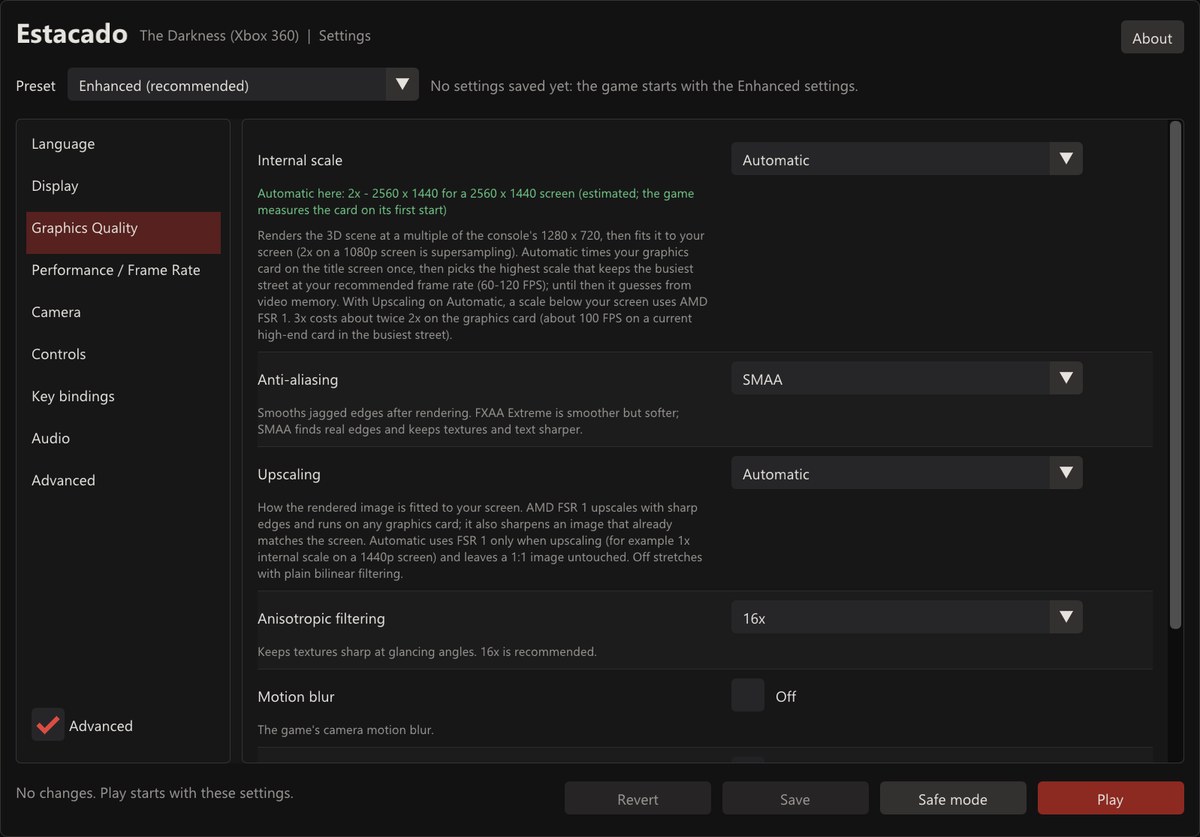
Estacado's launcher allows configuring graphic quality and other port features. Image: invinceble55-wq/Estacado.
First version is still a pre-release
Despite the set of features, the current version remains experimental. The developer states that they tested the project on only one PC with Windows 11 and an NVIDIA RTX GPU. The campaign was played from the beginning until the orphanage explosion, but later areas have not yet undergone a complete playthrough.
Additionally, multiplayer does not work. The menus appear, but Xbox LIVE and System Link remain unavailable. The project may also experience stuttering during the first few minutes while compiling shaders for the GPU; subsequent sessions reuse this cache.
The first version requires 64-bit Windows 10 or 11, an AVX2-capable processor, and a Direct3D 12 GPU. The user must provide the data from their own compatible copy of The Darkness for Xbox 360. The repository and release do not distribute the commercial game files.
Android, iOS, and other platforms do not yet have a build
As of this check, Estacado does not offer an Android APK, iPhone or iPad IPA, App Store, TestFlight, or mobile ARM64 build. Linux and macOS also do not appear as natively supported platforms by the first release.
The Steam Deck only has a single configuration preset and still lacks official testing. Therefore, any eventual execution via Proton should not be confused with a native Linux version. The same caution applies to any future testing on ARM devices.
The arrival of Estacado creates an unusual situation: The Darkness now features two independent recompilation efforts for PC. While the previous project has already received specific fixes in the Direct3D 11 renderer, Estacado debuts with ReXGlue, Direct3D 12 and an approach focused on modern PC features. The next major step will be to expand hardware testing and validate the full campaign.
Sources: Estacado — official repository; Estacado v0.9.0 — first release; original developer announcement on r/emulation.

Pingback: Pinyon Shift 0.3.1 leva Forza Horizon a 4K e 120 FPS