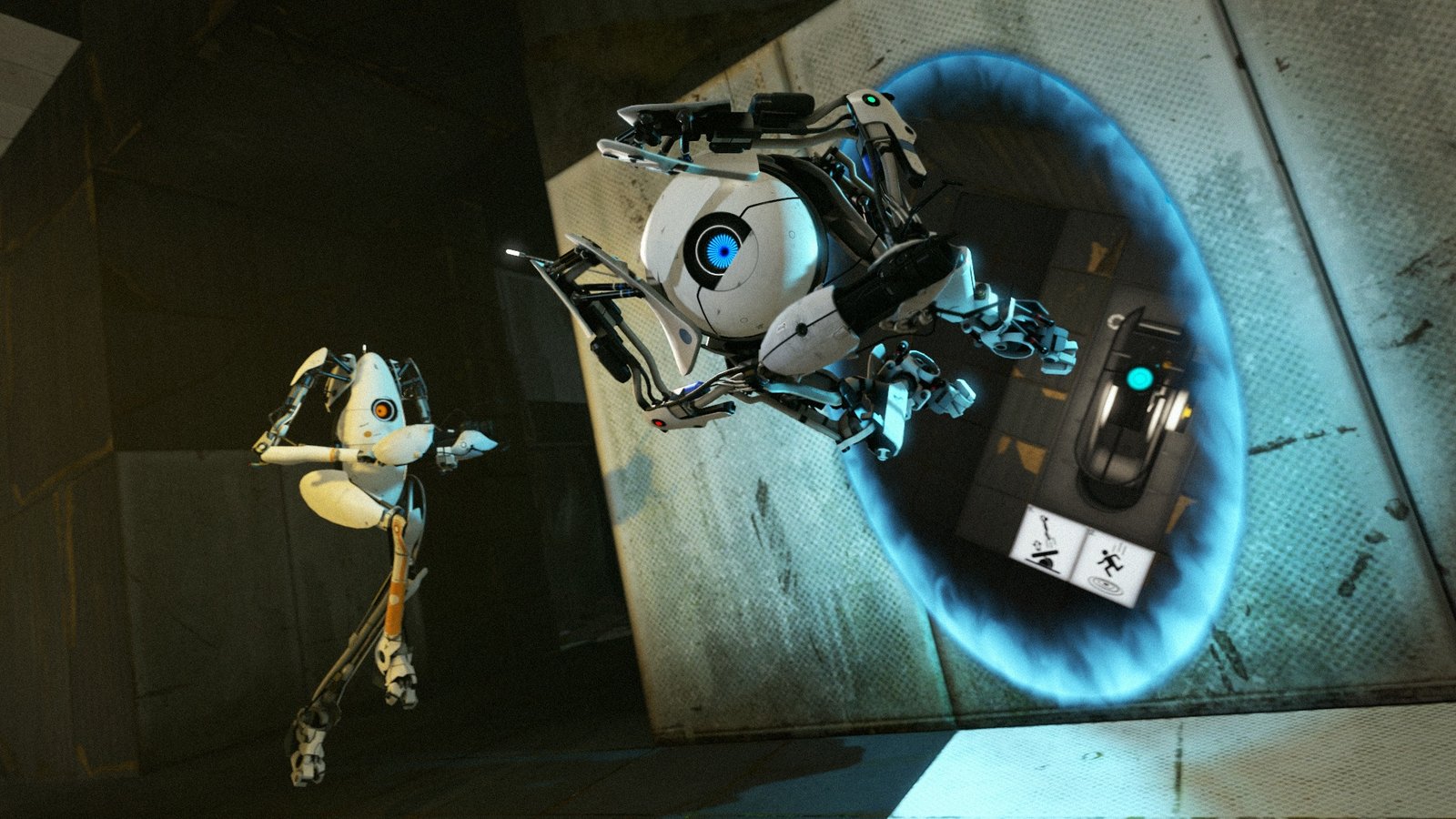
The PlayPort 0.3.0 now runs 32-bit x86 Windows games on non-jailbroken iPhones, and Portal 2 was the first public test of this new layer. The October 5, 2026 release averaged 58.4 FPS at 720p in a short session and about 50 FPS after prolonged heating. Furthermorethe 95-minute test ended with saves and loads without crashing.
The application runs games directly on the iPhone, without PC or cloud streaming. Howeverthe project is still experimental: Portal 2 is the only 32-bit game validated so far, the Vulkan backend is new, and usage requires sideloading the IPA, Developer Mode, and a helper for JIT.
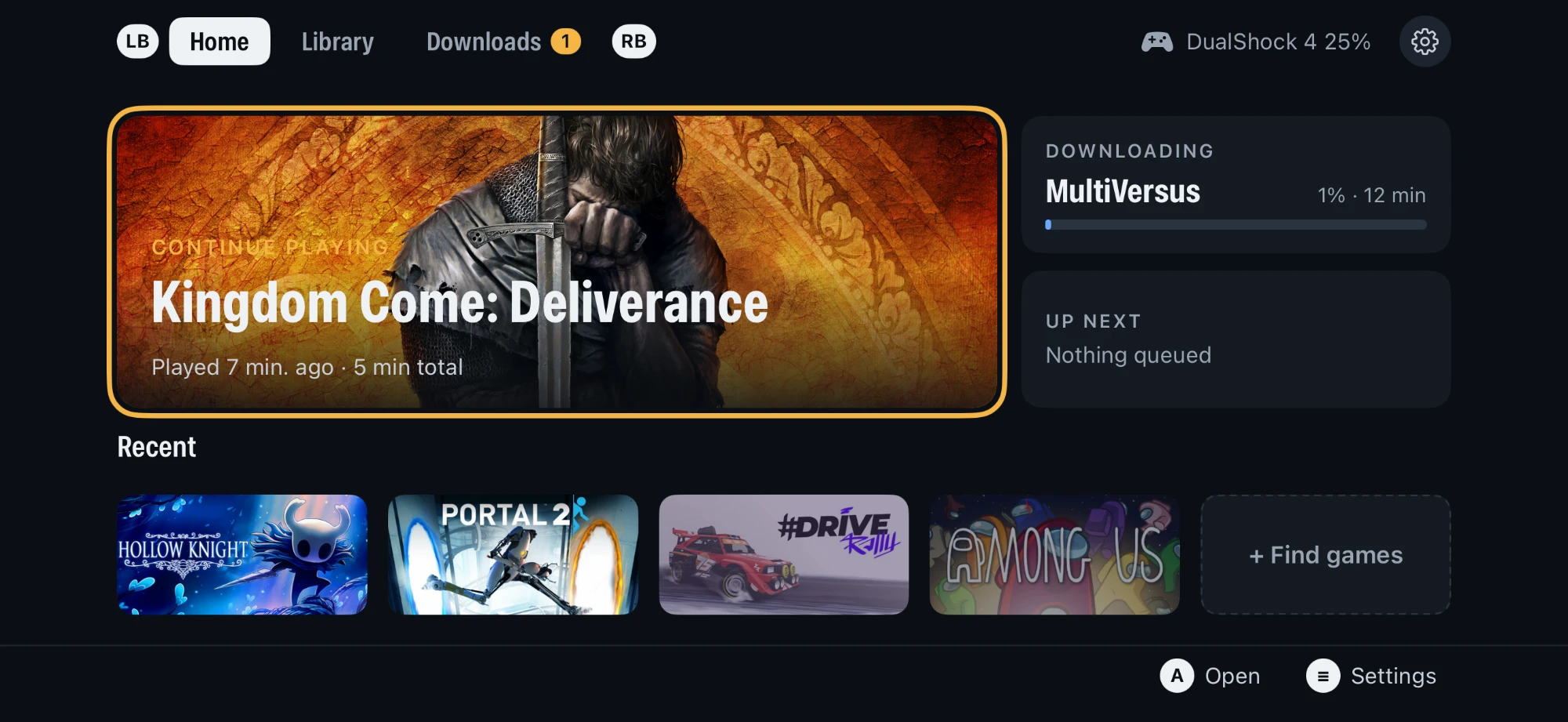
PlayPort home screen on iPhone, showing installed games and an integrated library. Image: playportdev/PlayPort.
PlayPort 0.3.0 makes room for 32-bit Windows games
The main change is a dedicated 4 GB virtual window for each 32-bit x86 process. So, the project bypasses the iOS restriction that prevents the low-level mapping expected by many older Windows programs.
, the path combines Wine WoW64 and FEX to run x86 code on the iPhone's ARM64. Meanwhile, Direct3D 9 games go through DXVK, which converts rendering to Vulkan, and KosmicKrisp translates Vulkan to Metal on the Apple GPU.
, to support DXVK, the project also added features to the iOS path such as geometry shaders, wireframe and point fill. Furthermore, an on-disk shader cache reduces recompilations in subsequent runs.
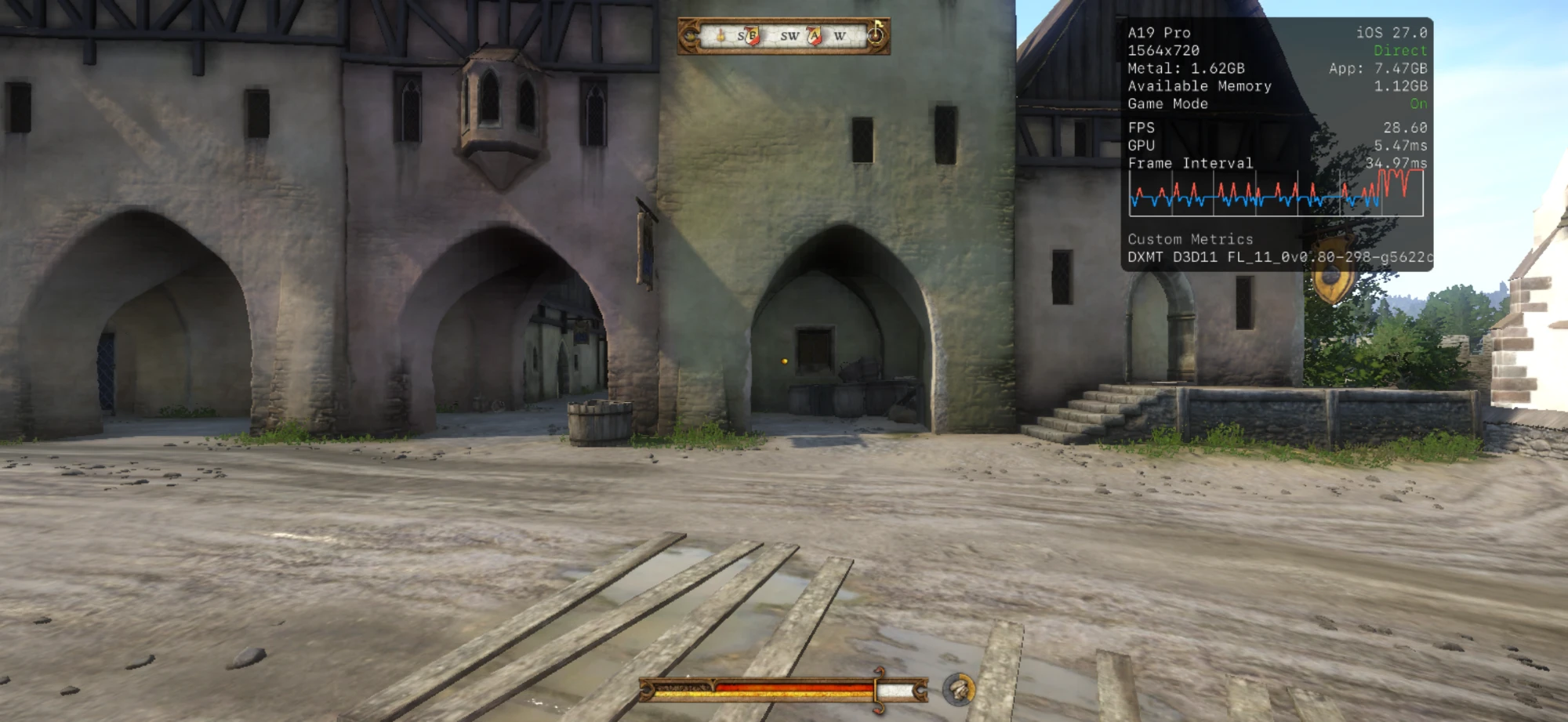
Kingdom Come: Deliverance running via PlayPort on the iPhone using the Direct3D 11/DXMT path. Image: playportdev/PlayPort.
Portal 2 nears 60 FPS on the iPhone
In the test shared by the developers, Portal 2 ran at 720p with an average of 58.4 FPS during five minutes of gameplay. Then, with the device warmed up in a long session, performance stabilized near 50 FPS.
The 95-minute session included saves and loads without a crash. According to the project, both portals, physics, audio, controls, saves, and Steam Cloud synchronization worked in the test. Even so, minor stuttering may still occur during level loading times.
PlayPort also uses native 64-bit precision in the x87 FPU for older games. According to the tests, this choice reduced the main thread work of Portal 2 by about 40% and helped control the thermal cost.
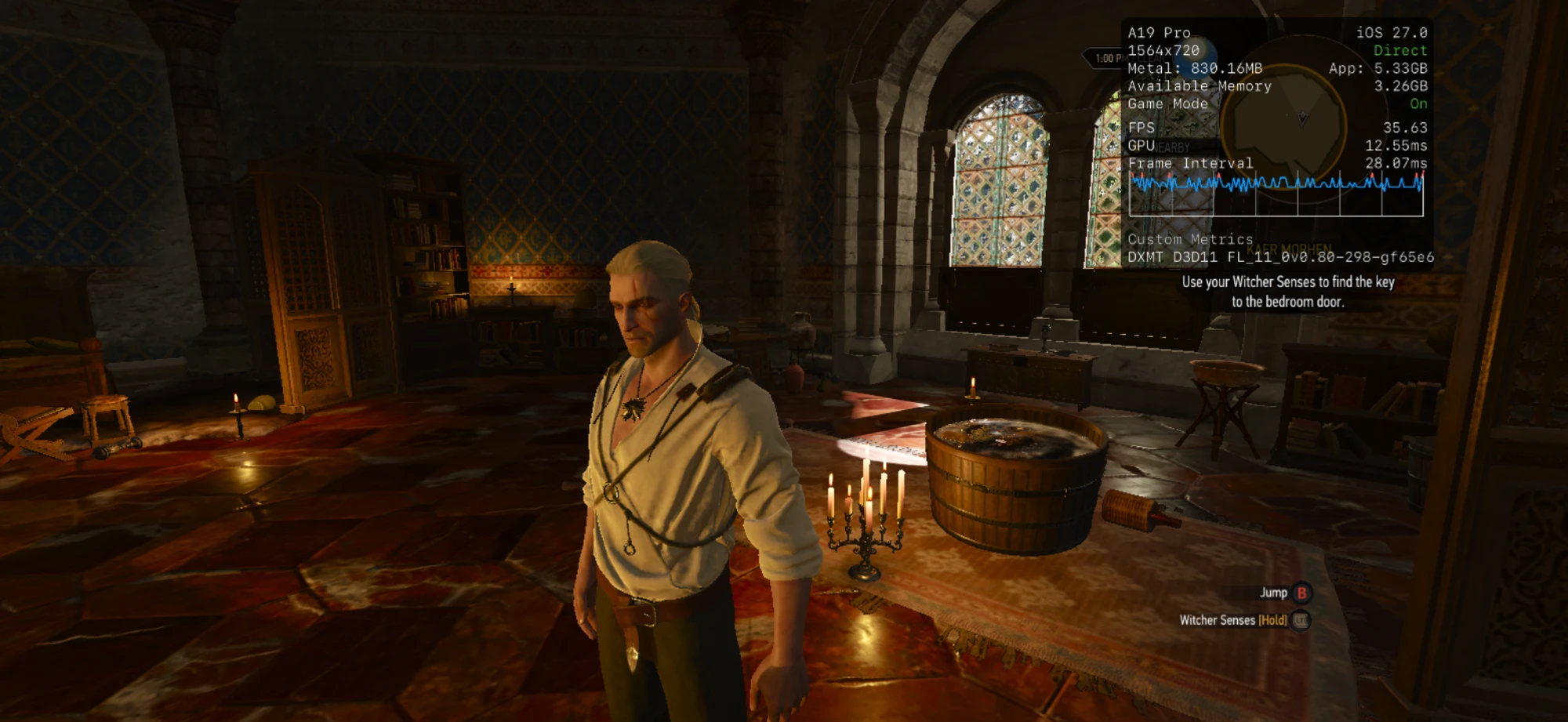
The Witcher 3 is another example of PlayPort, using Direct3D 11 via DXMT on iPhone. Image: playportdev/PlayPort.
PlayPort uses Wine, FEX, DXVK, and Metal in the same workflow
The PlayPort 0.3.0 derives from Madeira, a project that had already united Wine, FEX-Emu, and DXMT in a single process on iOS. Now, PlayPort adds a gaming-focused interface, Steam library integration, and graphics paths chosen according to the API used by the title.
Direct3D 10 and 11 continue to use DXMT, while Direct3D 9 goes through DXVK and KosmicKrisp. Furthermore, Direct3D 12 features an experimental path using vkd3d-proton. The project also updates components such as Wine, FEX, and Mesa relative to the original Madeira base.
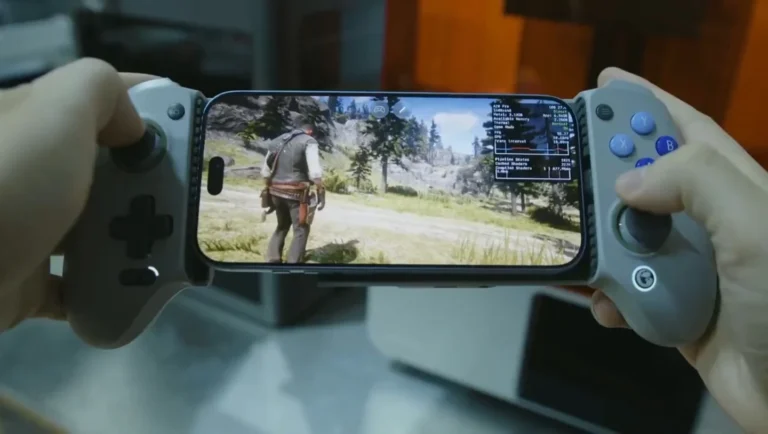
Allves Games has already shown Madeira running Red Dead Redemption 2 on the iPhone. Similarly, the evolution of runtimes on iOS also appears in projects like KartPad, which brings Mario Kart Wii to the iPhone.
IPA requires sideloading, JIT, and native games
Version 0.3.0 is distributed as an IPA and source code, but is not on the App Store. Therefore, installation requires sideloading with your own Apple account, Developer Mode, and LocalDevVPN to enable the JIT used by the application.
A free Apple account signs the app for seven days and needs to renew the subscription periodically. Furthermore, the user must download and use games from their own library; PlayPort does not provide games, Steam accounts, or pairing material.
, the current numbers should also not be generalized to the entire Windows catalog. Finally, the developers themselves point out that Portal 2 is the only 32-bit title tested in this phase and that other Direct3D 9 games may still present flaws.
Sources: official repository on GitHub; release v0.3.0 on GitHub; r/EmulationOniOS.