
Ninja Gaiden II on PC has gained a new alternative with the Ninja's Dawn project, an unofficial static recompilation that transforms the original Xbox 360 version's code into a native Windows executable. Developed by TheSaltTrader, the project allows the 2008 action game to run without relying on traditional console CPU emulation, while also offering graphical settings and features specific to modern computers.
The first public version was released on September 5, 2026. Since then, the developer has published several updates. Version 1.0.20, released on September 14, brought a fix for cutscene transitions on ultrawide monitors. The project gained wider attention in the gaming and recompilation communities on September 16.
The most important detail is that Ninja's Dawn uses the original Xbox 360 Ninja Gaiden II, and not its later versions. However, the project does not distribute the game files: you need to own your own copy to use the recompilation.

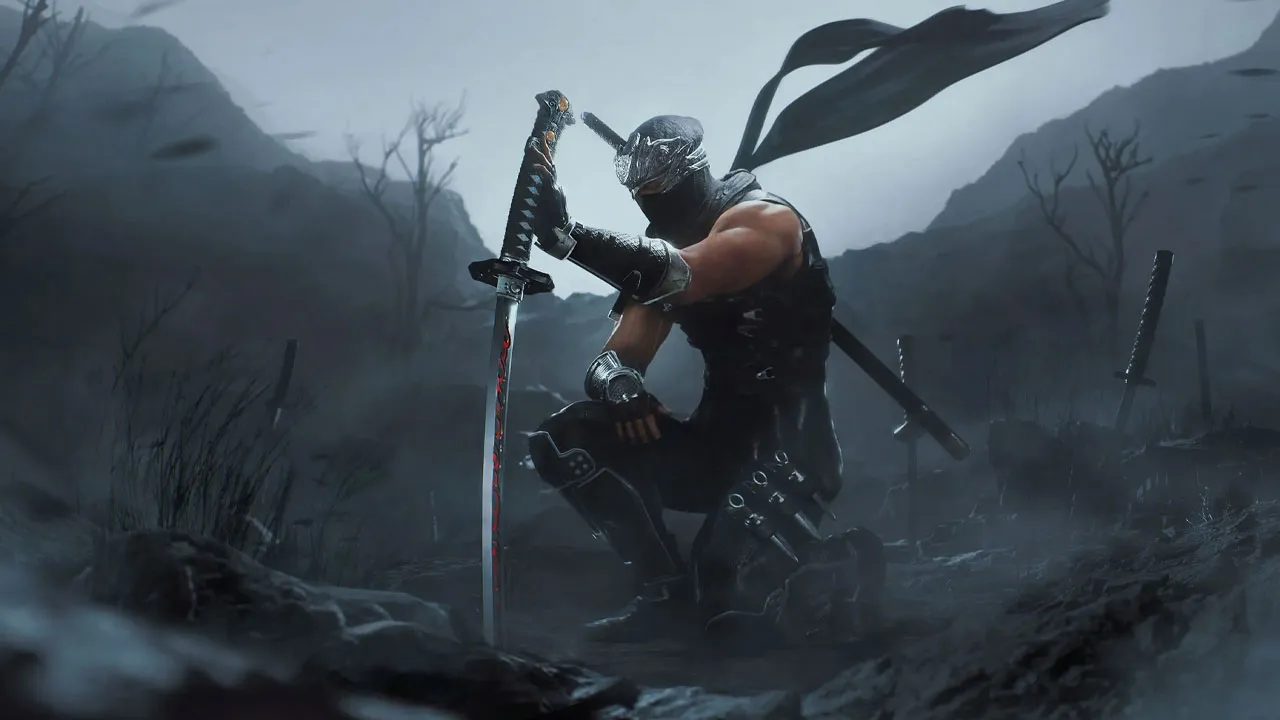
Ninja's Dawn uses the original version of Ninja Gaiden II, released for Xbox 360 in 2008. Illustrative image of the original game, not the recompilation. Source: Windows Central.
How does the recompilation of Ninja Gaiden II for PC work?
The official Ninja's Dawn repository on GitHub explains that the project was built using the ReXGlue SDK, a static recompilation tool.
To understand the importance of this technology, it is necessary to consider a fundamental difference between the Xbox 360 and modern computers.
The Xbox 360 used a processor based on the PowerPC architecture, while most Windows computers use x86-64 processors, such as those found in the AMD Ryzen and Intel Core lines.
These architectures work with different instruction sets. Therefore, a program compiled for the Xbox 360 processor cannot simply be executed directly on a conventional PC.

Illustration of the Xenon processor, based on PowerPC, used in the Xbox 360. Image: Henriok / Wikimedia Commons (CC0).
Static recompilation solves part of this problem by converting the game's PowerPC code in advance into native x86-64 code.
Instead of continuously interpreting the original CPU's instructions during execution, the project uses an executable already recompiled for the target computer.
In practice, Ninja's Dawn transforms Ninja Gaiden II's code into a Windows program, without needing to emulate the Xbox 360's PowerPC CPU.
This does not mean that all the console's peculiarities disappear. The project still needs to adapt system services and the operation of specific components, including the Xenos GPU, through its runtime and a graphics plugin.
The distinction is important: this is a native CPU code recompilation with adaptations for modern hardware, not a simple emulator setup.
Recompilation offers graphical adjustments and ultrawide support
In addition to allowing the game to run on Windows, Ninja's Dawn provides settings that were not present in the original Xbox 360 version.
According to the developer's documentation, the project uses Direct3D 12 and offers options for resolution, framerate, texture filtering, and image presentation.
Among the available features are:
- Configurable framerate: options from 30 to 144 FPS, depending on performance and compatibility.
- Adjustable internal resolution: ability to change the resolution used to render the game.
- Supersampling: options from 1x to 8x to render the image at a higher resolution before scaling it down to the output resolution.
- Ultrawide support: expansion of the horizontal field of view during 3D cutscenes.
- Anisotropic filtering: feature to improve the presentation of textures viewed at certain angles.
- FidelityFX CAS: filter option to increase image sharpness.
- Enhanced textures: tools to extract game textures and create packages with upscale versions.
These features do not mean the game will always reach 144 FPS or that any computer will be able to use maximum supersampling. The result depends on the hardware, the chosen settings, and how the recompilation works.
The developer himself notes that the highest levels of supersampling are especially demanding. The 2x option is presented in the documentation as a more practical setting for current hardware.
Ultrawide received improvements in the latest update
One of the new features in recent versions of Ninja's Dawn is the implementation of support for ultrawide monitors.
The feature was introduced in version 1.0.17, released on September 14, 2026, and received enhancements in subsequent updates.
The feature expands the horizontal field of view during gameplay. This allows viewing a larger area of the scenery on the sides, without simply stretching the characters and three-dimensional elements.
However, there is an important technical limitation: the game continues to use an internal rendering surface in a 16:9 aspect ratio. Ultrawide is implemented through the expansion of the field of view, rather than by creating a horizontally larger rendering surface.
Two-dimensional elements, such as menus and interface indicators, remain in 16:9 to prevent distortions.
Update 1.0.20 specifically fixed the behavior of scene transitions. Previously, the black screens used between certain sequences appeared only in the central region, leaving parts of the three-dimensional image visible on the sides.
Now, according to the official registry of version 1.0.20, these transitions fill the entire width of the ultrawide screen, while the remaining interface elements continue to preserve their proportions.
Project also allows improving textures with artificial intelligence
Ninja's Dawn includes tools to extract the game's original textures and produce packages with upscaled images.
The system offers traditional resizing methods, such as Lanczos, as well as an option based on Real-ESRGAN, an artificial intelligence image upscaling technology.
Since version 1.0.14, the distribution package now includes the Real-ESRGAN ncnn-vulkan engine, allowing processing to run locally on a compatible GPU.
A later update fixed an issue that prevented the program from correctly finding the artificial intelligence engine included in the installation.
The upscaling process does not happen automatically with all textures from the game's first launch. The user needs to extract the necessary files during execution and process them to build their own package.
It is also important to consider storage space. Extensive upscaled texture packages can take up dozens of gigabytes or even exceed 100 GB, depending on the settings and the number of processed images.
The project uses caching and staged loading mechanisms to try to reduce issues related to the use of large packages.
Developer had to solve specific Xbox 360 issues
The recompilation of Ninja Gaiden II involved more than just translating processor instructions.
The developer documented several issues encountered during the game's adaptation, including video playback glitches, crashes, and behavioral differences in components originally designed for the Xbox 360.
One of the issues was related to the VMX128 vector instructions used by the console's processor.
According to the technical documentation, certain vector registers were being incorrectly initialized during recompilation, causing video decoding routines to receive invalid values.
Another issue involved the Xenos GPU ring buffer, a structure used to organize the commands sent to the graphics processor.
The game reinitialized this structure during mode switches, but the adaptation mechanism did not correctly update the read and write pointers. This could cause old commands to be processed again and trigger crashes.

First-revision Xbox 360 motherboard, showing the hardware components that recompilation projects need to consider. Image: jnftech / Wikimedia Commons (CC BY-SA 4.0).
These fixes are relevant because they demonstrate that recompilation must preserve not only CPU instructions, but also specific behaviors expected by the original code.
The issues encountered, the investigations, and the implemented solutions are documented in the technical files available in the project's documentation directory.
What is required to run Ninja Gaiden II natively on Windows?
The project provides public builds for 64-bit Windows 10 and Windows 11.
According to the requirements published by the developer, it is necessary to have:
- 64-bit Windows 10 or Windows 11.
- Computer with x86-64 architecture.
- Graphics card compatible with Direct3D 12 and at least 2 GB of video memory.
- Preferably 4 GB or more of video memory to use enhanced texture packs.
- Approximately 8 GB of free space for the extracted game files and the port.
- A legitimate copy of Ninja Gaiden II for Xbox 360.
The program accepts an ISO disc image or a folder with the files already extracted, including the original executable default.xex.
The Ninja's Dawn package does not contain the textures, videos, music, or other commercial game files.
The developer also states that the recompiled executable contains code derived from the original game, although it does not include its data files. The repository's MIT license only covers the project's own code, and not the material belonging to the rights holders of Ninja Gaiden II.
Public version downloads are available on the official Ninja's Dawn releases page on GitHub.
Ninja's Dawn is different from Ninja Gaiden 2 Black and Ninja Gaiden Sigma 2
Although Ninja Gaiden II has received other versions over the years, Ninja's Dawn has a different technical approach.
The project starts directly from the original Xbox 360 edition and seeks to adapt it for native execution on Windows through static recompilation.
Already Ninja Gaiden 2 Black, officially released in January 2025, is a remaster developed with Unreal Engine 5, featuring modernized graphics and incorporating additional elements from later versions of the game.
Ninja Gaiden Sigma 2, in turn, is a modified version of the original game, initially released for PlayStation 3 in 2009.
Therefore, Ninja's Dawn is not a remake, an official remaster, or a port of Ninja Gaiden 2 Black. Its goal is to allow the execution of the original Xbox 360 Ninja Gaiden II code on modern computers, accompanied by adaptations and additional features.
What is the current stage of the recompilation?
Ninja's Dawn already has a public and playable executable, but the project is still undergoing fixes and improvements.
The development history records previously resolved issues, such as crashes in certain battles, failures in chapter transitions, and interruptions in audio playback.
The developer also maintains a list of known limitations, including specific achievement behaviors and restrictions related to the playback of certain videos.
To date, the consulted documentation does not present an independent test battery that allows stating that the port has perfect compatibility or superior performance compared to all existing alternatives.
The features and fixes described in this news correspond to the information published by the developer itself.
The availability of a functional executable, however, already represents a concrete advance for the technical preservation of the game: Ninja Gaiden II now has an execution alternative based on the recompilation of its original code, instead of relying exclusively on solutions that emulate the Xbox 360 environment.
For players interested in the original 2008 version, the main benefit is the possibility of running it on Windows with modern configurations, while still requiring the user to provide the files from their own copy of the game.
Development remains open on GitHub, where new releases, fixes, and technical information can be followed directly.
Sources: Ninja's Dawn — official repository and documentation | Ninja's Dawn — version 1.0.20 | Official update history | Team NINJA — Ninja Gaiden 2 Black.
Pingback: The Darkness Recomp 0.1.2 restaura sombras no PC
Pingback: Need for Speed Switch ganha port nativo por recompilação
Pingback: Resident Evil Umbrella Chronicles Linux e Steam Deck
Pingback: IzunaRecomp Ninja Gaiden II: versão 0.2.0 no PC