

The Monster Hunter Portable 3rd gets native recompilation for Android with the arrival of Yakumo v0.6.0-alpha.4, an update released on September 24, 2026. The project pre-emptively transforms the game's Allegrex/MIPS code into C++ and now distributes an official ARM64 build for Android, tested by the team itself on a physical phone.
The new alpha also brings an important round of optimizations. According to the developers, Snapdragon and Exynos devices that previously showed very low performance now run the game at full speed. Furthermore, the CPU and GPU are now able to work on two frames simultaneously, texture uploading no longer interrupts the GPU, and the decoding of these textures has become approximately five times faster.
However, “full speed” does not mean that Monster Hunter now has native 60 FPS simulation. The original logic remains at approximately 30 FPS, while Yakumo offers optional interpolation to present motion at 45, 60, 90, 120 FPS or at the screen's refresh rate without speeding up the game.

The code executed by Yakumo is PSP software for the Allegrex/MIPS architecture, but the copy currently accepted by the project comes from the HD edition released for PlayStation 3. Photo: Evan-Amos, public domain, via Wikimedia Commons.
Yakumo v0.6.0-alpha.4 brings recompilation to Android ARM64
The Yakumo version v0.6.0-alpha.4 was published on September 24 and gathers the changes developed since alpha.1, including the experimental Android builds that appeared in alpha.2 and alpha.3.
This time, the mobile distribution appears as an official artifact identified as:
yakumo-0.6.0-alpha.4-android-arm64.apk
The package requires a 64-bit device, Android 10 or higher and Vulkan 1.1.
This also represents a change from the first mobile builds. Previously, the base documentation still described Android as tested only via emulator. In the alpha.4 notes, however, the team explicitly states that they installed and played the build on a real phone.
The package was also signed with the same key used in previous versions and verified with apksigner. Furthermore, the team checked the imported libraries against API 29, corresponding to Android 10.
Snapdragon and Exynos reach full speed, according to the developers
The main practical change appears in performance.
The official notes state that Snapdragon and Exynos phones that showed severe slowdowns in previous builds are now able to run Monster Hunter Portable 3rd at full speed.
It is important to interpret this statement correctly.
The project did not publish in this version a standardized table with exact phone models, resolution, clocks, temperature, and frametime for each SoC. Therefore, the result should be treated as a measurement by the team during development tests, and not as a guarantee of full speed on any Snapdragon or Exynos device.
Furthermore, there is at least one specific known issue on Samsung devices with Exynos: the project is investigating a crash that can occur when leaving the Gathering Hall.
Thus, the performance jump is concrete within the disclosed tests, but mobile compatibility is still under development.
CPU and GPU now work on two frames at the same time
A good part of the gain comes from a reorganization of the renderer.
In previous versions, CPU and GPU could end up waiting for each other at different points in the frame. Alpha.4 now keeps two frames in progress simultaneously.
While the GPU finishes the graphical work of one frame, the CPU can already start preparing the next one.
This type of parallelism reduces periods where one of the two parts of the system remains idle waiting for the other to finish.
The change is especially important on mobile devices, where the CPU and GPU budget is considerably smaller than on modern desktops.
Texture uploads no longer block the entire GPU
Texture handling has also changed.
Previously, the input of a new texture could interrupt the renderer's flow while data was being prepared and sent to the GPU.
Now, these uploads no longer need to stop all graphics processing.
Furthermore, the team states that the texture decoding step is approximately five times faster and now happens in the background.
The expected result is a reduction in pauses and stutters when new monsters, environments, equipment or other graphic elements appear during gameplay.
Shaders are preserved between runs
Another optimization targets stutters related to the creation of graphics pipelines.
Yakumo now keeps shaders and pipelines cached between runs and prepares this material during startup.
Thus, when a known scene or effect reappears, the program can avoid part of the work that previously had to happen during gameplay.
The team also reduced the number of draw calls to approximately one-third of the previous value.
In addition, the shaders no longer use certain operations that prevented the efficient use of early depth testing.
These changes help explain why the update benefits both desktop GPUs and mobile hardware.
Steam Deck dropped from 16–18 ms to about 11 ms per frame
The project published a concrete comparison using the Steam Deck.
With an internal resolution of 6× and presentation set to 90 FPS, the rendering time indicated by the developers dropped from approximately 16–18 ms to about 11 ms per frame.
This number does not represent an Android benchmark. However, it helps to show the scale of the work done on the renderer, which also benefits the mobile build.
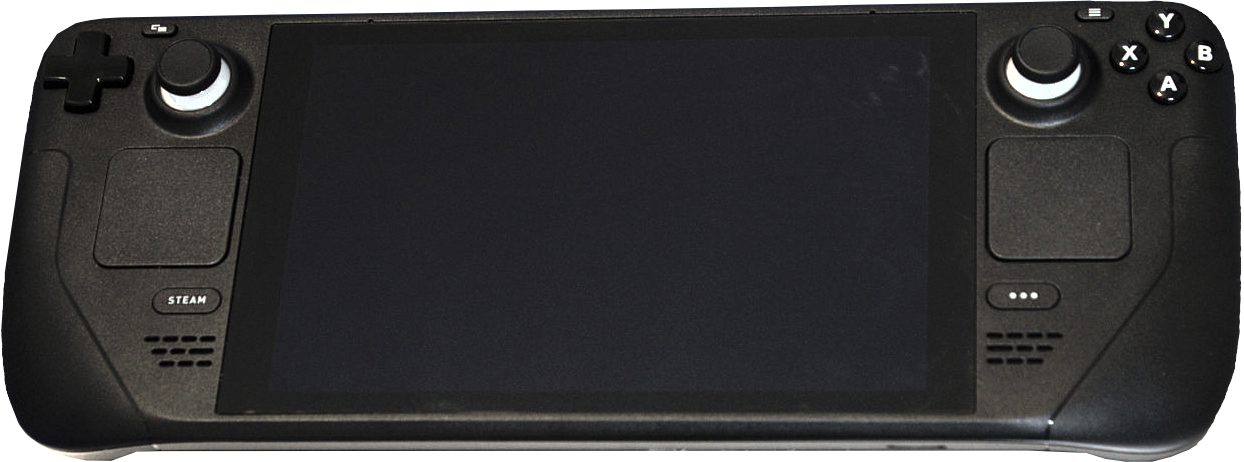
On the Steam Deck, the team measured a drop from 16–18 ms to about 11 ms of rendering time per frame at 6× internal resolution and 90 FPS presentation. Photo: Liam Dawe/GamingOnLinux and VulcanSphere, CC BY-SA 4.0.
Android receives optimization to keep clocks stable
Alpha.4 also adds a specific behavior for Android devices.
The app now informs the operating system that it is running a workload that requires sustained performance.
According to the team, this prevents CPU cores from aggressively reducing their clocks during the small intervals between frames.
In games, frequent frequency scaling can cause frametime stutters even when the processor has enough performance to maintain the average speed.
Therefore, maintaining a more consistent performance policy can be just as important as simply increasing peak processing power.
Fast Loading reduces loading time from 6.9 to 1.7 seconds
The update also introduces the feature Fast Loading, enabled by default.
During a silent loading screen, Yakumo temporarily lets the simulation run faster than the original PSP speed.
When loading finishes, the game immediately returns to normal pace.
In an example provided by the developers, the transition from the village to a quest dropped from:
6.9 seconds → 1.7 seconds.
The team states that reductions typically range from two to five times.
However, the feature has clear limits. It does not speed up gameplay, menus, cutscenes, or online matches.
Therefore, Fast Loading does not function as an indiscriminate fast-forward button applied to the game.
Monster Hunter continues running its simulation at 30 FPS
Another point that deserves attention is the frame rate.
The simulation of Monster Hunter Portable 3rd continues to follow the original PSP logic at approximately 30 FPS.
Yakumo offers a separate interpolation layer to present the animation at:
- 45 FPS;
- 60 FPS;
- 90 FPS;
- 120 FPS;
- or at the display's own refresh rate.
This interpolation does not make monsters, physics, attacks, or game timers run two or four times faster.
It creates intermediate visual states to produce a smoother presentation.
Thus, when the project talks about a phone running the game at "full speed", this means correctly maintaining the original pace of the simulation, and not necessarily producing 60 native frames of logic per second.
Alpha.4 itself still logs a known issue in this area: with VSync enabled, interpolation may exhibit a slight periodic stutter because the game runs at approximately 29.97 FPS while the screen operates at 60 or 90 Hz.
Yakumo is not PPSSPP
The project's architecture is precisely what makes this Android version unusual.
The Yakumo defines itself as a native port created through static recompilation.
The game executable is analyzed ahead of time. Then, every Allegrex/MIPS code instruction found by the system is transformed into C++.
This generated code enters the application's normal compilation process.
On Android, therefore, the final result is compiled into ARM64.
The main chain can be summarized as follows:
PSP Allegrex/MIPS → static analysis → generated C++ → ARM64 compilation → native runtime → Vulkan → Android GPU.
This differs from PPSSPP, which needs to function as a generic emulator capable of running thousands of different PSP softwares.
Yakumo focuses its runtime, optimizations, and integrations on a specific title.
An interpreter exists, but it functions as a fallback
The statement that Yakumo uses static recompilation does not mean that absolutely no instruction can be interpreted in any situation.
The PSPRecomp framework maintains a fallback interpreter.
It kicks in if the game reaches an address that does not belong to the previously recompiled code set.
When this happens, the program does not need to terminate immediately. The code for that section can continue to run more slowly until it encounters an address known by the runtime again.
Therefore, the interpreter exists as a safety mechanism, but it does not constitute the main execution model as in an architecture based essentially on interpretation.
All 355 code overlays have been recompiled
Monster Hunter Portable 3rd creates an additional difficulty for static recompilation.
The game does not keep all of its code permanently in the same memory space.
During execution, it loads 355 code overlays into a limited set of shared memory regions.
Yakumo recompiles each of these 355 overlays separately.
Each overlay turns into its own library. When the game requests a specific block, the runtime identifies the content and installs the corresponding recompiled library between frames.
This makes it possible to handle code that, on the PSP, appeared dynamically at the same address at different times during execution.
The current documentation explicitly lists the 355 recompiled overlays.
Runtime rebuilds only the PSP environment that the game needs
Recompiling the CPU instructions is not enough to run the game.
Monster Hunter keeps expecting to find services that existed in the PSP system.
That is why, around the recompiled code, Yakumo implements its own host environment.
Among the documented components are:
- kernel with threads;
- semaphores;
- event flags;
- timers;
- reading disk data;
- Vulkan renderer for the PSP GPU;
- software audio mixer;
- SDL3 for input and host infrastructure.
This is different from recreating a complete PSP and then putting Monster Hunter inside it.
The goal is to provide the necessary behaviors for that specific software to run as a native application.
Why does the project use a version released for PlayStation 3?
The origin of the files can cause confusion.
Yakumo currently requires a copy of Monster Hunter Portable 3rd HD Ver. for PlayStation 3, identified as NPJB-40001.
However, this does not mean the project is recompiling Cell/PowerPC code from a conventional PS3 game.
Monster Hunter Portable 3rd HD Ver. is part of the line of PSP remasters released by Sony on the PlayStation 3.
PPSSPP's own documentation explains that these HD editions used PSP software executed by Sony's PSP emulator inside the PS3, with additional features such as more memory, larger textures, and second analog stick support.
Thus, the base recompiled by Yakumo remains Allegrex/MIPS code from the PSP ecosystem.
The difference is that the source image currently supported by the installer is the HD edition distributed on disc for the PlayStation 3.

Monster Hunter Portable 3rd HD Ver. was released for PlayStation 3 as part of the PSP Remasters line. Despite this, internally it uses PSP software run by Sony's PSP environment. Photo: Evan-Amos, public domain, via Wikimedia Commons.
Four platforms already have pre-compiled builds
Alpha.4 is not limited to Android.
| Platform | Architecture | Package |
|---|---|---|
| Android | ARM64 | APK |
| Windows | x86-64 | Portable ZIP |
| Linux / Steam Deck | x86-64 | Flatpak or TAR.GZ |
| macOS | ARM64 / Apple Silicon | DMG |
Android is the most relevant new feature of this phase because it brings the same recompilation strategy to ARM64 CPUs of smartphones and handhelds.
Touch controls already work on Android
The mobile build draws touchscreen controls directly over the game.
Physical controls also work.
The project still aims to improve the touch experience, especially in areas like the camera, menus, and different weapon styles.
However, the basic infrastructure already allows launching the application, configuring the game, and playing directly on the device.
On desktop, Yakumo offers fully remappable keyboard and mouse and also allows controlling the camera using the second analog stick.
Multiplayer remains compatible with the ad hoc infrastructure
The port also maintains multiplayer.
According to the project, Yakumo can connect to the ad hoc servers used by the PSP community.
In addition, it is possible to host sessions via LAN or VPN.
This is particularly interesting because the multiplayer was not replaced by a completely isolated and exclusive implementation of the port.
The idea is to maintain compatibility with the existing community infrastructure surrounding the game.
Saves remain in the original PSP format
Yakumo also preserves the save format used by the game.
The user can import a save from the PSP and continue their game on the native port.
Then, the program also allows exporting and backing up this data.
The project also supports downloaded quests and other saved content alongside the original profile.
This model facilitates migration between different ways of running Monster Hunter without creating an exclusive proprietary format for Yakumo.
PPSSPP texture packs and mhp3reload mods are supported
Another integration leverages features already developed by the community.
Yakumo supports PPSSPP-compatible texture packs.
Additionally, the project implements the modification format used by mhp3reload, including file replacement and patches supported by the current system.
This means that part of the work created over years around the emulated version can remain useful even when the game starts running via native recompilation.
Android 10 is now the minimum requirement
Alpha.4 also reduces the system requirement.
The first Android builds worked with Android 11 or higher. Now, the minimum becomes Android 10.
The device still needs to be 64-bit and offer Vulkan 1.1.
The update also fixes an orientation issue that could occur when Android's auto-rotation was disabled.
In addition, importing the game image through the system's alternative file picker no longer fails in certain situations.
Yakumo takes up almost 2.5 GB during installation on Android
The APK has an important peculiarity.
The application takes up approximately 0.8 GB after installation.
During the initial setup, the user selects their Monster Hunter Portable 3rd HD Ver. image, and Yakumo copies approximately 1.3 GB to the application's private storage.
Therefore, the team recommends approximately 2.5 GB of free space during setup.
None of this commercial data accompanies the APK.
The user must provide their own legally obtained copy of Monster Hunter Portable 3rd HD Ver.
Project does not distribute Monster Hunter Portable 3rd
This separation is part of the project's architecture.
The repository contains the framework, runtime, native implementations, and tools required to produce the port.
The recompiled code derived directly from the game copy is generated locally and is not stored in the repository.
Yakumo also does not distribute textures, models, audio, videos, or the commercial disc image.
On the first run, the application checks the user-provided copy and prepares the necessary data in its own directory.
Issue on Samsung Exynos cell phones is still being investigated
Despite the general performance improvement, the team has already documented at least one major mobile regression.
On Samsung devices with Exynos, a crash has been reported when exiting the Gathering Hall.
The problem remains under investigation.
Therefore, the statement that Exynos devices have started to achieve full speed should not be confused with perfect compatibility.
Performance and stability are two different metrics.
PSPRecomp can be used by other games
The work developed for Monster Hunter also holds importance beyond this title.
Yakumo is built upon the PSPRecomp, a static recompilation framework designed to be game-agnostic.
The core provides components related to Allegrex/MIPS, ELF and PRX loading, guest memory, generated function dispatch, interpreter fallback, and AOT infrastructure.
Each game then receives its own profile with the generated code, HLE functions, bootstrap, renderer, audio, input, and specific fixes.
The documentation already includes a guide for creating new profiles.
This means that solutions developed during Yakumo can contribute to future recompilations of other PSP titles, although each game still requires its own integration work.
Why is this version of Yakumo important?
Static recompilations have gained a lot of traction recently in community PC ports.
Alpha.4 demonstrates that the same strategy can also be applied to an ARM64 smartphone.
Monster Hunter Portable 3rd is not a small technical demo. The game features hundreds of dynamically loaded overlays, multiplayer, data streaming, audio, videos, a large amount of assets, and multiple systems running simultaneously.
Yakumo recompiles all 355 known overlays and rebuilds the PSP environment needed to keep the game running around them.
Now, this package has an official Android ARM64 build, tested on physical hardware, with Vulkan 1.1 and touchscreen controls.
In addition, the new graphics architecture significantly reduced rendering costs and, according to the team, brought previously slow Snapdragon and Exynos devices up to full speed.
This does not make the project equivalent to a finished commercial port. There are known issues, mobile support is still recent, and new drivers or devices may reveal regressions.
Even so, the update shows an important stage shift: static recompilation of PSP software is no longer just a technique for creating desktop executables, but has now produced a playable ARM64 application directly on Android smartphones.
Sources: Yakumo v0.6.0-alpha.4 — official release | Yakumo / PSPRecomp — official repository and documentation | PSPRecomp — recompilation architecture | PPSSPP — documentation on PSP HD versions released on PS3.

Pingback: Resident Evil 4 Android Roda Nativo em Galaxy S5
Pingback: Yakumo 0.7.5: tradução PT-BR e melhorias de Monster Hunter