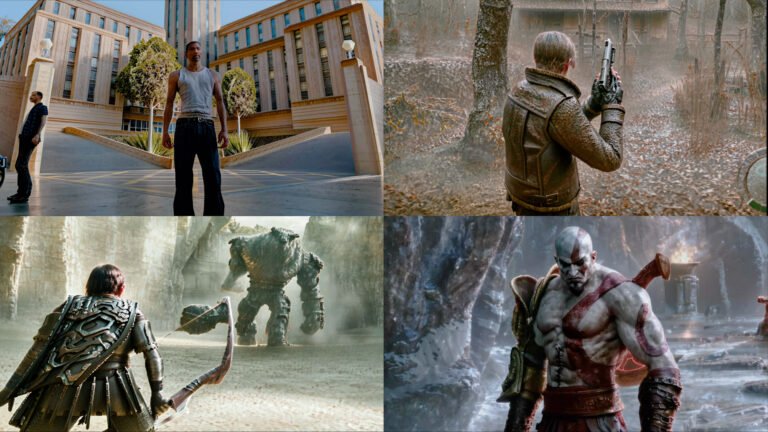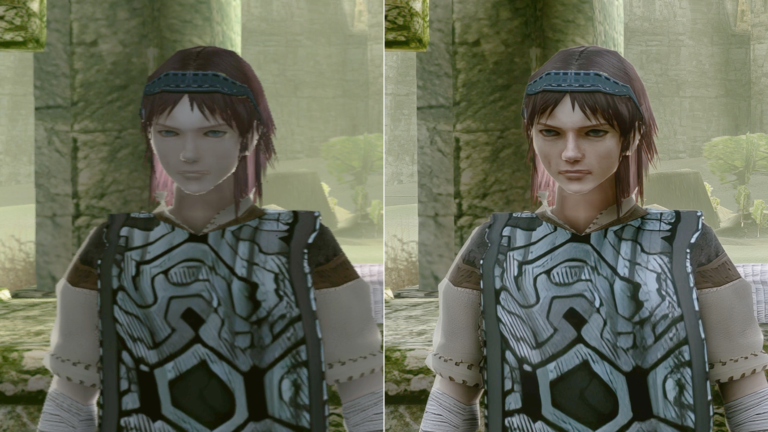
The DLSS 5 Swapper 2.2.9 was released on September 29, 2026 with fixes for installation, file restoration, and legacy games using DirectX 8/9 wrappers. The version arrives just hours after 2.2.8, a major update that revamped the package's core components, including DLSS5-Feeder 1.17.0, RenoDX DLSS5 6.5.3, and a new OptiScaler option with Pre-SR and Multipass.
The project remains a community tool with no official affiliation to NVIDIA. Its goal is to automate different Neural Rendering routes in compatible games, including titles without native DLSS and emulators. Therefore, technical support varies depending on the API, game, GPU, driver, and chosen method.
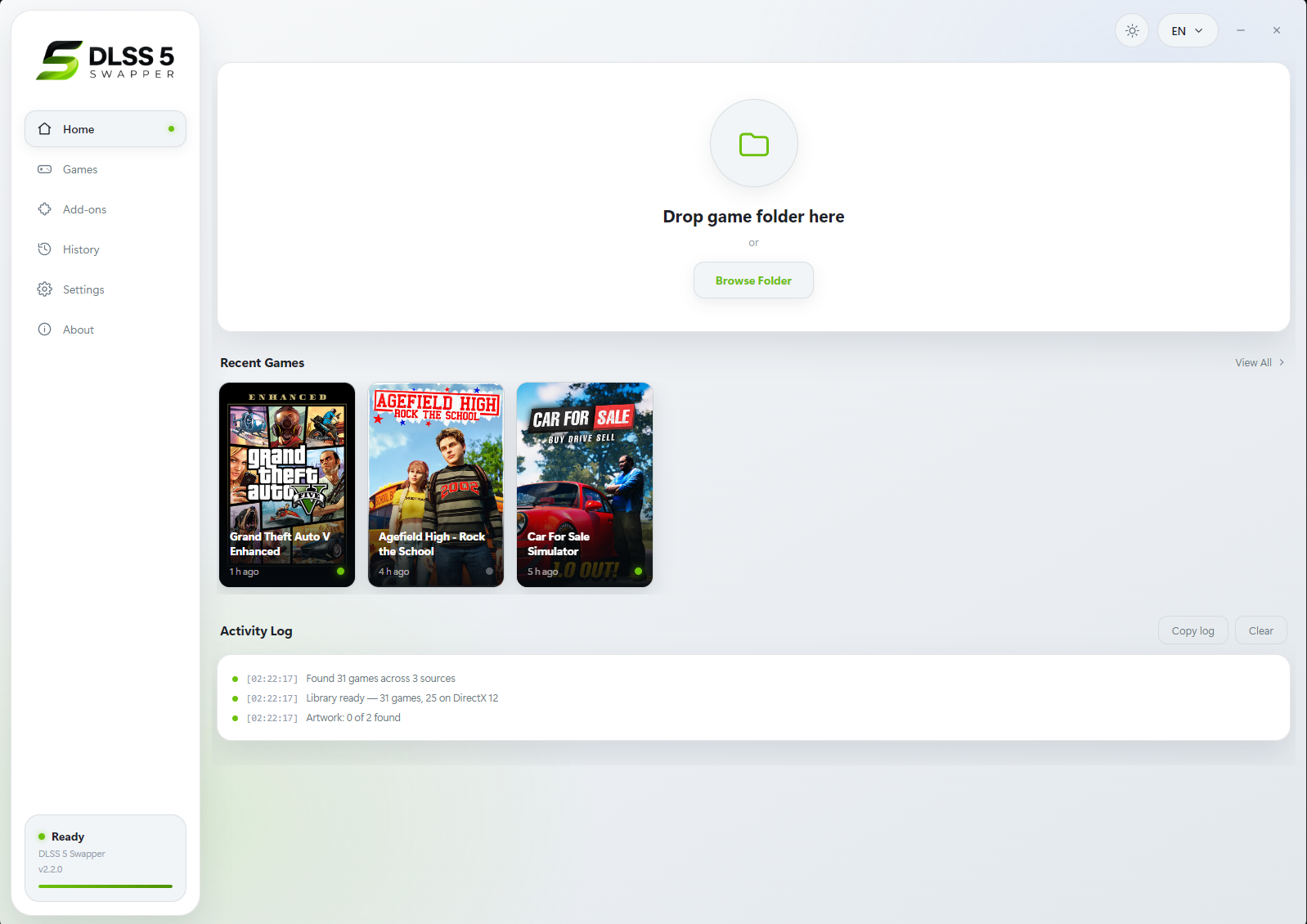
Home screen of DLSS 5 Swapper, featuring detected games and Neural Rendering installation routes. Image: rakanki911/GitHub.
DLSS 5 Swapper 2.2.9 fixes four bugs
Version 2.2.9 is a hotfix focused on four issues reported on the project tracker. First, the installer could close immediately with the error 0xc0000005 on some machines. According to the developer, the cause was in the installer framework when handling the user's programs folder path. The current build already uses the upstream fix.
In addition, the function to restore original files could become unavailable even when modified files were still inside the game. This happened in scenarios such as an interrupted restoration, a moved folder, or a reverted installation. Now the program looks for the most recent previous registry that still matches the found files and offers restoration again.
Another change directly affects older games. The package updates dgVoodoo2 from 2.87.4 to 2.87.5. According to the release notes, the previous version had been flagged by some antivirus mechanisms, while the upstream update was published precisely to fix this issue.
ReShade works again in some DirectX 8 and 9 games
The fourth fix in __ALLVES_KEEP_N_N__ DLSS 5 Swapper 2.2.9 resolves a case where ReShade would not start in DirectX 8/9 games run through dgVoodoo2. In this chain, the wrapper transforms the presentation into DirectX 11. However, some configurations load d3d11.dll and never call dxgi.dll.
Since ReShade relied on the file not being loaded, the entire rest of the chain could fail silently: no overlay, no Feeder, and no useful log. The Swapper now offers a choice of the ReShade file in these games, keeping dxgi.dll as default.
This change is relevant for using Neural Rendering in older titles and emulators. The project itself lists support for tools like PCSX2, RPCS3, DuckStation, Dolphin, PPSSPP, Xenia, Cemu, Flycast, xemu, Vita3K, RetroArch, and others, although compatibility varies depending on the renderer and game.
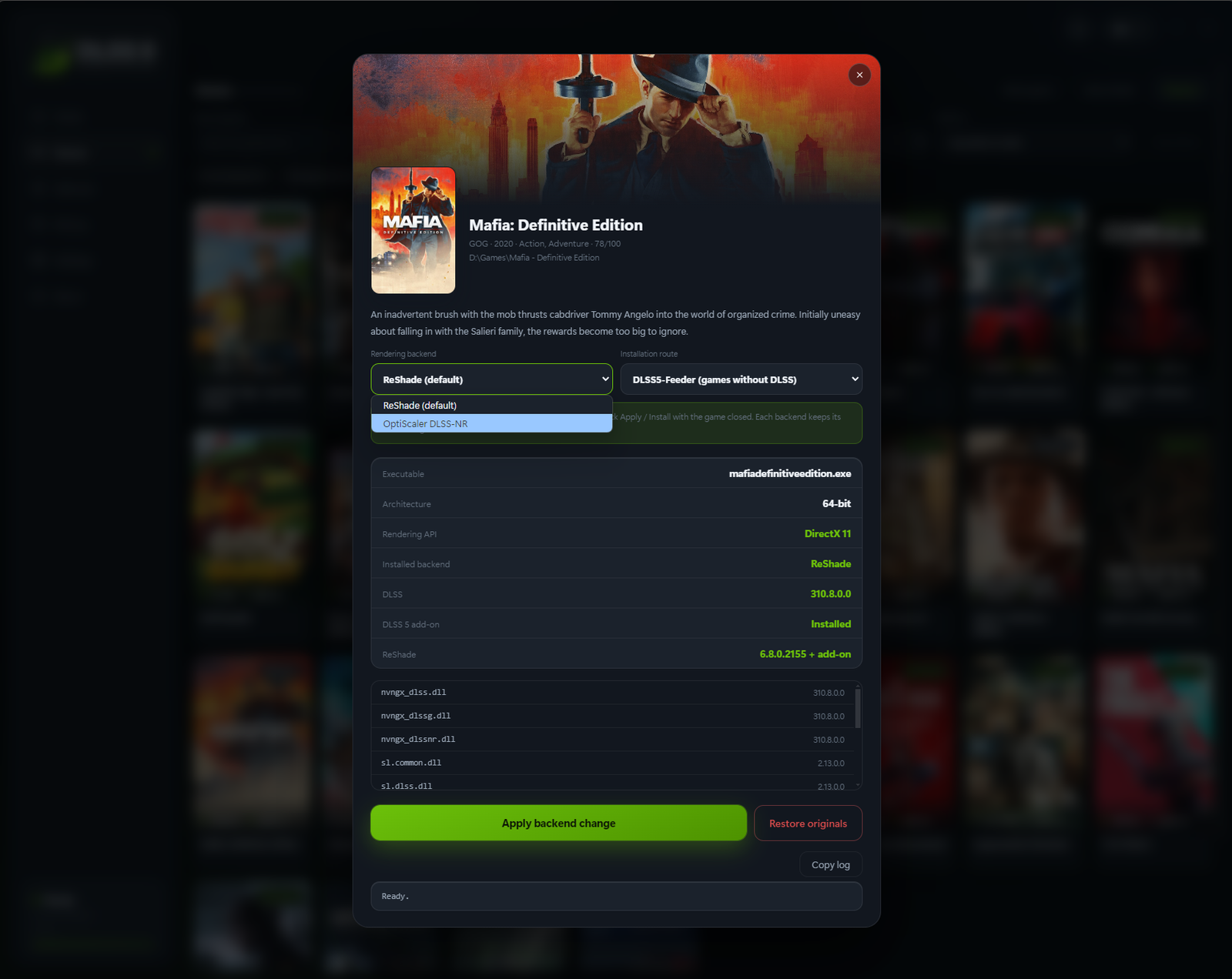
DLSS 5 Swapper game details screen, where the user manages routes, files, and options related to the installation. Image: rakanki911/GitHub.
Version 2.2.8 updated Feeder, RenoDX, and OptiScaler
Hotfix 2.2.9 maintains the components introduced in 2.2.8. The previous update brought DLSS5-Feeder to version 1.17.0 and RenoDX DLSS5 to 6.5.3. It also started loading the DLSS 310.9.1 runtime and updated the Multipass route to the September 28 DLSS Tool build.
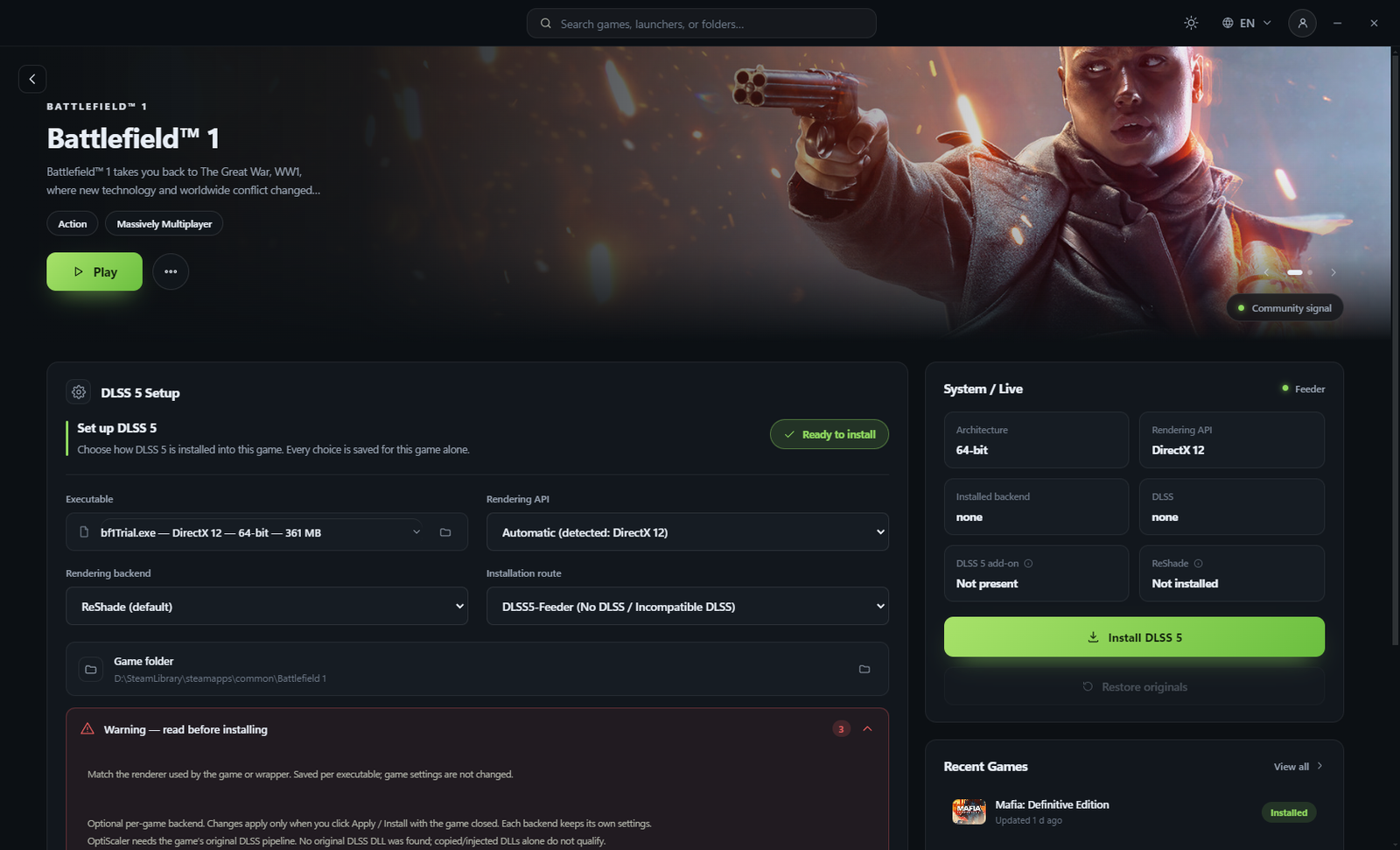
Version 2.2.8 also brought a second visual theme for the interface, shown here on the game configuration screen. Image: rakanki911/GitHub.
Feeder 1.17.0 adds an output stabilizer designed to reduce visual drift in static areas after the camera stops. In addition, the new version works with a D3D12 session on the same device without conflicting with the game's own DLSS in certain scenarios.
The update also removed the old generalized warning about NVIDIA 616.64 drivers or higher. According to the project notes, the issue was with the previously used RenoDX 4.7 consumer, and not necessarily the driver. The included RenoDX 6.5.3 has now completed the 300-review test on driver 617.14 used by the project.
OptiScaler gets Pre-SR Multipass route
The most interesting change in 2.2.8 for visual experimentation was a second OptiScaler option per game. In addition to the standard path, the user can choose the Pre-SR Multipass 0.8.92 fork.
This route executes the neural model before the upscaler and allows configuring style, intensity, structure, and skin independently across up to three passes. The fork can also compress the periphery of the frame to reduce the model's cost.
The figures cited in the notes are upstream measurements, not independent benchmarks. According to the project, peripheral compression reduced model time by about 10% to 12% at 4K, reaching 18% when the model resolution was adjusted to 85%. These values should be treated as development benchmarks, since the actual gain depends on the game and configuration.
The included fork also fixes two important issues below 100% model resolution: the content delivered to the network and the length of motion vectors in games that already upscale. According to the notes, these issues caused flicker at resolutions below 100%.
To understand how multiple passes affect quality and performance, Allves Games has already published a DLSS 5 Multipass guide. We also cover the DLSS5-Feeder 1.17.0-beta.3, which preceded the version now integrated into Swapper.
DLSS 5 Swapper remains a community tool
Despite the automation, none of these routes turns community support into official integration. Swapper combines components like ReShade, DLSS5-Feeder, RenoDX, OptiScaler, and dgVoodoo2 to target games with very different pipelines. Therefore, an installation may work on a specific title and fail on another that seemingly uses the same API.
The project itself warns that games with anti-cheat may reject add-ons or even pose a risk to the account. Thus, the tool should not be used to bypass protection mechanisms. In competitive games, the safest path remains avoiding unsupported injections.
With the 2.2.8 and 2.2.9 sequence, the most important advancement is not just in the final hotfix. The current package consolidates newer versions of Feeder and RenoDX, adds an OptiScaler Pre-SR Multipass route, and improves the compatibility chain for older games. Meanwhile, 2.2.9 closes practical flaws that could prevent ReShade installation, restoration, or startup.
Sources: GitHub — DLSS 5 Swapper 2.2.9 | GitHub — DLSS 5 Swapper 2.2.8 | official DLSS 5 Swapper repository.