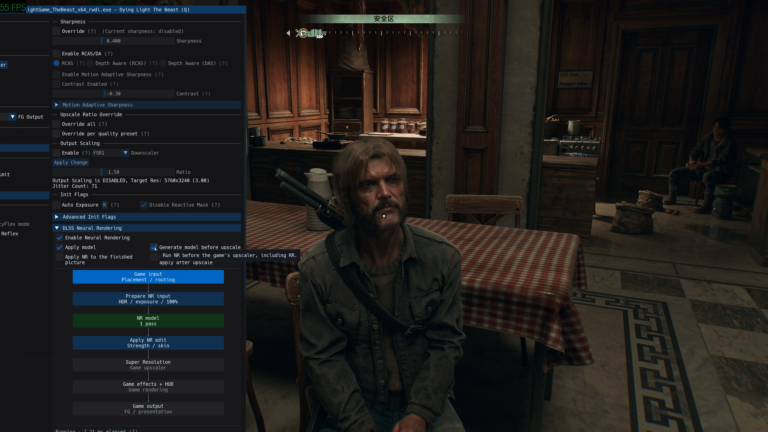
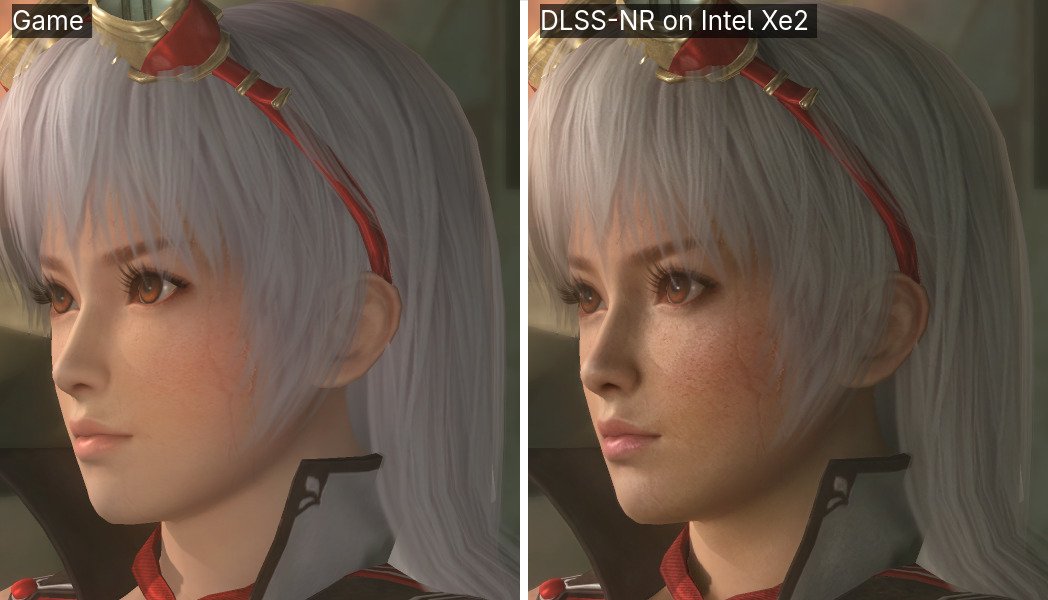
The DLSS 5 Intel Arc achieved 30 FPS in Tekken 7 using the Arc 140V integrated GPU, according to the dlss-nr-on-intel project update logged on October 5, 2026. The test runs at 800x450 with a 0.35 render scale and represents a significant leap over the 10.5 FPS previously measured at 640x360. Furthermore, the implementation remains independent: it does not use NVIDIA, CUDA, or NGX hardware.
, the project runs the Neural Rendering pass via Vulkan on the Xe2 architecture's XMX cores. However, it is experimental research, not official support from NVIDIA or Intel, and the repository itself warns that the visual result varies depending on the game and the scene.
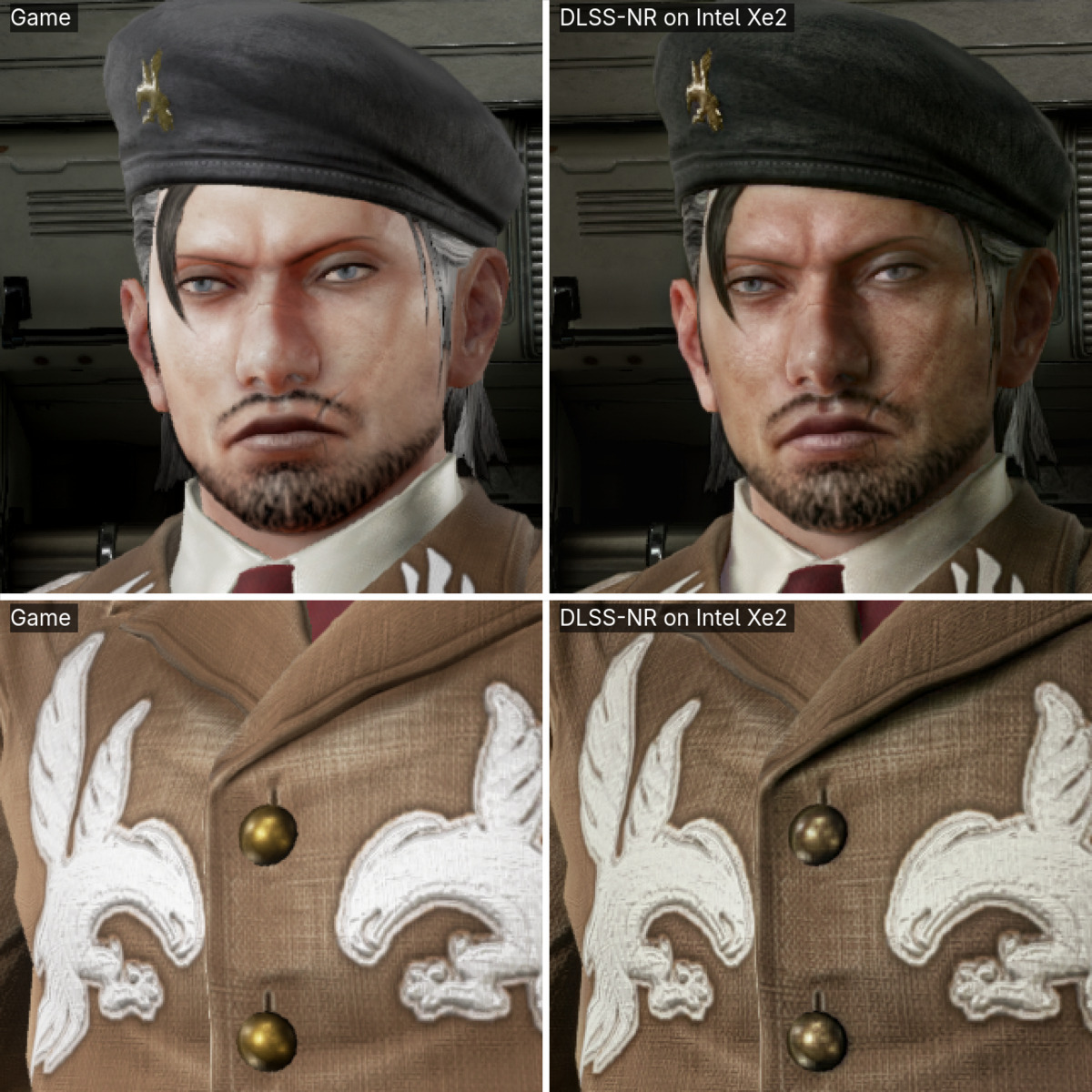
Tekken 7 with the original frame on the left and Neural Rendering on the Intel Arc 140V on the right. Image: Uzbekunknown/dlss-nr-on-intel.
DLSS 5 Intel Arc jumps from 10.5 to 30 FPS
The most direct comparison is in the measurement history itself. On September 16, Tekken 7 had run at 10.5 FPS at 640x360; the current measurement records 30 FPS at 800x450 with a 0.35 render scale and 27 FPS with a 0.6 scale. So, the breakthrough doesn't come just from reducing the test resolution.
The repository attributes the evolution to several accumulated optimizations in the pipeline. Among them, which include a reduction in passes and dispatches, merged operations, and specific work on the cooperative matrix path of XMX. At the same time, the project keeps the graph resident on the GPU to avoid unnecessary traffic with the host.
, in the daemon's benchmarks, 640x360 with 0.35 scaling sits around 26 ms per frame, while 854x480 with 0.50 scaling comes in at 34 ms. However, these numbers measure the cost of the isolated pipeline; the game adds its own work, which is why the actual result from Tekken 7 is the most important benchmark for live use.
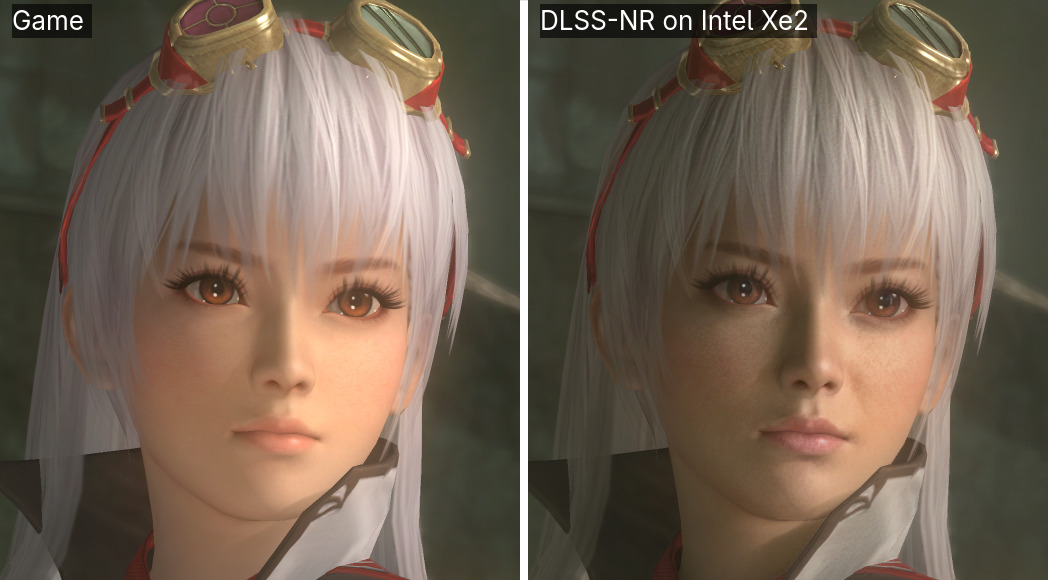
, a comparison in Dead or Alive 5 Last Round shows that the same model can alter texture and lighting differently. Image: Uzbekunknown/dlss-nr-on-intel.
Vulkan and XMX replace the CUDA and NGX path
The DLSS 5 Intel Arc uses VK_KHR_cooperative_matrix to execute matrix operations on the Arc 140V's XMX. Thus, the implementation does not depend on the CUDA path used in the NVIDIA ecosystem nor on NGX to inject the effect into the game.
The layer intercepts Vulkan presentation and sends each frame to a daemon that keeps the model loaded. Then, the result goes back for composition with the original image. The project states that Windows games can also enter this flow when running under Proton and presenting via Vulkan.
There is an important limitation: the repository distributes only code. Therefore, it does not include NVIDIA binaries or model weights, and the user must legally provide their own compatible DLL to extract the necessary data.
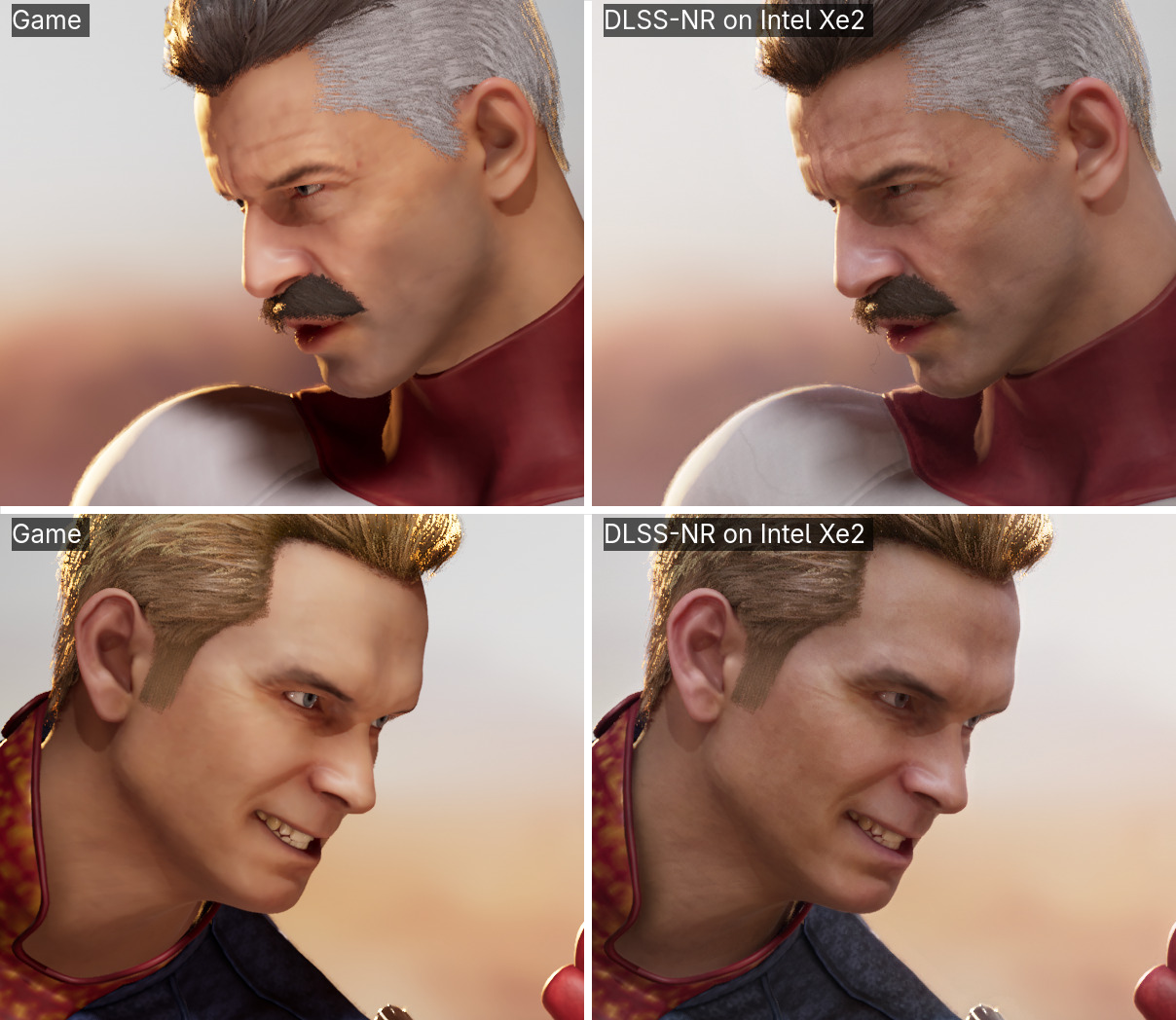
Mortal Kombat 1 was also used to compare the original frame and the Neural Rendering output on the Arc 140V. Image: Uzbekunknown/dlss-nr-on-intel.
DLSS 5 Intel Arc is still a research project
The 30 FPS does not mean that any Intel GPU can receive the feature automatically right away. First, the hardware needs to expose a compatible cooperative matrix configuration; furthermore, the project was developed and measured primarily on Arc 140V with Linux and Mesa ANV.
The author himself also avoids treating the visual transformation as a universal improvement. For example, measurements show a texture gain in parts of Tekken 7, while Mortal Kombat 1 may lose fine detail on faces. Soon, the result depends on the input material and should not be confused with an official DLSS update for Intel GPUs.
The advance, even so, reinforces a recent trend of porting Neural Rendering techniques to alternative paths. In this context, Allves Games also followed along with DLSS-NR-on-AMD arriving on Radeon RX 6000 and the three-dlss-nr bringing Neural Rendering to Three.js via WebGPU.
Sources: dlss-nr-on-intel on GitHub and post on r/IntelArc.