
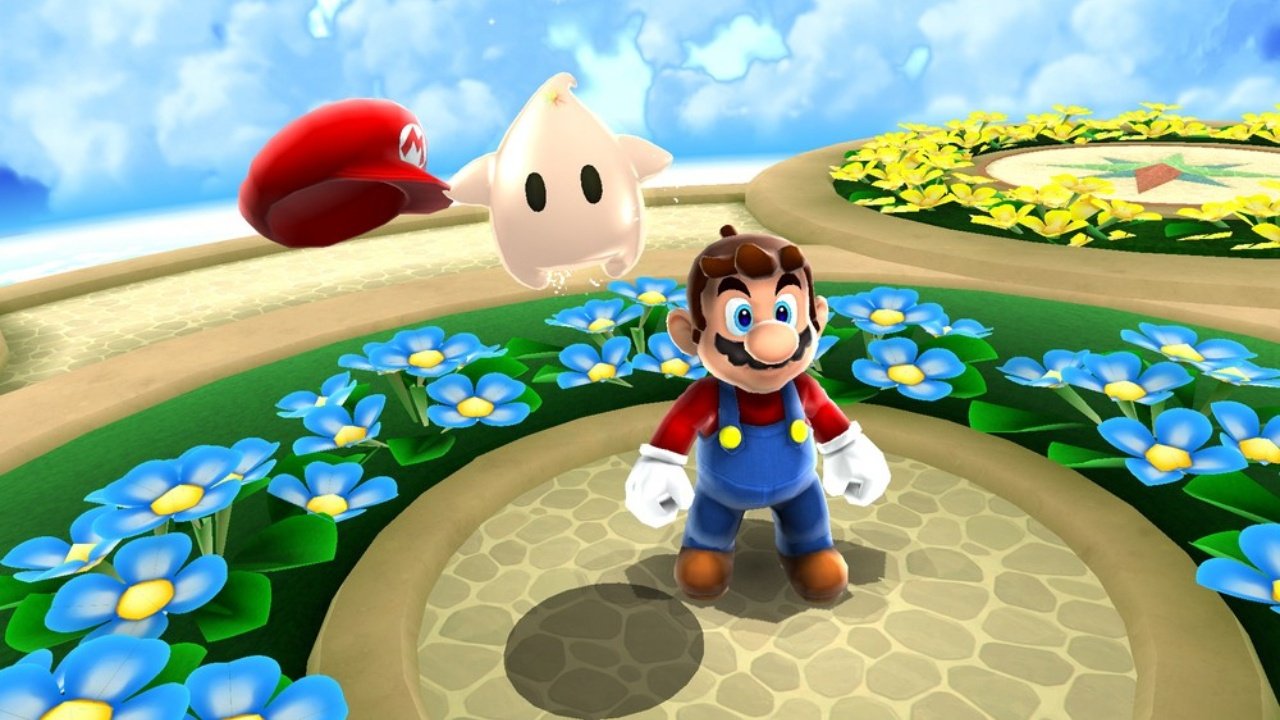
Super Mario Galaxy reached 100% decompilation on September 28, 2026, and the milestone has already paved the way for AstroCore, an unofficial native PC port shown running by the Luma's Workshop community. The breakthrough concludes the main phase of Petari, an SMGCommunity project that reconstructs the code of the Wii classic, while a separate team works to transform this base into an executable version on computers.
The technical difference is important. Petari is a decompilation matching: its goal is to reconstruct source code that reproduces the original binary, and the repository itself states that it is not a PC port project. AstroCore, on the other hand, is the layer focused on computer execution. Therefore, the news brings together two related yet distinct milestones.
Super Mario Galaxy reaches 100% in Petari
The official repository SMGCommunity/Petari describes the work as a decompilation of Super Mario Galaxy. The project does not distribute Nintendo assets or commercial code and requires the user to own the original data necessary to compile the reconstruction.
The project's policy also prohibits AI-generated decompilation code. AI tools can assist with cleaning, formatting, documentation, and naming, but the team rejects contributions that use automatic generation to reconstruct the game code.

This milestone does not mean that the Petari repository has become a ready-to-use executable for Windows. In fact, the README explicitly separates the decompilation from the development of a port. This distinction avoids confusing code reconstruction with automatic static recompilation or Wii emulation.
AstroCore turns the decompilation into a PC port
In parallel, the official AstroCore page identifies the project as the PC software used to run these games. Luma's Workshop published a video demonstration and stated that it hopes to make the project available soon, although it has not yet announced a release date.
The video is the most important practical evidence so far: AstroCore is already able to get Super Mario Galaxy running outside of its original environment. However, there is still no public release of AstroCore, nor complete system requirements or a closed list of compatible features.
Therefore, features such as unlocked resolution, higher frame rates, and advanced modding should be treated as natural possibilities of a native port, rather than a definitive list of functions for the first public version.
Decompilation is neither emulation nor automatic recompilation
The method also differs from the static recompilation projects that Allves Games follows. In GTA Liberty City Stories' LCS Recomp, for example, a tool transforms the PSP binary in advance into code units for a modern runtime.
Petari follows another route. Developers manually reconstructed the code of Super Mario Galaxy until they obtained a base corresponding to the original program. Afterward, a port like AstroCore can adapt this reconstructed code to the APIs, input, video, audio, and other services of a modern computer.
This model is closer to the native port of Super Mario Strikers, which also stems from decompiled code, than from projects that automatically translate instructions from a commercial executable.
Super Mario Galaxy 2 is the team's next target
After completing the main stage of the first game, the decompilation team reported that it intends to do a cleanup round and then move on to Super Mario Galaxy 2. The second title already has its own reverse engineering effort, known as Garigari.
Meanwhile, AstroCore enters a different phase: transforming the reconstructed base into a practical PC experience. The community has already shown gameplay, but still needs to demonstrate a public build, document compatibility, and establish which improvements will be available at launch.
The advancement also fits into a recent sequence of community ports. The GoldenEye 007 port, for example, has already achieved a full campaign at 60 FPS from reconstructed code, while other projects use static recompilation to reach modern systems.
What changes after 100%
For Petari, reaching 100% represents a milestone of preservation and reverse engineering. For players, however, the most relevant delta will be the next one: a first public version of AstroCore that can be installed and tested outside the development environment.
Until this release happens, it is more accurate to say that the port of Super Mario Galaxy for PC is in development and has already been demonstrated, but has not yet been released to the public. There is also no Android or iOS announcement for AstroCore at this time.
Sources: SMGCommunity/Petari; Luma's Workshop — AstroCore; video "The next step..."; GamesRadar+.
Pingback: Foxhollow Star Fox Adventures chega nativo ao PC