Native Mario Wonder already runs as recompiled code on modern computers. On October 2, 2026, a demonstration showed Super Mario Bros. Wonder running on Windows on a laptop with a GeForce RTX 3050, with the first level close to 60 FPS. Furthermore, the developer had previously demonstrated the same project on a Mac with Apple M1. This is not an emulator: the project ahead-of-time recompiles the Nintendo Switch's ARM64 code into native code.
Allves Games video brings together this topic and other recent news about native ports.
The project is led by developer Belmante and remains under development. For now, the repository remains private. Therefore, there is no public version ready for download. The team also cites Android, Linux, and iOS as planned platforms, but the verifiable evidence available in this round confirms execution of the same project on macOS and Windows; Android still appears only as a future objective.
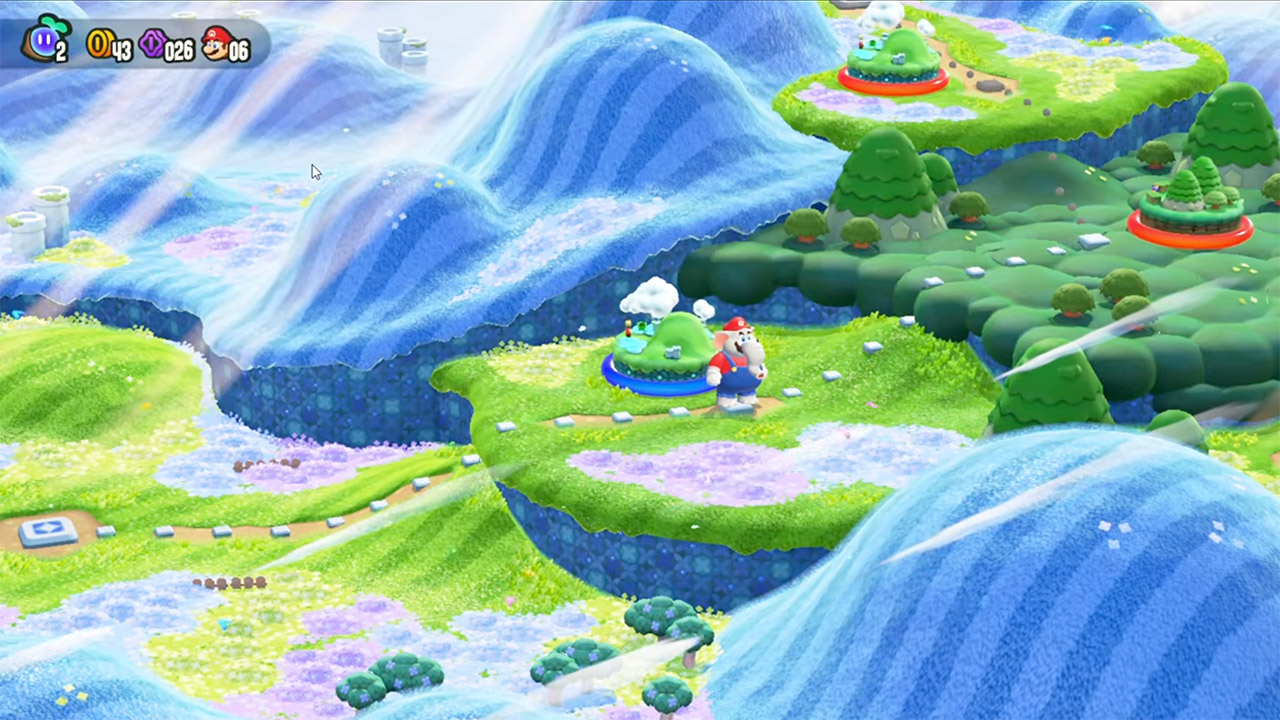
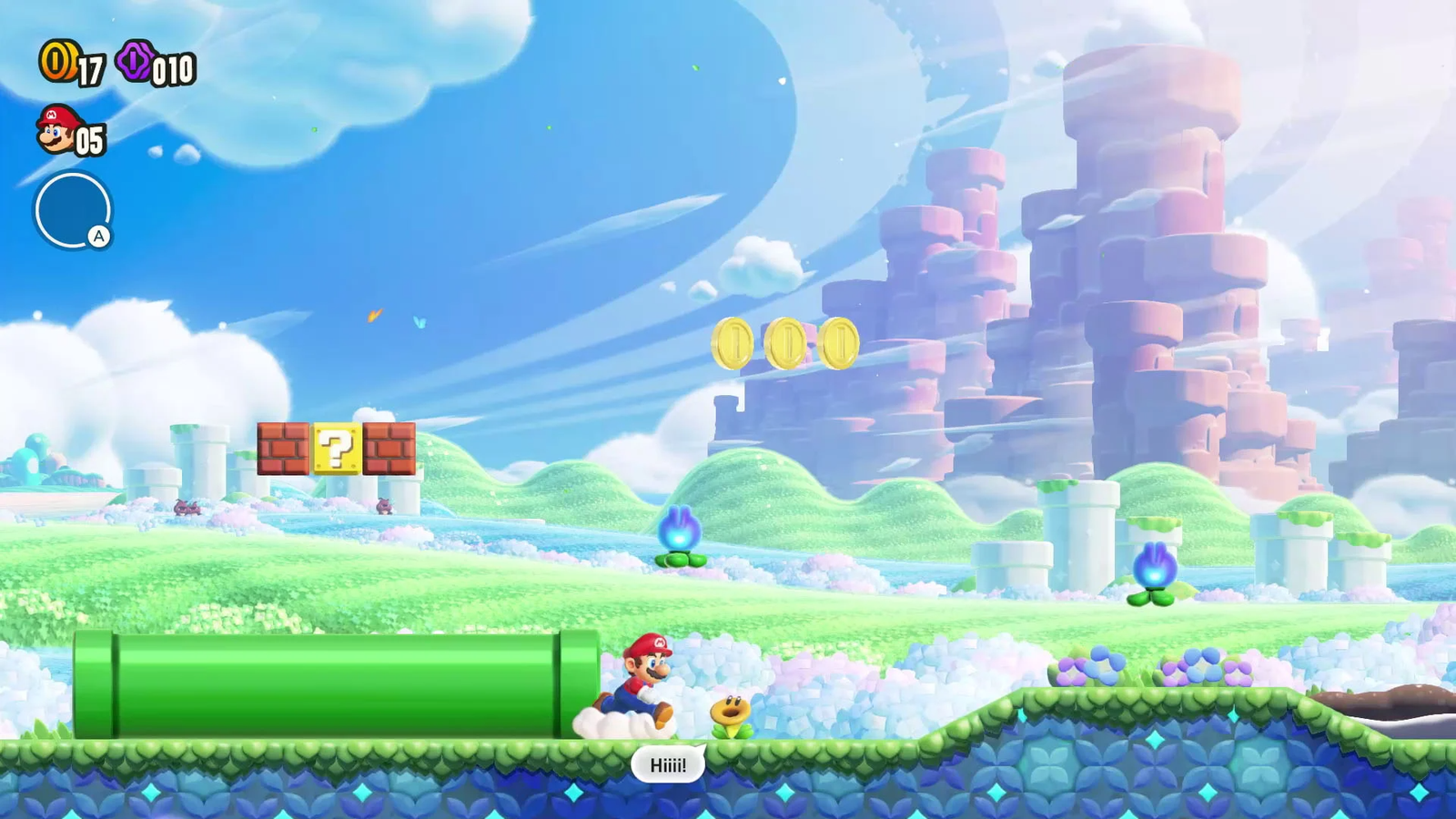
Demonstration of the Super Mario Bros. Wonder recompilation project on Windows. Image: TechEBlog.
How native Mario Wonder works
Instead of emulating Switch hardware in real time, the project ahead-of-time recompiles the game's ARM64 instructions. This way, the target machine executes the result as native code, with no JIT or interpreter between the game and the processor.
The graphics layer requires separate work. Super Mario Bros. Wonder uses Nintendo's NVN API. In the project, a custom layer receives these calls and translates them to Vulkan. On macOS, the path uses MoltenVK; on the Windows shown in October, the layer talks directly to NVIDIA's Vulkan driver.
Video shows the project running the first stage on Windows close to 60 FPS.
Windows port revealed new graphic issues
The migration from Mac to Windows also exposed important differences. According to technical coverage, some game textures use ASTC, a format that desktop NVIDIA GPUs do not handle in the same way as the original hardware. Therefore, the project added a CPU decoder during texture loading.
In addition, the developers needed to adjust barriers between rendering passes. On Mac, Metal already introduced part of these synchronizations. On Windows, however, execution over Vulkan revealed HUD glitches until the project added the necessary barriers. Upload issues also arose that caused characters to appear with incorrect colors.
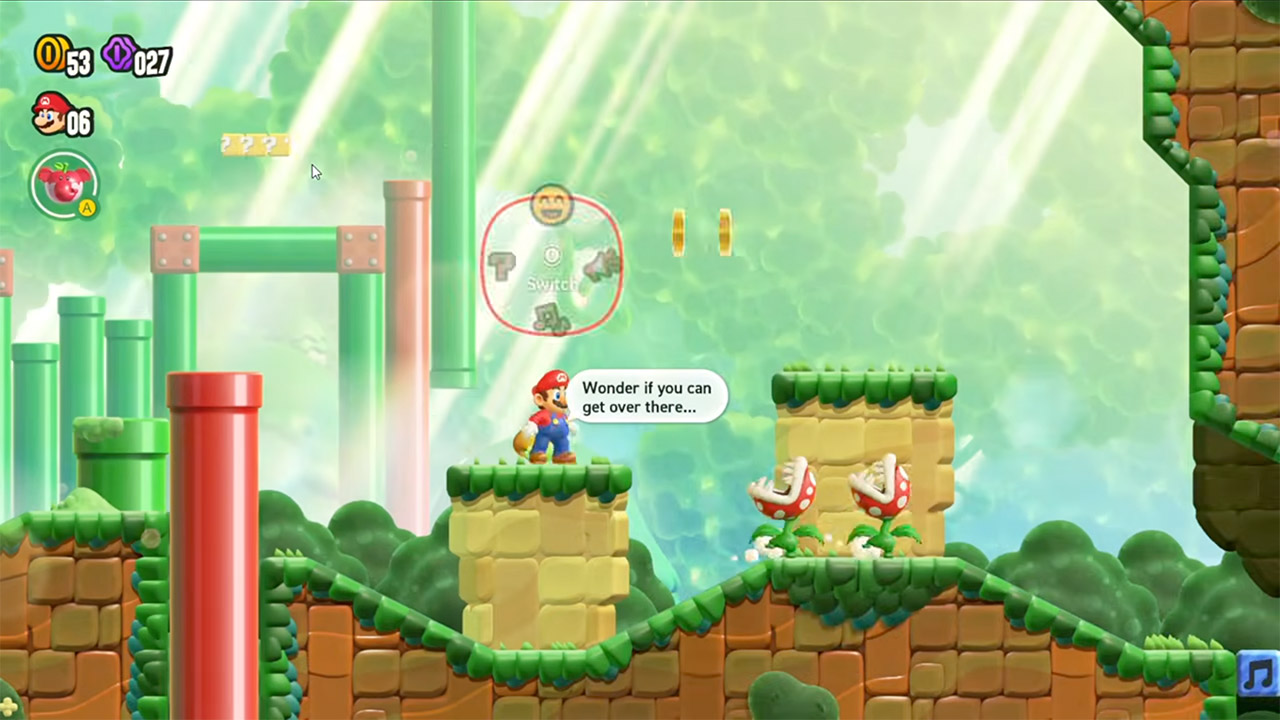
Another capture of the native build in development on Windows. Image: TechEBlog.
Native Mario Wonder comes close to 60 FPS on Windows
In the October 2 demonstration, the first stage stayed close to 60 FPS on a laptop with an RTX 3050. However, this result does not yet represent a final benchmark. The project is still in development, and performance may change as the developers refine the NVN → Vulkan layer, pipeline caching, and texture decoding.
The developer also intends to test the project on an Intel UHD 770. This test will be relevant because the integrated GPU offers a more modest target than the RTX 3050. Thus, it will be possible to better understand the real cost of recompilation and graphic translation.
Android is planned, but should not yet be treated as confirmed
In the comments of the initial Mac demo, the developer stated that they intend to create versions for Android, Windows, Linux, and iOS. However, in that publication, the project was not yet running gameplay, and Android appeared only as a future destination. The new October demo confirms major progress on Windows, but does not prove, by itself, an equivalent Android build.
Therefore, the current status is more accurately stated as follows: the developer has already demonstrated versions for Windows and macOS; Android, Linux, and iOS are part of the plan. This distinction avoids confusing an announced goal with an already functional version.
Project does not have a public release yet
The repository remains private while development matures. The stated plan is to eventually release the recompiler, the NVN → Vulkan layer, and the documentation produced during the work. Until then, there is no official public package to install.
When there is a public distribution, the user must comply with the legal requirements of the project and use only data obtained from their own legally acquired copy of the game. Allves Games does not provide ROMs, proprietary files, or instructions for unauthorized acquisition.
The progress fits into a recent trend of native ports and recompilations. The site already follows projects like the MediEvilRecomp and the native Metroid Prime port. Furthermore, the Native Mario Wonder stands out for starting from a Switch game and already showing gameplay on Windows.
Sources: developer's post on r/decomps; TechEBlog; Nintendo.