An independent project of Tomodachi Life on PC emerged on October 8, 2026, and has already managed to start the Nintendo Switch version on Linux. Tomodachi LTD Recomp converts the game code to x86-64, but still uses emulation components derived from suyu. Therefore, the public version remains experimental and does not offer a fully independent port ready to install.
According to the official repository of RussoPhone, the developer reports that the initial test opened the game with image and audio. Furthermore, he completed ten preparation steps on a laptop with an Intel Core i5-13450HX and 16 GB of RAM. This report describes a test machine, without proving compatibility with all activities and events.
Tomodachi Life on PC receives audio fix
In October 16, 2026, the project fixed the silent output used when SDL3 cannot open an audio device. Previously, it discarded buffers immediately and consumed CPU time needed by other parts of the game. Thus, machines with few cores could get stuck on a blue screen before the first frame.
According to the author, a 60-second test without an audio device reduced the iterations of this routine from about 274,000 to 12,700. However, these internal counters do not measure FPS nor prove stable gameplay. The crashing issue on Fedora with Intel Iris Xe remained open on October 17; therefore, the fix does not guarantee a solution for all cases.
To apply the change, the README instructs to update the existing folder with git pull and run ./install.sh again. The installer redoes the affected steps, which may require another time-consuming compilation. Additionally, make a copy of the saves before updating. If the problem persists, the project recommends checking the audio and reporting the error with the log, without attaching game files or console keys.

Official image of Tomodachi Life: Living the Dream on Nintendo Switch. Illustrates the original game; it is not a capture of the experimental recompilation on Linux. Source: Nintendo.
Tomodachi Life on PC already starts on Linux
The project uses a technique called static recompilation to translate ARM instructions from the Nintendo Switch and generate executable code on the computer. Thus, the produced version runs natively on the PC architecture, without relying on console CPU emulation during gameplay.
For graphics, audio, and Switch services, the executable still depends on emulation components derived from suyu, including the execution of GPU commands. Therefore, the author himself clarifies that the current version does not work free of emulation. A more independent port is in development, with no promised completion date.
According to the author, the complete process took about two hours on the test machine. Still, this result corresponds to a single computer and should not be treated as a universal installation time or as proof of performance in prolonged gameplay.

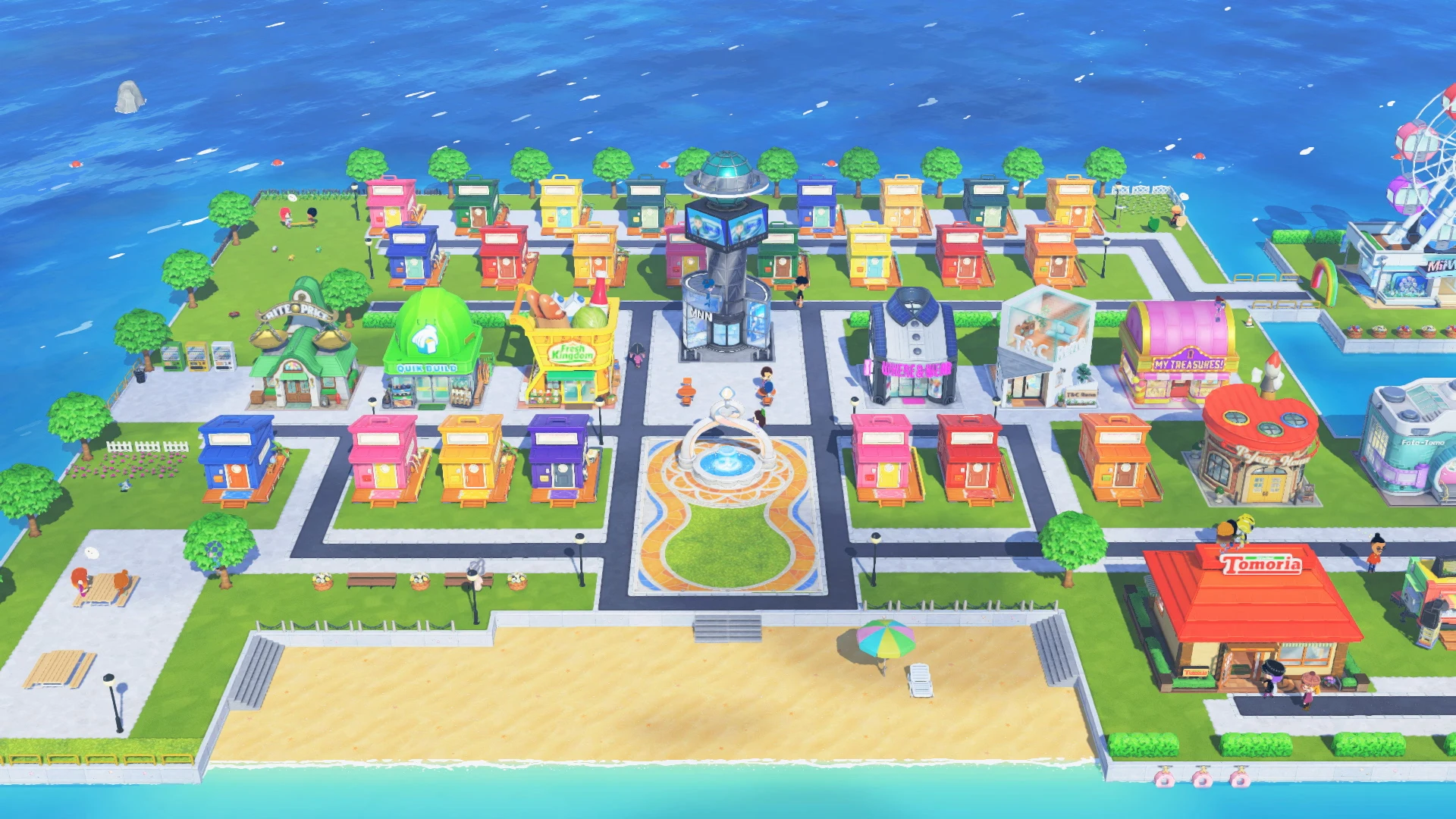
Scene from the original game with Mii characters in the square. Nintendo Switch promotional image, used for visual reference only. Source: Nintendo / Game Informer.
What is needed to try out recompilation
The documentation in Portuguese informs high requirements for preparation: Linux, 16 GB of RAM, at least 8 GB of swap, 35 GB free and a Vulkan-compatible GPU. The developer tested the workflow on Arch Linux and EndeavourOS.
Additionally, the user needs their own copy of Tomodachi Life: Living the Dream, legally dumped from their Nintendo Switch. For now, only version 1.0.0 of the game is accepted. Keys dumped from the console itself, which the project does not provide, are also required.
The repository contains scripts to download dependencies, prepare files, and compile the executable locally. However, there is no public release with a ready-made game package or standalone binary installer. Therefore, there is no installable port download button at this stage: public access is to the project's code and instructions.
Tomodachi Life on PC: Windows has not yet had gameplay confirmed
Tomodachi Life on PC also received an experimental installer for Windows 10 and 11. However, automated tests only confirmed the compilation of tools and the first steps of the process. As of the record consulted, the developer had not yet tested the full execution of the game on a real Windows PC.
Therefore, it would be premature to announce a functional Windows version. The main path remains Linux, on which the author managed to complete the preparation and open the game. Even there, the project's state is early: glitches may still arise in parts of the campaign that have not been verified.
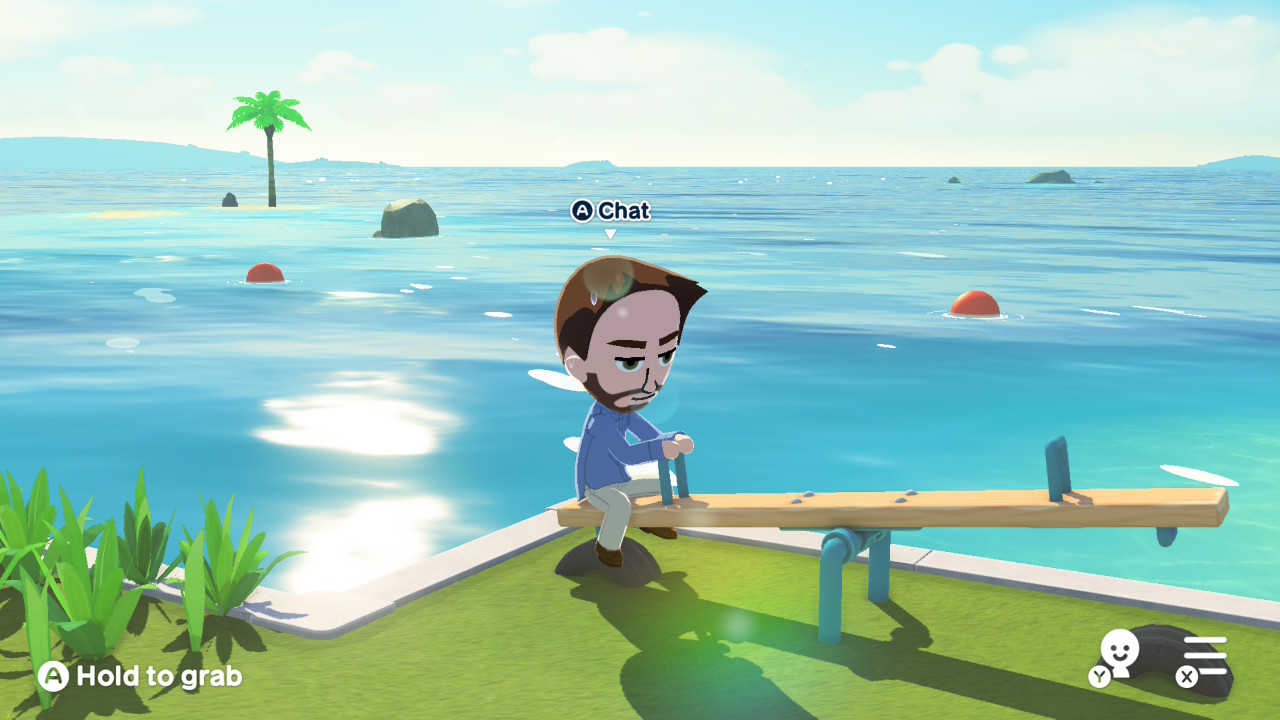
Screenshot of Tomodachi Life: Living the Dream on Switch. Does not represent gameplay recorded on the experimental PC port. Source: Nintendo / TechRadar.
What is the difference compared to a Switch emulator?
In a conventional emulator, the game's execution goes through a layer that reproduces the console's operation. Recompilation, on the other hand, attempts to convert the application's code into an executable intended for PC. Even so, compatibility libraries are still necessary for graphics, audio, and system services.
This approach also appears in other independent works. For example, the project that brought Super Mario Bros. Wonder natively to Windows explores the idea of running a console game as a PC program. Similarly, it Wind Waker HD recompilation for PC shows another path for adapting games originally made for consoles.
For now, the project remains experimental. The audio fix addresses a cause of crashing, but does not prove that all activities work. Furthermore, hardware, drivers, and a complete installation on Windows still require specific testing. The project is independent and has no affiliation with Nintendo.
Sources: Tomodachi LTD Recomp — official repository; README in Portuguese; Nintendo — original game; fix for silent audio output, from October 16th; clarification regarding emulation components.