Paper Mario Android received a native implementation based on PaperBoat, a community port of the Nintendo 64 classic created over the Paper Mario DX decompilation. The mobile version compiles the reconstructed code for ARM64 and executes the game directly on Google's system, instead of launching the original MIPS binary inside a Nintendo 64 emulator.
The news gained visibility on October 1, 2026, with a functional Android build of the project. Furthermore, PaperBoat's current base itself already contains specific infrastructure for Android, iOS, and browser. The user still needs to provide a compatible copy of Paper Mario obtained from their own media.
Video of Allves Games that brings together the news of ports and recompilations covered in this article.
Paper Mario Android runs as ARM64 code
PaperBoat was born as a port by Harbour Masters based on the Paper Mario DX decompilation. On desktop, the project already has versions for Windows, Linux, and macOS. Now, the mobile work brings the same reconstructed base to ARM64 processors.
On Android, the game's C and C++ code goes into a native library. libultraship provides part of the port's infrastructure, while the platform layer handles input, window, audio, and other system services.
This architecture sets the project apart from solutions like Mupen64Plus or RetroArch. In a traditional emulator, the device replicates the Nintendo 64 environment to run the original program. In PaperBoat, the reconstructed code is compiled for modern hardware.

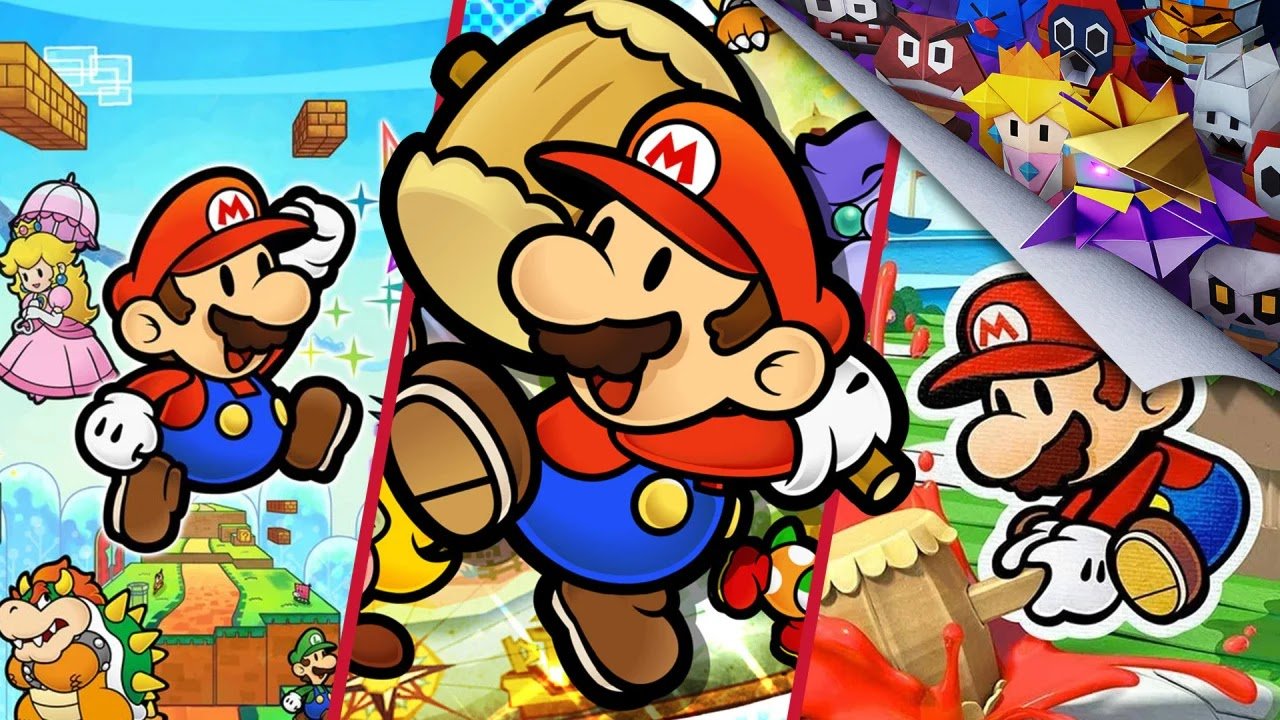
Paper Mario 64, the game whose decompilation serves as the basis for PaperBoat. Reference image of the original game.
Touch controls can be repositioned
The Android version does not rely exclusively on a physical controller. The engine itself draws a set of buttons over the rendering area. Therefore, the user can play directly via the touchscreen.
In the settings, it is possible to change the scale and opacity of the controls. Furthermore, the layout editor allows you to individually drag buttons to other positions on the screen. The system also accepts physical controllers through the mapping database used by the project.
Consequently, mobile support goes beyond simply compiling an ARM executable. The interface received a specific adaptation for touch devices.
Paper Mario 64 gameplay used as visual reference of the original game; the video does not represent a benchmark of the Android build.
APK extracts data from the user's own copy
PaperBoat does not include Paper Mario's commercial files. On Android, the launcher requests a compatible ROM via the document picker and compares the file with the configuration maintained by the project.
After validation, the Torch tool extracts the necessary data and creates the file pm64.o2r. Already paperboat.o2r brings together resources belonging to the port itself, such as shaders, fonts and interface elements.
Thus, the APK does not function as a package that redistributes the Nintendo game. The user must provide their own legally obtained copy. The main PaperBoat documentation lists the compatible American edition by its SHA-1 hash 3837f44cda784b466c9a2d99df70d77c322b97a0.
Android uses OpenGL ES and does not require Vulkan
The mobile implementation uses OpenGL ES for rendering. Therefore, Vulkan does not appear as a mandatory requirement for this build. This also differentiates the project from some recent mobile ports that rely directly on Vulkan and specific drivers.
The analyzed configuration compiles only for arm64-v8a. The documentation explains that 32-bit ARM could be added to the build process, but this architecture is not part of the currently distributed target.
Coverage published on October 1st points to Android 7.0 or higher as the target for the current configuration. However, this represents the platform requirement of the build, not a guarantee of performance on any compatible device. There is still no comprehensive table of validated phones, SoCs, and GPUs.

Paper Mario 64 in an original gameplay capture. The PaperBoat version recompiles the reconstructed base for modern platforms. Image: GamesRadar+.
iPhone and iPad also appear in the infrastructure
Mobile support doesn't end on Android. Official PaperBoat documentation has specific instructions for iOS and reports that the continuous integration system generates an unsigned IPA.
This file requires sideloading and does not represent a release on the App Store or TestFlight. Furthermore, the existence of an automated build does not mean the team has announced a commercial or officially supported version by Apple.
The engine's touch controls also work on iOS. Just like on Android, they are enabled by default on mobile platforms and can have their size, opacity, and position modified.
The project also maintains browser code. In this case, the same CMake structure is adapted for the Web, while the user remains responsible for providing the necessary game data.
PaperBoat had already brought Paper Mario to desktop
Harbour Masters publicly released PaperBoat for computers in September 2026. The main version offers Windows, Linux, and macOS, and supports DirectX 11 on Windows, OpenGL on compatible platforms, and Metal on macOS.
The port also accepts custom assets in packages .o2r and .otr. Therefore, the foundation was created not only to preserve Paper Mario on current systems, but also to facilitate mods and future enhancements.
The arrival of Android represents an important delta compared to the desktop release. The reconstructed code can now run natively on ARM64, while touch support, on-device asset extraction, and a mobile launcher reduce the necessary manual adaptations.
Native port should not be confused with emulation
PaperBoat starts from code reconstructed through decompilation work and adapts that code to modern platforms. Therefore, the correct classification is decompilation-based source port.
It is not automatic static recompilation of the original MIPS executable. Nor is it streaming, a wrapper, or an independent commercial mobile version.
On Android, the code is compiled for ARM64 and the presentation goes through the modern graphics backend. The device still needs to interpret the graphical resources and behaviors reconstructed by the project, but it does not run the game inside a Nintendo 64 virtual machine.
For now, sustained performance needs more testing on real hardware. Individual demonstrations may show good fluidity on certain devices, but they do not replace benchmarks across different GPUs and SoCs.
The breakthrough rapidly expands the reach of PaperBoat. After Windows, Linux, and macOS, Paper Mario 64 now has a native path for Android ARM64 and documented infrastructure for iPhone, iPad, and web browsers.
Sources: YlPorts/PaperBoat-android; HarbourMasters/PaperBoat; official Android/iOS/Web documentation; AndroGaming.